Local anaesthesia hair transplant explained
Local anaesthesia hair transplant explained
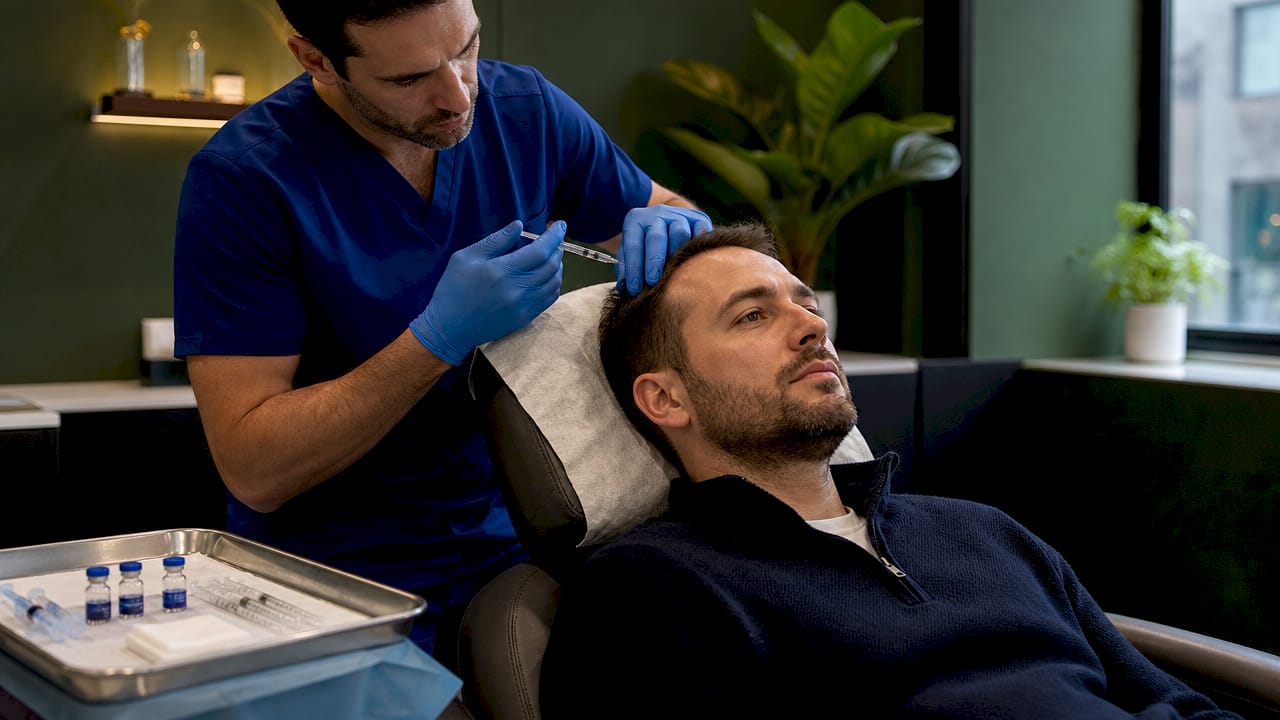
Local anaesthesia is defined as the targeted numbing of specific scalp areas during a hair transplant, allowing the procedure to be completed while you remain fully awake and comfortable. The American Society of Plastic Surgeons endorses local anaesthesia as the standard for hair transplant surgery over general anaesthesia. Once effective anaesthesia is administered, over 90% of patients report a pain level of 2/10 or lower throughout the procedure. Understanding how local anaesthesia works in hair transplants removes one of the biggest barriers stopping people from booking a consultation.
How does local anaesthesia work during a hair transplant?
Local anaesthesia works by blocking nerve signals in the scalp so that pain cannot travel to the brain. The two agents used most commonly are lidocaine and bupivacaine. Lidocaine acts quickly, producing numbness within minutes. Bupivacaine has a longer duration, which supports comfort during extended sessions and into the early recovery period.
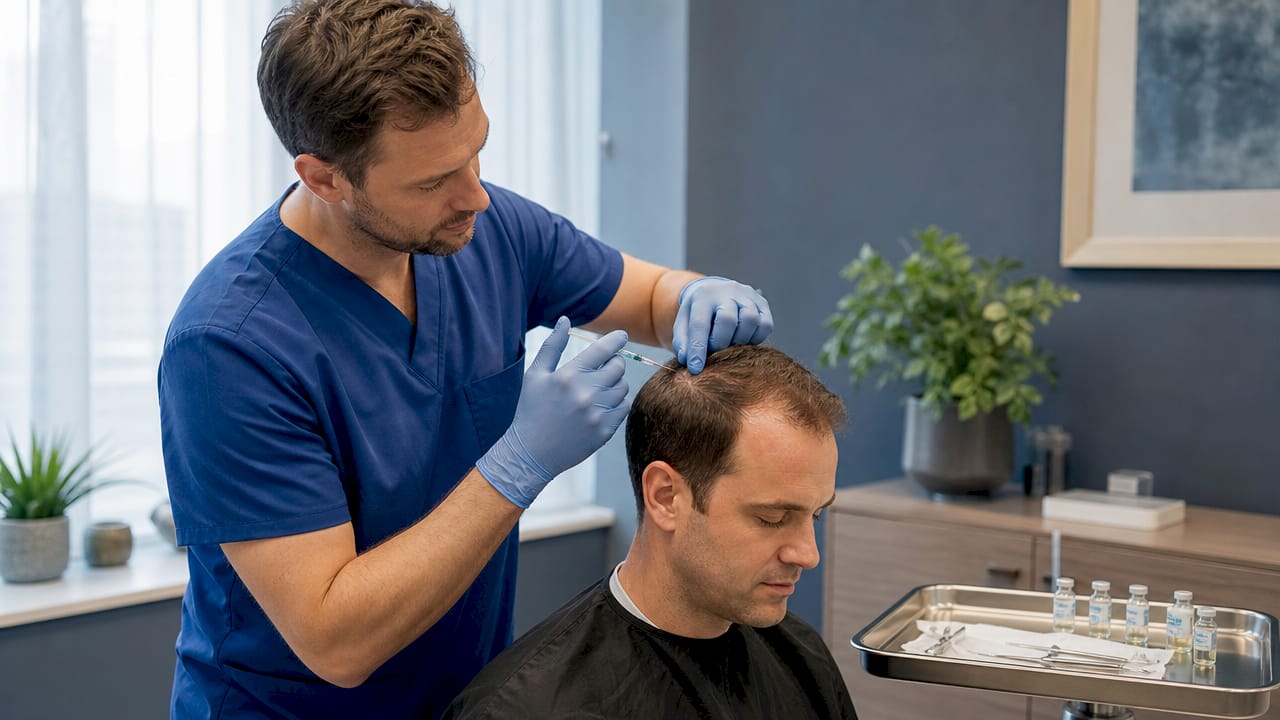
The surgeon injects the anaesthetic into two distinct zones: the donor area at the back and sides of the scalp, and the recipient area where grafts will be placed. Both zones must be fully numb before any incisions are made. This two-stage approach means the surgeon can confirm adequate coverage before proceeding.
Numbness typically sets in within 15–30 minutes of the initial injections. That timeline accommodates the preparation work that happens between injection and the first incision. Epinephrine is added to the anaesthetic solution in most cases. It constricts local blood vessels, which reduces bleeding and extends the duration of numbness throughout a session that can last 4–8 hours.
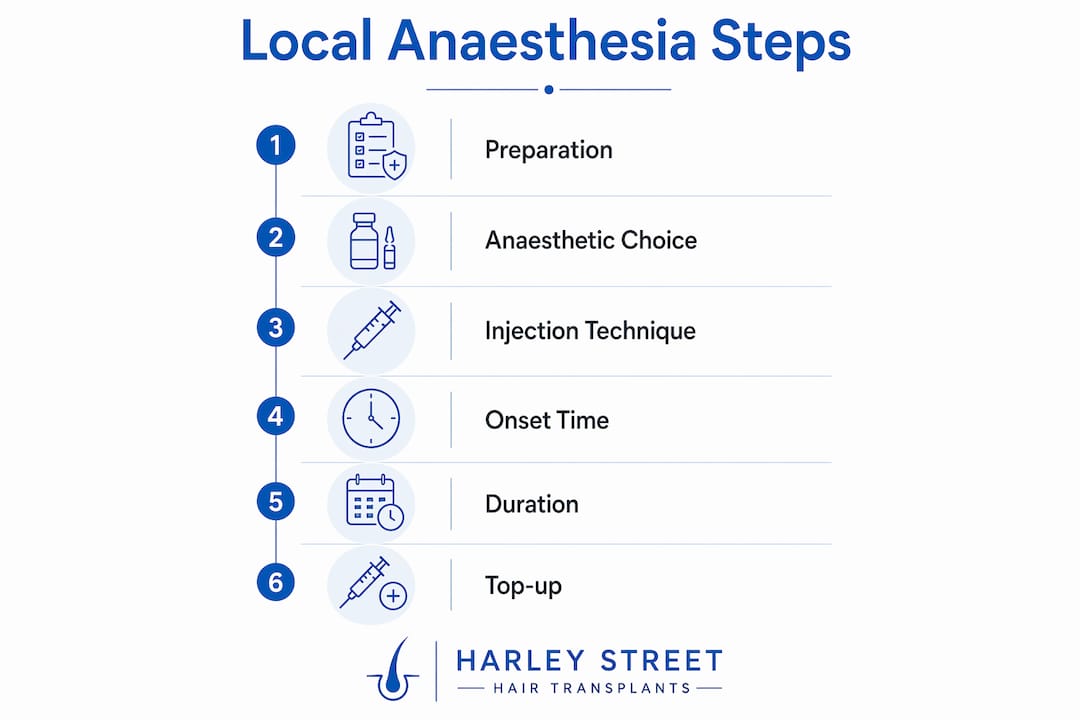
- Injection into the donor area. The back and sides of the scalp are numbed first, preparing the site for follicular extraction.
- Injection into the recipient area. The thinning or bald zone receives anaesthetic to prepare for graft placement.
- Onset confirmation. The surgeon tests sensation before making any incisions.
- Top-up doses as needed. For longer procedures, additional anaesthetic is administered to maintain full coverage.
Pro Tip: Ask your surgeon whether epinephrine is included in the anaesthetic solution. Its presence significantly reduces bleeding and extends the numbness, which directly improves your comfort during a long session.
What are the different types and techniques of local anaesthesia?
The method of delivering local anaesthesia matters as much as the agent itself. Several techniques exist, each suited to different patient needs and comfort levels.
Buffered lidocaine
Standard lidocaine is acidic, and that acidity causes the familiar sting on injection. Buffered lidocaine uses sodium bicarbonate to raise the pH of the solution closer to the body’s natural level of 7.4. The result is a noticeably less painful injection. This is now a widely adopted technique in quality hair restoration clinics.
EMLA cream
EMLA cream is a eutectic mixture of lidocaine and prilocaine applied directly to the scalp surface. Applied 1–2 hours before injections, it numbs the skin superficially and reduces the sharpness of the needle. It is particularly useful for patients with needle phobia and is a straightforward addition to the pre-procedure preparation.
Needle-free jet injectors
Jet injectors deliver anaesthetic through a high-pressure stream rather than a needle. Needle-free jet injectors reduce initial pain by up to 70% compared to conventional needles. The limitation is that they rarely achieve deep enough penetration on their own, so a follow-up tumescent infiltration with a fine needle is usually still required. They are most beneficial for patients with severe needle phobia.
Injection technique refinements
The physical technique of the injection affects patient comfort significantly. The table below summarises the key variables.
| Technique variable | Lower discomfort approach | Why it helps |
|---|---|---|
| Syringe size | 1 mL syringe | Less mechanical force required, smoother delivery |
| Injection angle | 90-degree entry | Passes through fewer pain receptors than 45-degree angle |
| Injection speed | Slow infiltration | Rapid injection increases tissue pressure and pain |
| Re-angulation | “Walking” the needle | Improves anaesthetic spread, reduces number of entry points |
Pro Tip: Before your procedure, ask whether the clinic uses buffered lidocaine and 1 mL syringes. These two choices alone can make the injection phase considerably more comfortable.
Why is local anaesthesia preferred over general anaesthesia for hair transplants?
Local anaesthesia eliminates systemic risks that come with general anaesthesia, including intubation complications and the need for respiratory monitoring. This distinction matters most for the typical hair loss demographic, where conditions such as high blood pressure and obesity are common. Both conditions increase the risk profile of general anaesthesia considerably.
The benefits of keeping patients awake extend beyond safety statistics. Conscious patients can communicate with the surgical team in real time, reporting any discomfort, adjusting their position, or requesting a short break. That communication directly improves surgical quality during sessions that can last the better part of a working day.
Key reasons local anaesthesia is the preferred choice:
- No intubation risk. General anaesthesia requires a breathing tube, which carries its own complications. Local anaesthesia removes this entirely.
- Suitable for comorbid patients. Patients with cardiovascular conditions or higher body weight face elevated risk under general anaesthesia. Local anaesthesia sidesteps those risks.
- Real-time communication. The surgeon can make positioning adjustments and comfort checks throughout the procedure.
- Faster recovery. Patients are alert immediately after the procedure and typically leave the clinic the same day.
- Sedoanalgesia as an adjunct. For anxious patients, light sedation combined with local anaesthesia (sedoanalgesia) provides relaxation without the systemic risks of full general anaesthesia.
General anaesthesia is rarely, if ever, necessary for a hair transplant. When patients choose between the UK and Turkey for their procedure, the quality of anaesthetic protocols is one of the most important factors to compare.
What should you expect during the procedure?
The injection phase is the most uncomfortable part of the entire hair transplant. It lasts approximately 10–20 minutes. After that, the scalp is numb and the remainder of the procedure is essentially painless. Most patients describe the sensation during surgery as pressure or mild pulling rather than pain.
Here is a realistic sequence of what you will experience:
- Pre-procedure preparation. EMLA cream may be applied to the scalp 1–2 hours before you enter the theatre.
- Initial injections. The surgeon injects the donor and recipient areas. This is the sharpest phase, but it is brief.
- Onset of numbness. Within 15–30 minutes, the scalp is fully numb and surgery begins.
- Surgery in progress. You remain awake, comfortable, and able to communicate. You can watch a film, listen to music, or rest.
- Top-up anaesthetic. For longer procedures, the surgeon administers additional doses to maintain coverage.
- Completion and dressing. Once grafts are placed, the scalp is dressed and you are given aftercare instructions.
Sedoanalgesia is available for patients who feel significant anxiety about the injection phase. Light sedation means that 95% of sedated patients do not recall injection discomfort afterwards. This option does not replace local anaesthesia; it works alongside it to reduce anxiety without the risks of full sedation.
Pro Tip: Tell your surgeon about any needle anxiety before the procedure, not on the day. Clinics can arrange sedoanalgesia in advance, and knowing your options ahead of time reduces pre-procedure stress considerably.
Reviewing what to do before and after a hair transplant helps you prepare properly and ensures the anaesthetic works as effectively as possible on the day.
Key takeaways
Local anaesthesia is the medically preferred and safest method for hair transplant procedures, eliminating systemic risk while keeping patients comfortable and communicative throughout.
| Point | Details |
|---|---|
| Gold standard method | Local anaesthesia with epinephrine is endorsed by leading surgical bodies as the standard for hair transplants. |
| Injection phase is brief | The most uncomfortable part lasts 10–20 minutes; the rest of the procedure is essentially painless. |
| Technique reduces discomfort | Buffered lidocaine, 1 mL syringes, and 90-degree injection angles each reduce the sting of administration. |
| Awake patients improve outcomes | Conscious communication allows real-time positioning adjustments and comfort monitoring during surgery. |
| Sedoanalgesia is available | Anxious patients can combine light sedation with local anaesthesia for a relaxed experience without general anaesthesia risks. |
What I have learned from watching anaesthesia protocols evolve
Having observed hair restoration procedures across a range of clinical settings, the single biggest shift I have seen is the adoption of buffered lidocaine as a default rather than an afterthought. Clinics that still use unbuffered solutions are, frankly, behind the curve. The difference in patient comfort during the injection phase is not subtle.
The other thing that strikes me is how undervalued awake surgery is. Patients sometimes arrive hoping for general anaesthesia because they associate it with a more “serious” or thorough procedure. The opposite is true. An awake patient who can say “that area feels sharp” gives the surgeon information that no monitoring equipment can replicate. That feedback loop is a genuine clinical advantage.
I would also encourage anyone with needle anxiety to raise it early. Sedoanalgesia is not a last resort; it is a well-established adjunct that makes the injection phase far more manageable. Clinics that offer it proactively, rather than waiting for patients to ask, are the ones worth doing your due diligence on before booking.
The bottom line is this: the anaesthetic protocol a clinic uses tells you a great deal about how much it values patient experience. Ask about it directly. A confident, detailed answer is a good sign.
— Harley
Hair transplants at Glasgowhairtransplantclinics: safe, comfortable, and awake
Glasgowhairtransplantclinics applies current best-practice local anaesthesia protocols across all procedures, from FUE hair transplants to crown hair restoration. Every patient remains awake and comfortable throughout, with the surgical team monitoring comfort and adjusting as needed. Sedoanalgesia is available for patients who need additional reassurance during the injection phase.
All surgeons at Glasgowhairtransplantclinics are registered with the General Medical Council (GMC), and clinics hold CQC and HIS registration for your peace of mind. Whether you are considering a procedure in Glasgow, Newcastle, or another UK location, the team offers free consultations online or face to face. Book yours today and get clear, honest answers about what to expect from your procedure.
FAQ
Is a hair transplant painful under local anaesthesia?
The injection phase causes brief discomfort lasting around 10–20 minutes. Once the scalp is numb, the procedure is essentially painless and most patients report a pain level of 2/10 or lower.
How long does local anaesthesia last during a hair transplant?
Local anaesthesia with epinephrine lasts long enough to cover sessions of 4–8 hours. Top-up doses are administered as needed to maintain full numbness throughout.
Can I request sedation if I am nervous about injections?
Yes. Sedoanalgesia combines light sedation with local anaesthesia and is suitable for anxious or needle-phobic patients. It does not replace local anaesthesia but significantly reduces anxiety during the injection phase.
Why is general anaesthesia not used for hair transplants?
General anaesthesia carries systemic risks including intubation complications, which are unnecessary for a procedure that local anaesthesia handles safely. It is also less suitable for patients with high blood pressure or obesity, both common in the hair loss demographic.
What is buffered lidocaine and why does it matter?
Buffered lidocaine is standard lidocaine mixed with sodium bicarbonate to raise its pH closer to the body’s natural level. This reduces the sting of injection and is considered a best-practice technique in quality hair restoration clinics.
Recommended