
Afro Hair Transplant Glasgow
Hair transplantation for Afro-textured and tightly curled hair requires careful assessment of the donor area, curl pattern and the path of each follicle beneath the skin.
Treatment planning with Dr Harpreet Kalra considers the cause of hair loss, donor density, follicle curvature, hairline design and how the available donor hair can be used safely over the long term.
Book a Free Consultation



Afro Hair Transplant in Glasgow
An Afro hair transplant relocates suitable follicular units from the donor area, usually around the back and sides of the scalp, into an area where permanent hair loss has reduced natural coverage. The transplanted follicles retain their own characteristics, including curl, calibre and growth pattern.
The principle is the same as other forms of hair transplantation, but tightly curled hair creates different technical considerations. The portion of the follicle underneath the scalp can follow a curved path which is not always obvious from the visible direction of the hair shaft.
This is particularly important during individual follicular-unit extraction. The extraction technique must account for the shape and direction of the follicle beneath the skin so that viable grafts can be released without unnecessary transection.
Afro-textured hair should not be treated as one uniform hair type. Curl pattern, hair calibre, follicular-unit composition, scalp characteristics and donor density vary considerably between patients.
What Is Different About Afro-Textured Hair?
The visible shaft can range from relatively loose curls to tightly coiled hair. Beneath the skin, the follicle can also curve rather than travelling in a predictable straight line.
An extraction plan should therefore be based on the individual donor anatomy rather than assumptions based purely on visible curl.
Curl can provide strong visual coverage once transplanted hair grows because curved hairs occupy more apparent space. However, this does not mean every Afro hair transplant automatically requires fewer grafts.
Graft requirements still depend on treatment area, donor density, existing hair, hair calibre and the density that can realistically be achieved.
Which Areas Can Be Restored?
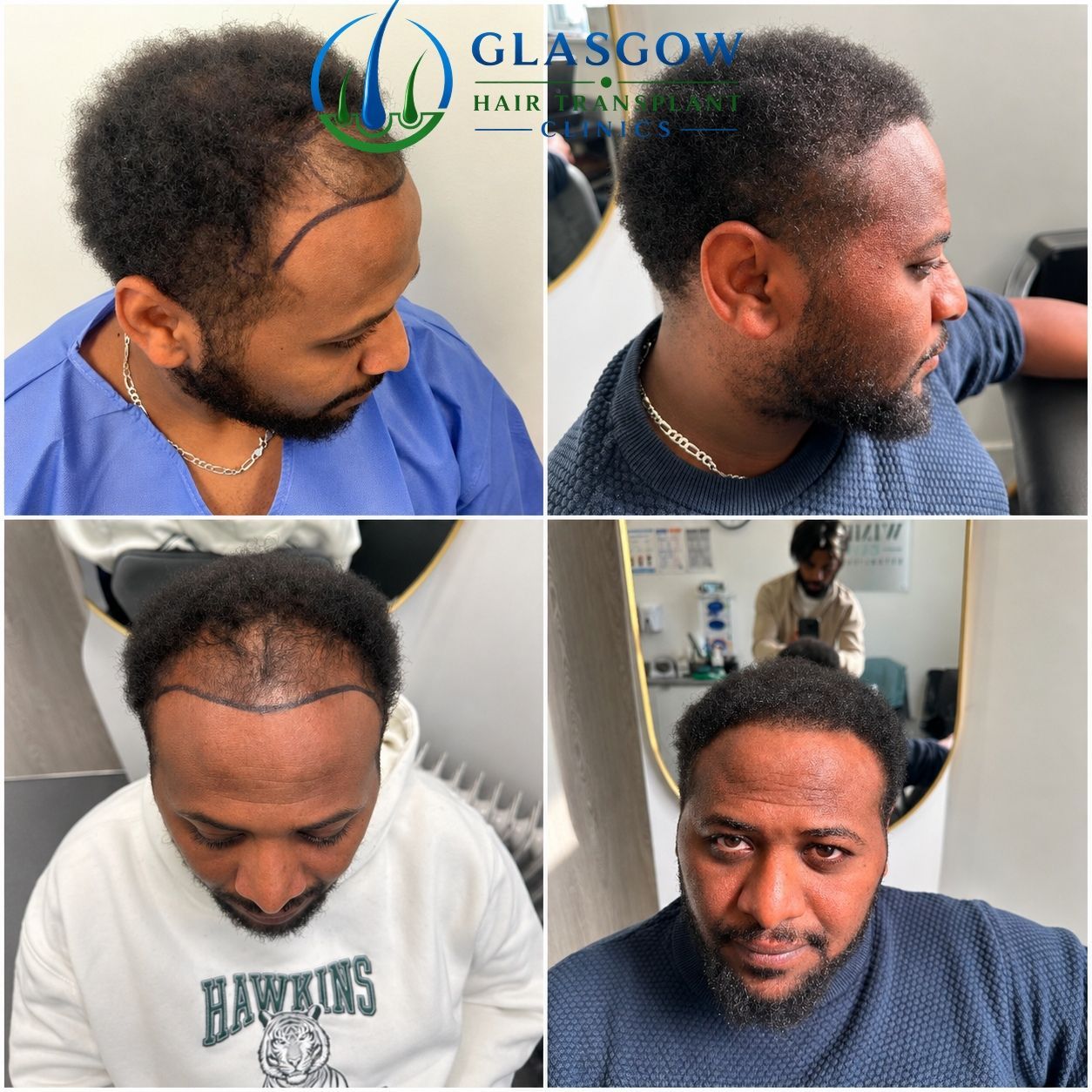
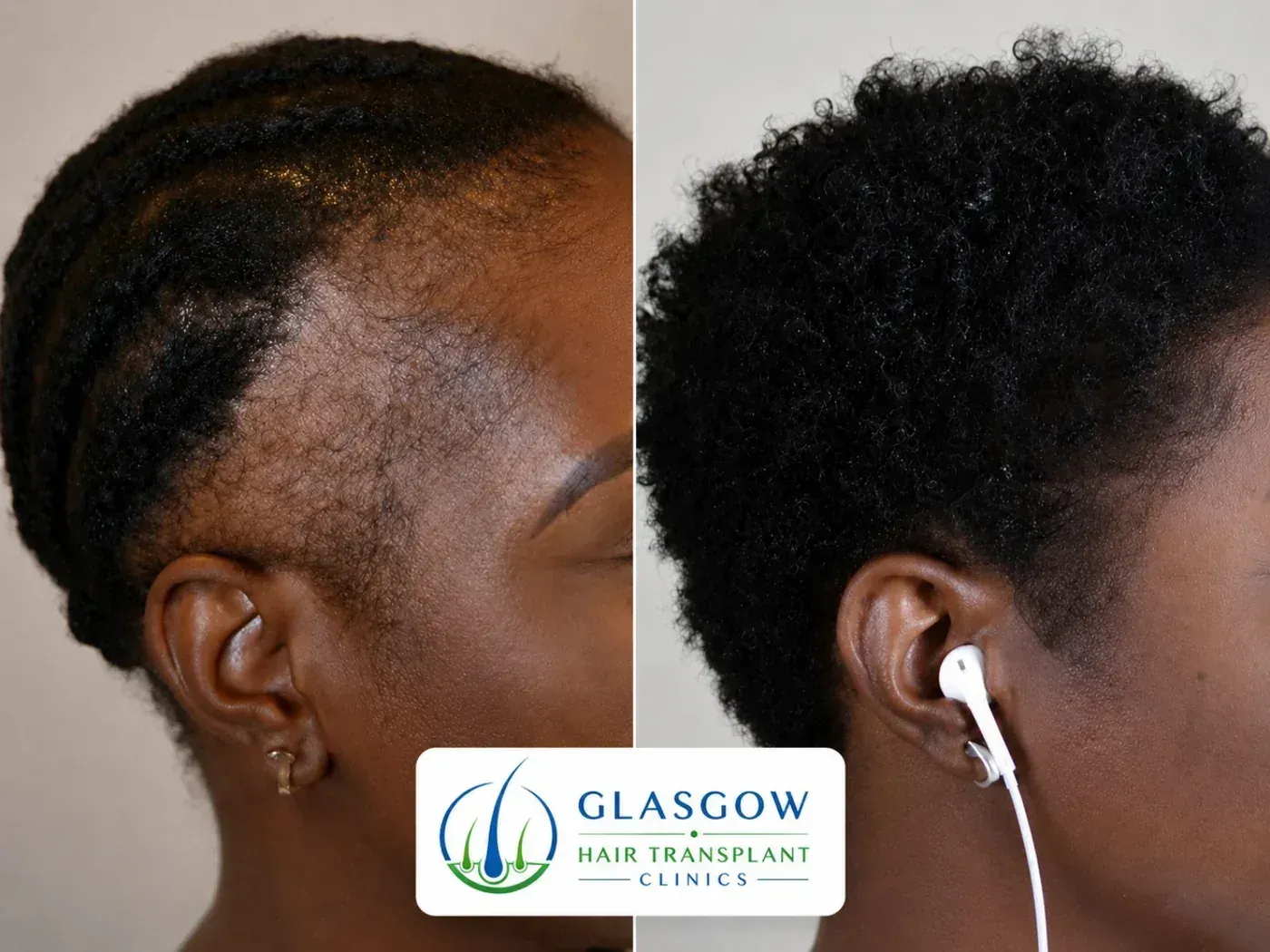
Afro hair transplantation can be considered for frontal recession, temple loss, a receding hairline, frontal thinning and selected areas of permanent hair loss where the donor area is suitable.
Crown restoration requires separate planning because transplanted grafts need to follow the natural whorl while covering a comparatively large surface area. See our crown hair transplant guide for more detail.
The donor scalp is equally important. Every transplanted follicular unit comes from a limited supply of donor hair, so the back and sides must be assessed before promising a particular graft number or density.
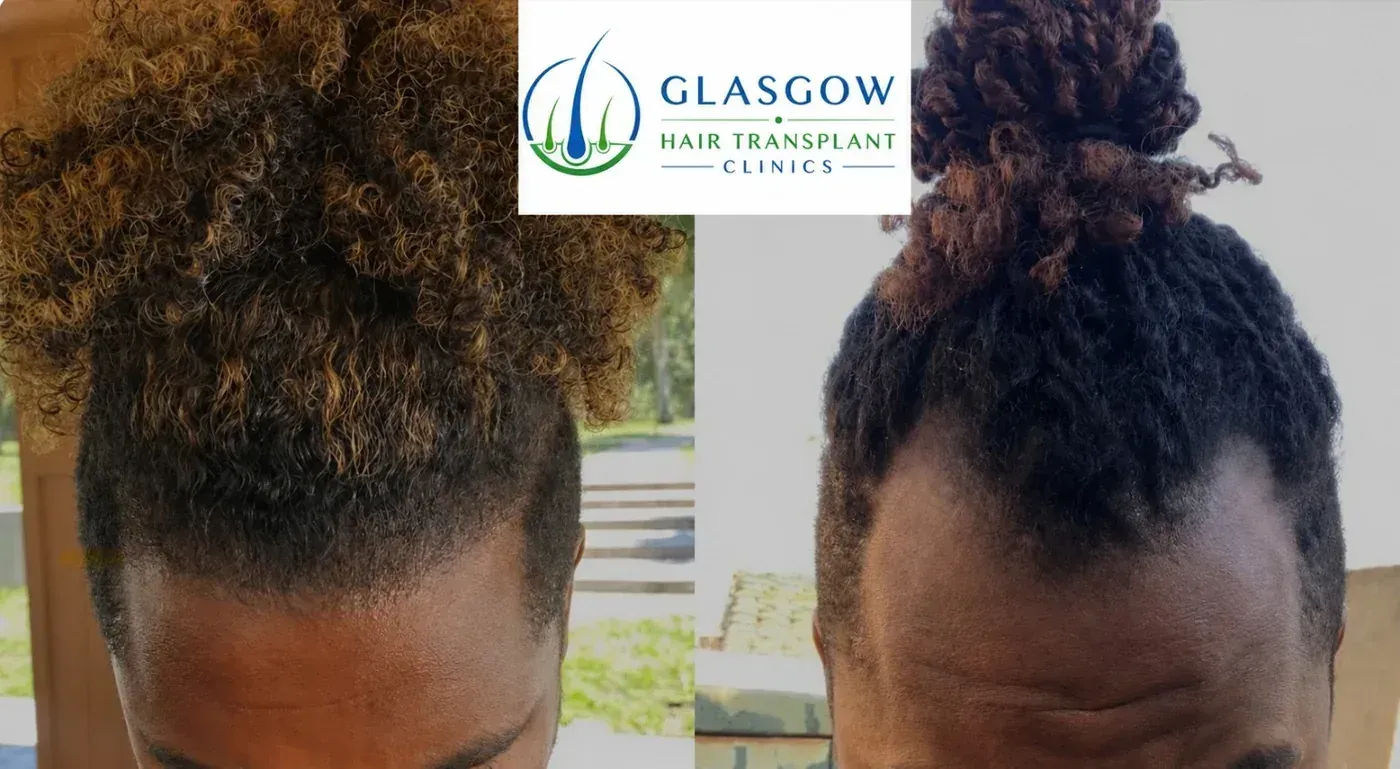
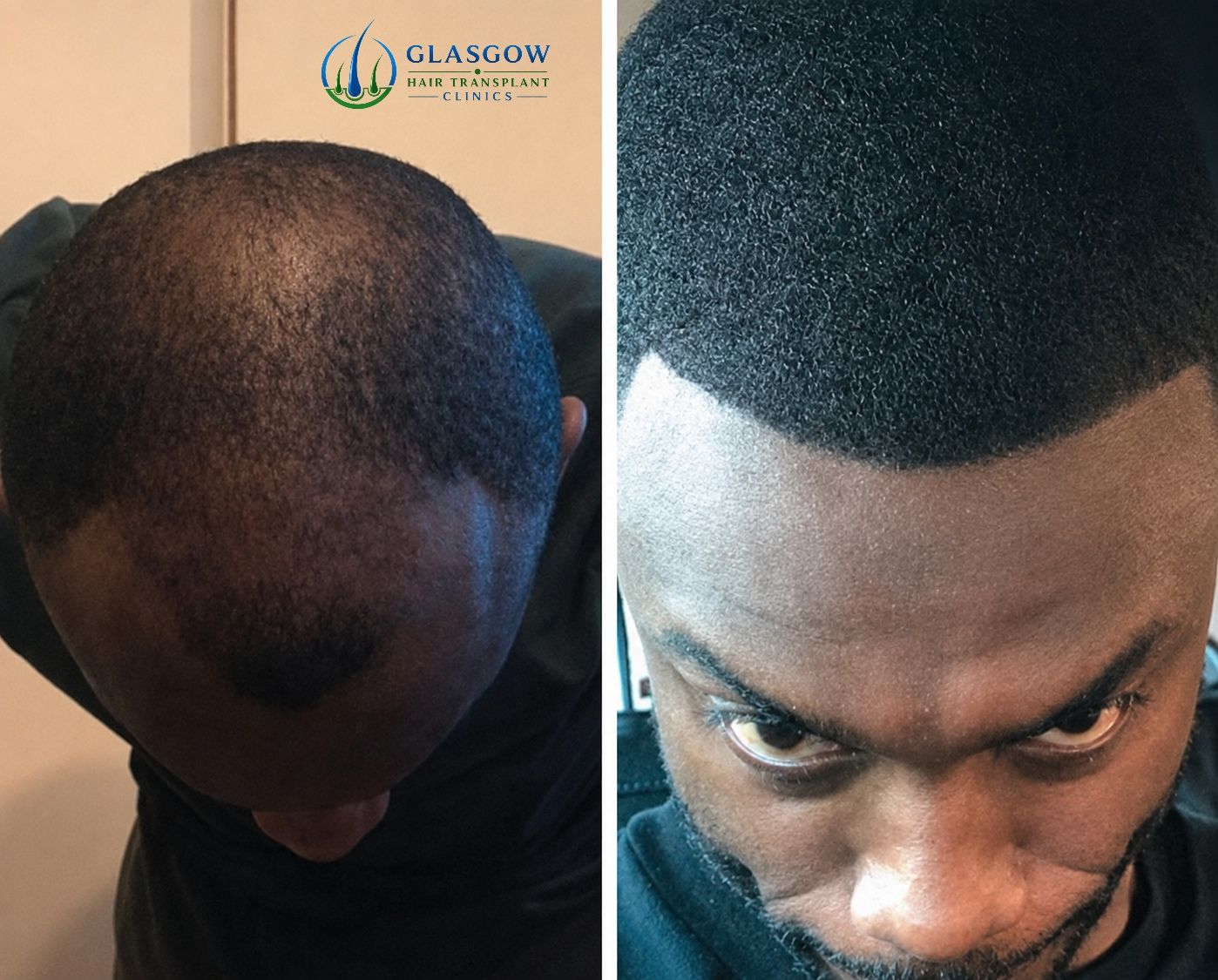
Afro Follicle Curvature and Donor Planning
The main extraction issue with tightly curled hair is not the curl that can be seen above the scalp. It is the route the follicle takes underneath the skin.
A follicular unit may enter the scalp in one direction and then curve below the surface. If an FUE punch follows only the visible shaft, part of the follicle can be cut rather than released intact. This is known as transection.
The degree of curvature is not identical from one patient to another. It can also vary between individual grafts within the same donor area.
Test Extractions
Early test extractions allow the actual follicular shape to be examined before wider harvesting continues. The depth, angle and movement of the extraction instrument can then be adjusted according to the grafts being removed.
This is more useful than assuming that one punch diameter or one extraction angle will suit every patient with tightly curled hair.
Protecting Donor Density
Curl can make a donor area look visually dense because each shaft occupies more space once it grows. The underlying follicle supply is still finite.
Removing too many grafts, or concentrating extraction heavily into one part of the donor region, can permanently reduce the density at the back and sides of the scalp.
The number of grafts removed therefore needs to be considered alongside the surface area being harvested, existing donor density and whether further hair loss may create a need for another procedure later.
Hairline Direction and Curl
Frontal placement also needs to account for the way curly hair sits once it gains length. Hair along the leading edge, temple corners and frontal scalp does not all emerge at one identical angle.
The front edge should remain softer than the density immediately behind it. Suitable single-hair follicular units can be used at the leading edge while stronger units contribute more coverage farther into the frontal scalp.
More detail on frontal design is covered on our hairline transplant page.
Hair Loss and Afro Hair Transplant Suitability
The diagnosis matters before the graft number or transplant technique is decided. Pattern hair loss, traction alopecia and scarring alopecia can produce visibly thin areas of scalp, but the underlying follicle damage is different.
Pattern Hair Loss
Androgenetic alopecia gradually miniaturises susceptible follicles. In men this often begins around the temples or frontal hairline and can later extend through the mid-scalp and crown.
A transplant can replace hair in established areas of loss, but it does not prevent untreated native follicles from continuing to miniaturise. The position and density of the transplant therefore need to make sense if the surrounding pattern continues changing.
Traction Alopecia
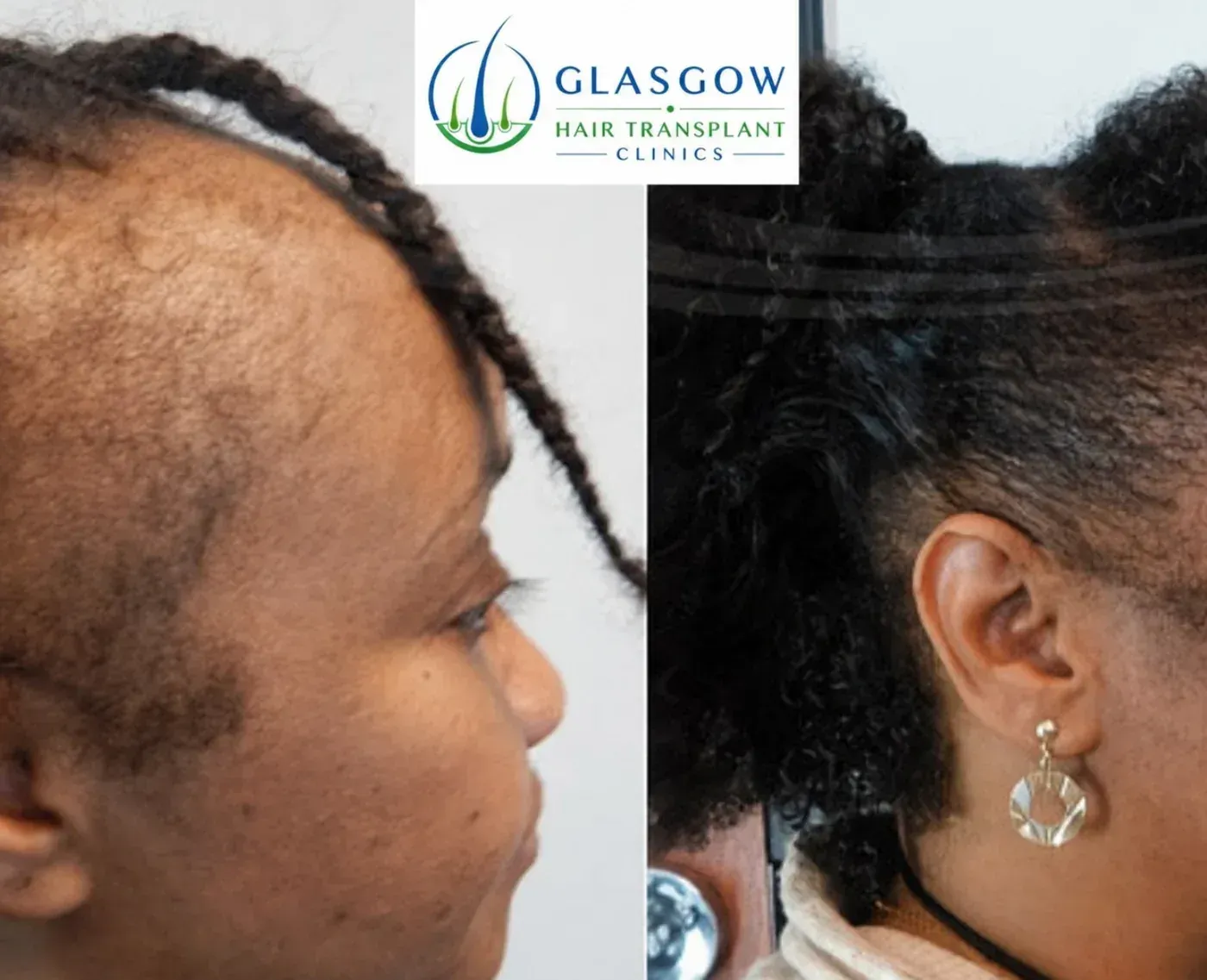
Repeated tension from braids, extensions, tightly secured locs, ponytails and other hairstyles can damage follicles, particularly around the frontal and temporal margins.
Earlier traction-related loss can sometimes recover after the source of tension is removed. Longstanding traction can cause permanent follicular loss. A transplant is considered differently in a stable permanently affected area than in hair that may still recover.
CCCA
Central centrifugal cicatricial alopecia is a scarring form of hair loss in which inflammation damages follicles and they are eventually replaced by scar tissue.
It often begins through the central scalp and can spread outwards. Burning, tenderness, itching, breakage or loss of follicular openings can be relevant signs when the scalp is examined.
Where inflammatory or scarring alopecia is suspected, establishing and managing the underlying condition comes before transplant planning.
Who Can Be Considered for Surgery?
A suitable case needs a recipient area where transplantation makes clinical sense and a donor region capable of supplying the required grafts without creating unacceptable thinning.
The size of the area, the amount of native hair remaining, donor density, follicle characteristics, previous surgery and the likely future pattern all affect that assessment.
FUE, DHI and FUT for Afro Hair
Afro-textured hair does not require one single transplant technique. The choice depends on the shape of the donor follicles, donor density, graft requirement, previous surgery, hairstyle and the type of donor scarring the patient is prepared to accept.
FUE
Individual follicular units are removed from the donor region through small circular extraction sites.
With tightly curled hair, the main technical challenge is the path of the follicle beneath the scalp. The visible hair shaft may leave the skin in one direction while the follicle curves below the surface.
Extraction therefore needs to account for that curvature while also distributing graft removal through the donor region so that donor density is preserved.
DHI
DHI principally relates to the implantation stage rather than the method used to obtain the donor follicles.
Prepared grafts are loaded into an implanter device and positioned into the recipient area according to the planned angle, direction and distribution.
Using an implanter does not change the anatomy of tightly curled donor follicles. If those grafts are harvested individually, the extraction stage still has to account for follicle curvature before implantation can take place.
FUT
FUT removes a narrow strip of donor scalp which is then dissected into individual follicular-unit grafts before implantation.
The technique leaves a linear donor scar. However, the follicles are separated from the removed donor tissue rather than each follicular unit being individually punched while it remains curved beneath the scalp.
Whether FUE, DHI or FUT is appropriate depends on the individual donor anatomy, follicular curvature, graft requirement, previous surgery, preferred hairstyle and overall treatment plan.
Afro Hair Transplant Recovery
Immediately after treatment, small crusts are visible around the newly implanted grafts and the donor scalp begins healing from the extraction or strip-harvesting stage.
During this period the grafts should not be rubbed, scratched or subjected to ordinary styling. Washing follows the post-operative instructions provided after surgery.
Braids, Extensions and Styling
Tight braids, extensions or other hairstyles that create significant traction should not be placed across healing donor or recipient areas.
Chemical relaxers, adhesives, edge-control products and high heat should also wait until the scalp has healed sufficiently for their use to be discussed safely.
The complete early recovery instructions are covered in our hair transplant aftercare guide.
Shedding
Many transplanted hair shafts shed during the first part of recovery. The visible shaft and the transplanted follicle beneath the scalp are not the same thing, so shedding does not by itself mean that the graft has been lost.
Our hair transplant shedding guide explains this stage in more detail.
New Growth
New growth develops gradually rather than appearing at one fixed date. Early hairs can be fine and uneven because individual follicles do not all enter active growth simultaneously.
As more follicles become active, the transplanted hair gains length and calibre. With tightly curled hair, the visual coverage also changes as the new shafts become long enough for their curl pattern to develop.
Month-by-month development is covered in our hair transplant timeline.
Afro Hair Transplant Cost in Glasgow
An Afro hair transplant in Glasgow typically costs between £3,000 and £8,000, depending on the size of the treatment area, the number of grafts required and the complexity of the procedure.
A smaller procedure to restore limited temple recession or part of the frontal hairline will usually require fewer grafts than treatment extending across the complete frontal scalp or into a large crown area.
Donor density, follicle curvature, previous transplant surgery and the extraction technique can also affect the amount of surgical work required.
Current pricing information is available on our hair transplant cost page.
How Many Grafts Are Needed?
There is no standard graft number for Afro-textured hair. Curl can create strong visual coverage, but the number of grafts still depends on the size of the recipient area, the amount of existing hair and the supply available in the donor region.
A patient restoring relatively small temple corners may require substantially fewer grafts than somebody rebuilding the complete frontal hairline or treating a large crown.
The graft estimate should therefore be based on measurements of the treatment area and examination of the donor scalp rather than copied from another patient's transplant.
Planning for Future Hair Loss
Donor follicles are a finite resource. Once a follicular unit has been moved from the donor area, it cannot be used to restore another part of the scalp later.
This becomes particularly important when frontal recession is accompanied by developing thinning through the mid-scalp or crown.
Hairline position, treatment density and graft allocation should therefore be planned with the likely long-term pattern of hair loss in mind rather than concentrating only on the area that is currently most visible.
Patients can also read about our no-deposit scheme.
Afro Hair Transplant Planning With Dr Kalra
The donor area and recipient area need to be examined together. Curl pattern, follicle curvature, donor density, previous styling, the diagnosis and the wider pattern of thinning all affect what can reasonably be transplanted.
Dr Harpreet Kalra can also consider whether FUE, DHI or FUT fits the donor anatomy and how many grafts should remain available if other parts of the scalp become thinner later.
Dr Kalra is registered with the General Medical Council under reference 7126076.
How to Get to Our Glasgow Clinic
Glasgow Hair Transplant Clinics is based at Tay House on Bath Street, close to Charing Cross in Glasgow city centre. The clinic can be reached from across Glasgow and the wider Central Belt by train, subway, bus or car.
Glasgow Hair Transplant Clinics
Tay House
300 Bath Street
Glasgow
G2 4JR
Tay House sits towards the western side of Glasgow city centre, close to the Charing Cross end of Bath Street.
- Train: Charing Cross railway station is nearby. Patients arriving through Glasgow Central or Glasgow Queen Street can continue towards Bath Street on foot, by local bus or by taxi.
- Subway: Buchanan Street Subway provides another route into the city centre. From Buchanan Street, continue west towards Bath Street and Charing Cross.
- Bus: Bath Street, Sauchiehall Street and the surrounding city-centre streets are served by regular local bus services, with stops within walking distance of Tay House.
Patients travelling by car can approach Glasgow city centre from the M8. Public car parks and on-street parking are available around Bath Street, Sauchiehall Street and Charing Cross.