
Hormones and female hair loss: what the evidence shows
Hormones are the primary regulators of the female hair growth cycle, and disruptions to their balance are among the most common female hair loss causes. The role of hormones in female hair loss is not limited to a single chemical signal. Oestrogen, androgens such as dihydrotestosterone (DHT), progesterone, cortisol, and thyroid hormones each influence how hair follicles grow, rest, and shed. Understanding which hormones are involved, and why, is the first step towards finding a management approach that actually works for you.


The role of hormones in female hair loss explained
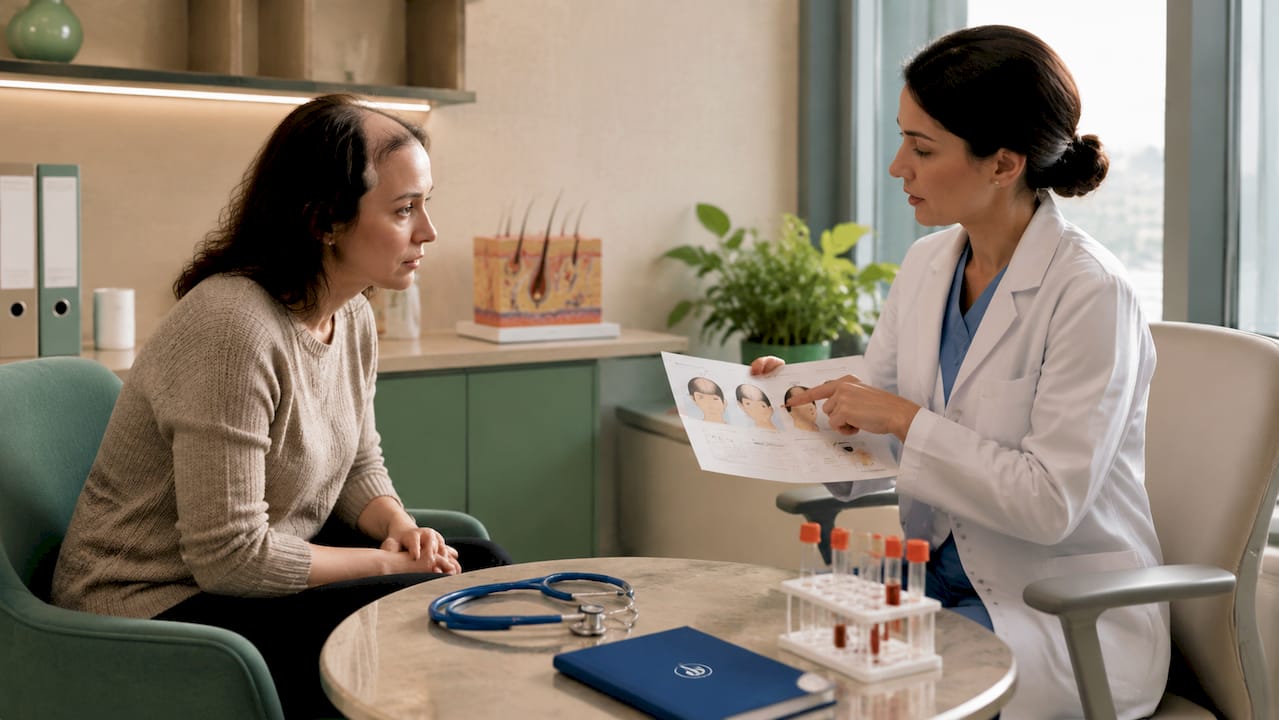
Hormones are the primary regulators of the female hair growth cycle, and disruptions to their balance are among the most common female hair loss causes. The role of hormones in female hair loss is not limited to a single chemical signal. Oestrogen, androgens such as dihydrotestosterone (DHT), progesterone, cortisol, and thyroid hormones each influence how hair follicles grow, rest, and shed. Understanding which hormones are involved, and why, is the first step towards finding a management approach that actually works for you.
Which hormones drive female hair loss?
The hair follicle is one of the most hormonally sensitive structures in the body. Each follicle cycles through three phases: anagen (active growth), catagen (transition), and telogen (shedding). Hormones determine how long each phase lasts, which directly controls hair density and thickness.
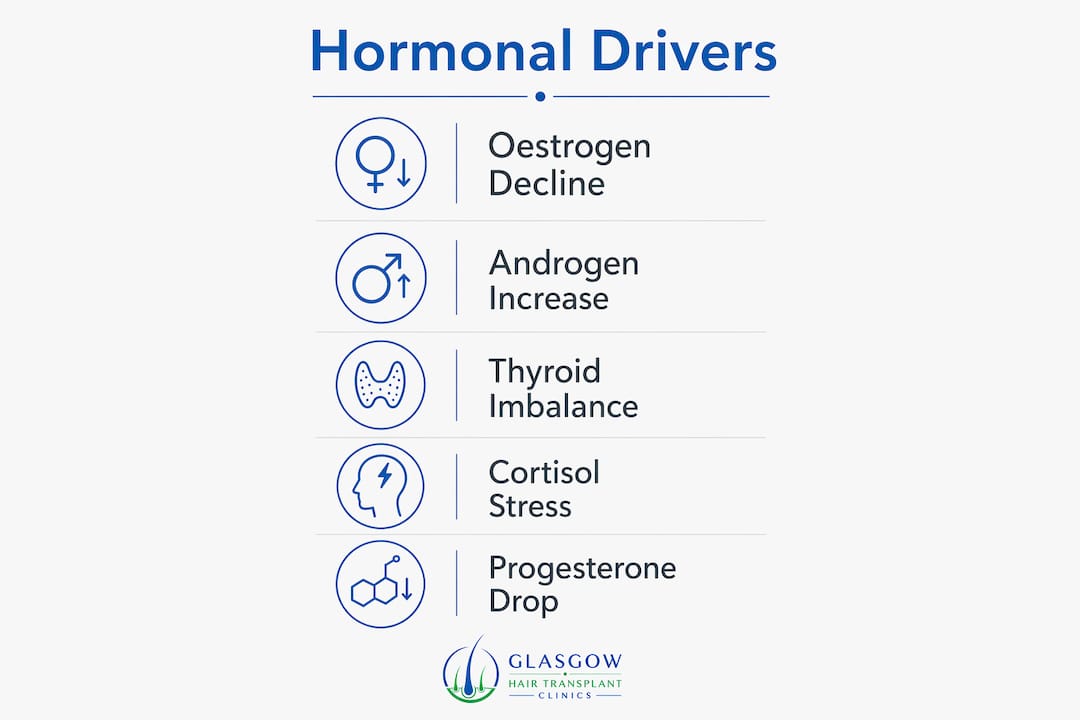
The key hormones involved are:
- Oestrogen promotes the anagen phase, keeping hair in active growth for longer. When oestrogen levels fall, follicles spend more time in telogen, producing noticeable thinning. Oestrogen and hair thinning are closely linked, particularly during perimenopause and menopause.
- DHT (dihydrotestosterone) is converted from testosterone by the enzyme 5-alpha reductase. The role of DHT in hair loss is to bind to androgen receptors in follicles, causing them to shrink progressively. This process, called follicle miniaturisation, is the defining mechanism of female pattern hair loss (androgenetic alopecia).
- Progesterone naturally inhibits 5-alpha reductase, reducing DHT conversion. When progesterone declines, this protective effect weakens and androgen activity at the follicle increases.
- Cortisol , the primary stress hormone, triggers telogen effluvium. Elevated cortisol levels push large numbers of follicles into the shedding phase simultaneously, causing diffuse hair loss that typically appears two to three months after a stressful event.
- Thyroid hormones (T3 and T4) regulate the metabolic rate of every cell, including follicle cells. Both hypothyroidism and hyperthyroidism disrupt the hair cycle, producing brittle, thinning hair and increased shedding.
Pro Tip: If you notice diffuse shedding rather than a receding hairline, cortisol and thyroid hormones are often the first suspects. Ask your GP for a full thyroid panel alongside a hormone screen.
The effects of hormones on hair are rarely isolated. Most women experiencing significant hair loss have more than one hormonal factor at play simultaneously.
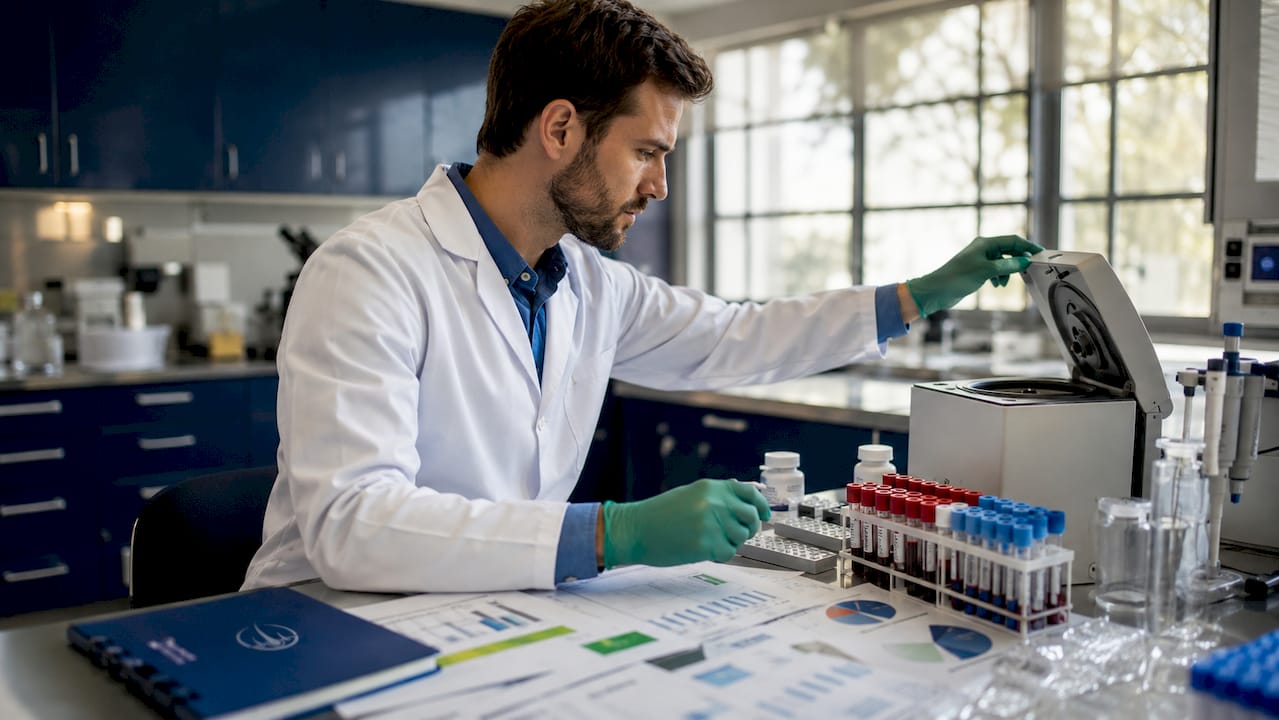
How do life stages and medical conditions cause hormonal hair loss?
Hormonal imbalance hair loss does not occur randomly. It follows predictable patterns tied to specific life events and underlying health conditions.
-
Menopause and perimenopause. Declining oestrogen and progesterone relative to androgen activity is the central driver of hair loss due to menopause. A 2026 survey of nearly 6,000 women found that 50% reported hair thinning during perimenopause and menopause. That figure confirms hair thinning is not a minor side effect of this life stage. It is a widespread physiological consequence of hormonal change. Elevated Luteinising Hormone (LH) during menopause adds a further complication. LH can accelerate follicle ageing independently of androgens, triggering oxidative stress and cellular senescence in follicles. This means hair loss in menopausal women has at least two distinct hormonal pathways operating at once.
-
Polycystic ovary syndrome (PCOS). PCOS is the most common endocrine disorder in women of reproductive age. Approximately 70% of women with PCOS exhibit insulin resistance, which lowers sex hormone-binding globulin (SHBG) and raises free testosterone. More free testosterone means more DHT conversion and faster follicle miniaturisation.
-
Metabolic syndrome. The connection between metabolic health and hair is frequently overlooked. Research shows that 59.4% of women with female pattern hair loss have metabolic syndrome. Insulin resistance, elevated triglycerides, and central obesity all alter androgen metabolism in ways that accelerate hair thinning.
-
Thyroid disease. Both an underactive and overactive thyroid disrupt the hair cycle. Thyroid hormones and hair health are directly connected because follicle cells require stable T3 and T4 levels to maintain normal cycling. Thyroid-related hair loss often presents as generalised thinning across the entire scalp rather than patterned loss.
Pro Tip: If you have been diagnosed with any thyroid condition, request a ferritin (stored iron) test at the same time. Iron deficiency and thyroid dysfunction frequently co-exist and compound each other’s effect on hair.
Female hair loss rarely results from a single cause. Nutritional deficiencies, hormonal shifts, and lifestyle factors typically overlap, which is why addressing only one factor often produces limited results.
What diagnostic approaches identify hormonal hair loss?
Accurate diagnosis separates hormonal hair loss from other causes and prevents ineffective treatment. UK specialists use a combination of clinical and laboratory methods.
Clinical examination tools:
- Dermoscopy allows a specialist to examine follicle diameter and density at the scalp surface. It can identify miniaturised follicles characteristic of androgenetic alopecia before hair loss becomes visually obvious.
- The pull test assesses active shedding. A positive result, where more than six hairs are removed with gentle traction, indicates telogen effluvium or another active shedding condition.
Blood tests to request:
Hormones and female hair loss: what the evidence shows

Hormonal changes can affect the hair-growth cycle, but they are not the only explanation for hair loss in women. Genetics, illness, iron deficiency, medicines, weight loss, stress and inflammatory scalp conditions can all produce thinning or shedding. The pattern and speed of the change are often more informative than assuming one hormone is responsible.
Female pattern hair loss is the most common form of hair loss in women. It usually develops gradually, with a wider central parting and reduced density over the top of the scalp while the frontal hairline often remains in place. The British Association of Dermatologists describes both genetic and hormonal factors, although many affected women do not have raised androgen levels.
How hormones fit into female hair loss
Each follicle moves through growth, transition and resting phases. A major physical change can move more follicles than usual into the resting phase, leading to diffuse shedding several months later. This is called telogen effluvium. It differs from the gradual follicle miniaturisation seen in female pattern hair loss.
Hormones are particularly relevant when hair loss appears alongside other changes:
- Polycystic ovary syndrome (PCOS): female pattern hair loss can occur with androgen excess. Irregular periods, acne, increased facial or body hair and difficulty becoming pregnant are reasons to speak to a GP.
- Perimenopause and menopause: thinning is more common in later life, but age, genetics, health and medicines can overlap. Menopause should not be assumed to be the sole cause.
- Thyroid disease: both an underactive and an overactive thyroid can be associated with diffuse loss. Thyroid testing is useful when the history or other symptoms suggest it.
- Pregnancy and childbirth: increased shedding often begins after childbirth. This is usually telogen effluvium and commonly improves as the hair cycle settles.
- Changes to medicines: some medicines and changes to hormonal treatment can alter shedding. Ask the prescriber to review the timing rather than stopping a medicine without advice.
Stressful events can also trigger telogen effluvium. This does not make cortisol the routine first test, nor does stress explain every case of diffuse loss. The medical history and scalp examination come first.
The pattern and pace of change matter
Gradual thinning through the central parting or crown, with a normal-looking scalp, is typical of female pattern hair loss. Telogen effluvium tends to cause a more sudden increase in shedding from across the scalp, often around three months after illness, surgery, childbirth, marked weight loss or another major physical or emotional stress.
Smooth round patches may indicate alopecia areata. Redness, scale, pain, burning, a smooth or shiny area, eyebrow loss or recession in a band around the frontal hairline can point to another condition that needs medical assessment. The clinic's guide to types of alopecia explains why patchy, diffuse and scarring patterns are assessed differently.
Which blood tests may be useful?
There is no single female hair-loss panel that everyone needs. Diagnosis begins with the duration and pattern of loss, recent health changes, menstrual history, medicines, diet, family history and examination of the scalp.
NICE advises considering thyroid function, a full blood count, ferritin and vitamin D, particularly when telogen effluvium is suspected. Tests for androgen excess may be appropriate when hair loss occurs with irregular periods, acne, increased facial hair or other features of PCOS. Dermoscopy and, less commonly, a scalp biopsy may be needed when examination does not give a clear diagnosis.
Ferritin has no universal hair-growth target
Ferritin is used to assess iron stores, and iron deficiency can contribute to diffuse shedding. Claims that every patient needs a ferritin result of 70 or 100 micrograms per litre for hair growth are not based on an agreed clinical threshold. Results must be interpreted with the laboratory range, full blood count, symptoms and factors such as inflammation, which can raise ferritin.
Do not start iron supplements solely because of an online hair-loss target. A GP can confirm whether iron deficiency is present, investigate its cause and advise on treatment.
Treatment follows the diagnosis
When shedding is linked to illness, iron deficiency, thyroid disease, a medicine or another identifiable trigger, treatment focuses on that cause. Telogen effluvium usually improves without a hair-growth medicine, although it can take months for the previous volume to return.
Topical minoxidil may slow female pattern hair loss and produce partial regrowth in some women. It usually needs at least six months before benefit can be judged, and any benefit lasts only while treatment continues. Scalp irritation and a temporary increase in shedding can occur.
Topical minoxidil should not be used during pregnancy or while breastfeeding. The British Association of Dermatologists also advises avoiding it when planning a pregnancy. If you become pregnant while using minoxidil, stop using it and contact your GP or pharmacist for advice.
A dermatologist may sometimes consider low-dose oral minoxidil or an anti-androgen such as spironolactone. These medicines are not licensed for female pattern hair loss in the UK and require individual assessment, monitoring and specific pregnancy precautions. HRT may be prescribed for appropriate menopause symptoms, but it is not a hair-loss treatment and should not be started simply in the hope of reversing thinning.
Wigs, hairpieces and fibre products can provide useful camouflage. Evidence for platelet-rich plasma remains limited, and it should not be presented as a guaranteed way to restart growth. Hair transplantation is considered only for selected women with permanent, stable loss and a suitable donor area. The clinic's hair transplant guide for women explains how suitability and donor supply are assessed.
When to speak to your GP
Arrange a GP appointment if hair loss is sudden, patchy, painful or inflamed, or appears with fatigue, unexplained weight change, irregular periods, increased facial hair or eyebrow loss. Seek advice as well if shedding persists, the scalp is becoming more visible or the change is affecting your wellbeing. NHS guidance recommends establishing the cause before approaching a commercial hair clinic.
This article provides general information and cannot diagnose the cause of hair loss or recommend treatment for an individual reader.
The clinic's hair loss advice hub has more information on common patterns and assessment.
About the author

Dr Harpreet Kalra is a GP and hair-transplant surgeon involved in consultation-led treatment planning at Glasgow Hair Transplant Clinics. His assessments consider the cause and pattern of loss, the condition of the existing hair and whether medical or surgical treatment is appropriate.
UK specialists use dermoscopy, pull tests, and blood work including ferritin and thyroid hormones to diagnose persistent hair loss and exclude non-hormonal causes. Blood tests alone, however, do not tell the full story. Blood hormone levels may appear normal despite hair follicles being genetically sensitive to androgens. This means a woman can have standard circulating hormone levels and still experience significant androgen-driven hair loss. Clinical context always matters more than a single result.
Trichologists and dermatologists emphasise thorough history-taking covering menstrual cycle patterns, dietary habits, stress levels, and medications. That information differentiates telogen effluvium from androgenetic alopecia and guides treatment decisions far more reliably than blood tests alone.
How can hormone-driven female hair loss be managed?
Treatment works best when it matches the specific hormonal pattern identified through diagnosis. No single approach suits every woman.
Medical and hormonal treatments:
- Hormone replacement therapy (HRT) restores oestrogen and progesterone levels in menopausal women. For women whose hair thinning is directly linked to declining oestrogen, HRT can slow or partially reverse the process. Discuss the risks and benefits with a GP or menopause specialist before starting.
- Anti-androgens reduce DHT’s effect at the follicle. Specialist-prescribed anti-androgens like spironolactone and finasteride are used off-label in the UK under dermatological care with close monitoring. These are not over-the-counter options. They require specialist supervision due to their hormonal effects and potential interactions.
- Minoxidil is the only topical treatment currently licensed for female pattern hair loss in the UK. It extends the anagen phase and is often used alongside hormonal treatments.
Lifestyle and nutritional approaches:
- Reducing chronic stress through practices such as regular exercise, sleep hygiene, and mindfulness directly lowers cortisol levels and reduces stress-related shedding.
- Correcting iron deficiency through diet or supplementation is a foundational step. Ferritin levels below 70 kg/L are associated with impaired hair growth even when anaemia is absent.
- Vitamin D deficiency is common in the UK and linked to disrupted hair cycling. Supplementation is low-risk and frequently beneficial.
- A diet that supports stable blood glucose reduces insulin resistance and, in turn, lowers free androgen levels. This is particularly relevant for women with PCOS.
When to consider advanced treatments:
When hormonal management stabilises hair loss but density does not recover sufficiently, surgical and non-surgical options become relevant. Female hair transplant procedures using Follicular Unit Extraction (FUE) or Direct Hair Implantation (DHI) can restore density in areas of permanent follicle loss. Platelet Rich Plasma (PRP) therapy is a non-surgical option that stimulates follicle activity and complements medical management. You can also treat female hair loss naturally through targeted nutritional and lifestyle changes as a first-line approach before considering procedures.
Key takeaways
Hormonal imbalance is the most common and most treatable underlying driver of female hair loss, but it rarely acts alone.
| Point | Details |
|---|---|
| Multiple hormones are involved | Oestrogen, DHT, progesterone, cortisol, and thyroid hormones each affect the hair cycle differently. |
| Life stages are high-risk periods | Menopause, perimenopause, and PCOS create hormonal conditions that accelerate follicle miniaturisation. |
| Blood tests have limits | Normal hormone levels do not rule out hormonal hair loss if follicles are genetically sensitive to androgens. |
| Diagnosis requires full assessment | Dermoscopy, pull tests, hormone panels, ferritin, and detailed personal history together produce the most accurate picture. |
| Treatment must match the cause | HRT, anti-androgens, lifestyle changes, and advanced procedures each suit different hormonal profiles. |
Why I think most women are told too little, too late
What strikes me most, having worked alongside specialists in this field for years, is how often women are told their hair loss is “just ageing” or “just stress” without any real investigation. That dismissal is not just unhelpful. It delays treatment during the window when intervention is most effective.
The science is clear that female hair loss is a systemic symptom, not a cosmetic inconvenience. When a woman in her forties notices her parting widening, that is a signal worth investigating fully. It may reflect declining oestrogen, rising free androgens, insulin resistance, thyroid dysfunction, or a combination of all four. Each of those has a management pathway.
What I have also seen is that women who bring a detailed personal log to their consultation, covering cycle changes, dietary shifts, stress events, and medication history, get far better outcomes. That information allows a clinician to differentiate telogen effluvium from androgenetic alopecia quickly and accurately. Without it, diagnosis becomes guesswork dressed up as medicine.
My honest view is that the field is moving in the right direction. The recognition that LH can drive follicle ageing independently of androgens is a relatively recent finding, and it changes how we think about menopausal hair loss entirely. There is genuine reason for optimism. But that optimism only translates into results when women push for thorough assessment rather than accepting a surface-level answer.
— Harley
How Glasgowhairtransplantclinics supports women with hormonal hair loss
Women dealing with hormone-related hair loss deserve a clear diagnosis and a treatment plan built around their specific hormonal profile, not a generic response.

Glasgowhairtransplantclinics offers free consultations, online or face to face, where our GMC-registered surgeons and specialists assess your hair loss in full. We work with women across Glasgow, Newcastle, and other UK locations to identify the right combination of medical, non-surgical, and surgical options. From PRP therapy to advanced FUE and DHI procedures, every treatment plan is built around your individual needs. Visit Glasgowhairtransplantclinics to book your consultation and take the first step towards a clear diagnosis.
FAQ
What is the main hormonal cause of female hair loss?
DHT-driven follicle miniaturisation is the primary hormonal mechanism in female pattern hair loss, but declining oestrogen, elevated LH, and thyroid dysfunction each contribute independently.
Can normal hormone blood tests rule out hormonal hair loss?
No. Follicles can be genetically sensitive to androgens even when circulating hormone levels appear within the normal range, so blood tests must be interpreted alongside clinical findings.
Does menopause always cause hair thinning?
Not always, but it is very common. A 2026 survey found 50% of women reported hair thinning during perimenopause and menopause due to declining oestrogen and progesterone relative to androgen activity.
Can stress cause permanent hair loss in women?
Stress-induced telogen effluvium is typically reversible once cortisol levels normalise, but prolonged or repeated episodes can cause cumulative follicle damage that becomes harder to reverse over time.
When should a woman seek specialist help for hair loss?
Seek specialist assessment if shedding persists beyond three months, if you notice patterned thinning at the crown or parting, or if hair loss coincides with other symptoms such as fatigue, irregular cycles, or weight changes.
Recommended
Certifications




Which hormones drive female hair loss?
The hair follicle is one of the most hormonally sensitive structures in the body. Each follicle cycles through three phases: anagen (active growth), catagen (transition), and telogen (shedding). Hormones determine how long each phase lasts, which directly controls hair density and thickness.
The key hormones involved are:
- Oestrogen promotes the anagen phase, keeping hair in active growth for longer. When oestrogen levels fall, follicles spend more time in telogen, producing noticeable thinning. Oestrogen and hair thinning are closely linked, particularly during perimenopause and menopause.
- DHT (dihydrotestosterone) is converted from testosterone by the enzyme 5-alpha reductase. The role of DHT in hair loss is to bind to androgen receptors in follicles, causing them to shrink progressively. This process, called follicle miniaturisation, is the defining mechanism of female pattern hair loss (androgenetic alopecia).
- Progesterone naturally inhibits 5-alpha reductase, reducing DHT conversion. When progesterone declines, this protective effect weakens and androgen activity at the follicle increases.
- Cortisol , the primary stress hormone, triggers telogen effluvium. Elevated cortisol levels push large numbers of follicles into the shedding phase simultaneously, causing diffuse hair loss that typically appears two to three months after a stressful event.
- Thyroid hormones (T3 and T4) regulate the metabolic rate of every cell, including follicle cells. Both hypothyroidism and hyperthyroidism disrupt the hair cycle, producing brittle, thinning hair and increased shedding.
Pro Tip: If you notice diffuse shedding rather than a receding hairline, cortisol and thyroid hormones are often the first suspects. Ask your GP for a full thyroid panel alongside a hormone screen.
The effects of hormones on hair are rarely isolated. Most women experiencing significant hair loss have more than one hormonal factor at play simultaneously.
How do life stages and medical conditions cause hormonal hair loss?
Hormonal imbalance hair loss does not occur randomly. It follows predictable patterns tied to specific life events and underlying health conditions.
-
Menopause and perimenopause. Declining oestrogen and progesterone relative to androgen activity is the central driver of hair loss due to menopause. A 2026 survey of nearly 6,000 women found that 50% reported hair thinning during perimenopause and menopause. That figure confirms hair thinning is not a minor side effect of this life stage. It is a widespread physiological consequence of hormonal change. Elevated Luteinising Hormone (LH) during menopause adds a further complication. LH can accelerate follicle ageing independently of androgens, triggering oxidative stress and cellular senescence in follicles. This means hair loss in menopausal women has at least two distinct hormonal pathways operating at once.
-
Polycystic ovary syndrome (PCOS). PCOS is the most common endocrine disorder in women of reproductive age. Approximately 70% of women with PCOS exhibit insulin resistance, which lowers sex hormone-binding globulin (SHBG) and raises free testosterone. More free testosterone means more DHT conversion and faster follicle miniaturisation.
-
Metabolic syndrome. The connection between metabolic health and hair is frequently overlooked. Research shows that 59.4% of women with female pattern hair loss have metabolic syndrome. Insulin resistance, elevated triglycerides, and central obesity all alter androgen metabolism in ways that accelerate hair thinning.
-
Thyroid disease. Both an underactive and overactive thyroid disrupt the hair cycle. Thyroid hormones and hair health are directly connected because follicle cells require stable T3 and T4 levels to maintain normal cycling. Thyroid-related hair loss often presents as generalised thinning across the entire scalp rather than patterned loss.
Pro Tip: If you have been diagnosed with any thyroid condition, request a ferritin (stored iron) test at the same time. Iron deficiency and thyroid dysfunction frequently co-exist and compound each other’s effect on hair.
Female hair loss rarely results from a single cause. Nutritional deficiencies, hormonal shifts, and lifestyle factors typically overlap, which is why addressing only one factor often produces limited results.
What diagnostic approaches identify hormonal hair loss?
Accurate diagnosis separates hormonal hair loss from other causes and prevents ineffective treatment. UK specialists use a combination of clinical and laboratory methods.
Clinical examination tools:
- Dermoscopy allows a specialist to examine follicle diameter and density at the scalp surface. It can identify miniaturised follicles characteristic of androgenetic alopecia before hair loss becomes visually obvious.
- The pull test assesses active shedding. A positive result, where more than six hairs are removed with gentle traction, indicates telogen effluvium or another active shedding condition.
Blood tests to request:
Hormones and female hair loss: what the evidence shows
Hormonal changes can affect the hair-growth cycle, but they are not the only explanation for hair loss in women. Genetics, illness, iron deficiency, medicines, weight loss, stress and inflammatory scalp conditions can all produce thinning or shedding. The pattern and speed of the change are often more informative than assuming one hormone is responsible.
Female pattern hair loss is the most common form of hair loss in women. It usually develops gradually, with a wider central parting and reduced density over the top of the scalp while the frontal hairline often remains in place. The British Association of Dermatologists describes both genetic and hormonal factors, although many affected women do not have raised androgen levels.
How hormones fit into female hair loss
Each follicle moves through growth, transition and resting phases. A major physical change can move more follicles than usual into the resting phase, leading to diffuse shedding several months later. This is called telogen effluvium. It differs from the gradual follicle miniaturisation seen in female pattern hair loss.
Hormones are particularly relevant when hair loss appears alongside other changes:
- Polycystic ovary syndrome (PCOS): female pattern hair loss can occur with androgen excess. Irregular periods, acne, increased facial or body hair and difficulty becoming pregnant are reasons to speak to a GP.
- Perimenopause and menopause: thinning is more common in later life, but age, genetics, health and medicines can overlap. Menopause should not be assumed to be the sole cause.
- Thyroid disease: both an underactive and an overactive thyroid can be associated with diffuse loss. Thyroid testing is useful when the history or other symptoms suggest it.
- Pregnancy and childbirth: increased shedding often begins after childbirth. This is usually telogen effluvium and commonly improves as the hair cycle settles.
- Changes to medicines: some medicines and changes to hormonal treatment can alter shedding. Ask the prescriber to review the timing rather than stopping a medicine without advice.
Stressful events can also trigger telogen effluvium. This does not make cortisol the routine first test, nor does stress explain every case of diffuse loss. The medical history and scalp examination come first.
The pattern and pace of change matter
Gradual thinning through the central parting or crown, with a normal-looking scalp, is typical of female pattern hair loss. Telogen effluvium tends to cause a more sudden increase in shedding from across the scalp, often around three months after illness, surgery, childbirth, marked weight loss or another major physical or emotional stress.
Smooth round patches may indicate alopecia areata. Redness, scale, pain, burning, a smooth or shiny area, eyebrow loss or recession in a band around the frontal hairline can point to another condition that needs medical assessment. The clinic's guide to types of alopecia explains why patchy, diffuse and scarring patterns are assessed differently.
Which blood tests may be useful?
There is no single female hair-loss panel that everyone needs. Diagnosis begins with the duration and pattern of loss, recent health changes, menstrual history, medicines, diet, family history and examination of the scalp.
NICE advises considering thyroid function, a full blood count, ferritin and vitamin D, particularly when telogen effluvium is suspected. Tests for androgen excess may be appropriate when hair loss occurs with irregular periods, acne, increased facial hair or other features of PCOS. Dermoscopy and, less commonly, a scalp biopsy may be needed when examination does not give a clear diagnosis.
Ferritin has no universal hair-growth target
Ferritin is used to assess iron stores, and iron deficiency can contribute to diffuse shedding. Claims that every patient needs a ferritin result of 70 or 100 micrograms per litre for hair growth are not based on an agreed clinical threshold. Results must be interpreted with the laboratory range, full blood count, symptoms and factors such as inflammation, which can raise ferritin.
Do not start iron supplements solely because of an online hair-loss target. A GP can confirm whether iron deficiency is present, investigate its cause and advise on treatment.
Treatment follows the diagnosis
When shedding is linked to illness, iron deficiency, thyroid disease, a medicine or another identifiable trigger, treatment focuses on that cause. Telogen effluvium usually improves without a hair-growth medicine, although it can take months for the previous volume to return.
Topical minoxidil may slow female pattern hair loss and produce partial regrowth in some women. It usually needs at least six months before benefit can be judged, and any benefit lasts only while treatment continues. Scalp irritation and a temporary increase in shedding can occur.
Topical minoxidil should not be used during pregnancy or while breastfeeding. The British Association of Dermatologists also advises avoiding it when planning a pregnancy. If you become pregnant while using minoxidil, stop using it and contact your GP or pharmacist for advice.
A dermatologist may sometimes consider low-dose oral minoxidil or an anti-androgen such as spironolactone. These medicines are not licensed for female pattern hair loss in the UK and require individual assessment, monitoring and specific pregnancy precautions. HRT may be prescribed for appropriate menopause symptoms, but it is not a hair-loss treatment and should not be started simply in the hope of reversing thinning.
Wigs, hairpieces and fibre products can provide useful camouflage. Evidence for platelet-rich plasma remains limited, and it should not be presented as a guaranteed way to restart growth. Hair transplantation is considered only for selected women with permanent, stable loss and a suitable donor area. The clinic's hair transplant guide for women explains how suitability and donor supply are assessed.
When to speak to your GP
Arrange a GP appointment if hair loss is sudden, patchy, painful or inflamed, or appears with fatigue, unexplained weight change, irregular periods, increased facial hair or eyebrow loss. Seek advice as well if shedding persists, the scalp is becoming more visible or the change is affecting your wellbeing. NHS guidance recommends establishing the cause before approaching a commercial hair clinic.
The clinic's hair loss advice hub has more information on common patterns and assessment.
Questions and answers
Do normal hormone blood tests rule out female pattern hair loss?
No. Female pattern hair loss can occur without an abnormal result on a routine hormone test. Diagnosis considers the pattern of thinning, scalp examination and medical history.
Does everyone with thinning hair need the same blood tests?
No. Tests should be chosen according to the symptoms and examination. Mention menstrual changes, recent pregnancy, weight changes and medicines so the clinician can decide what is relevant.
Should I start hormone treatment to improve my hair?
Do not start or change hormone treatment on the basis of hair thinning alone. Discuss the cause of the loss and the potential benefits and risks of any treatment with your clinician.
About the author
Dr Harpreet Kalra is a GP and hair-transplant surgeon at Glasgow Hair Transplant Clinics. His consultations consider the diagnosis, donor area, existing hair and likely future pattern before treatment is discussed.
Get female hair loss properly assessed
Our Glasgow team can review the pattern, medical history and possible hormonal factors before discussing treatment.
Book a Free Consultation