FUT or surgical scars
A stable linear scar may sometimes be softened with carefully spaced grafts.
Hair transplantation may soften the visibility of selected mature scars, but scar tissue has variable blood supply and cannot be treated like normal scalp.
These images are genuine clinic cases or clinic photographs. They illustrate treatment and recovery but do not guarantee an identical result.

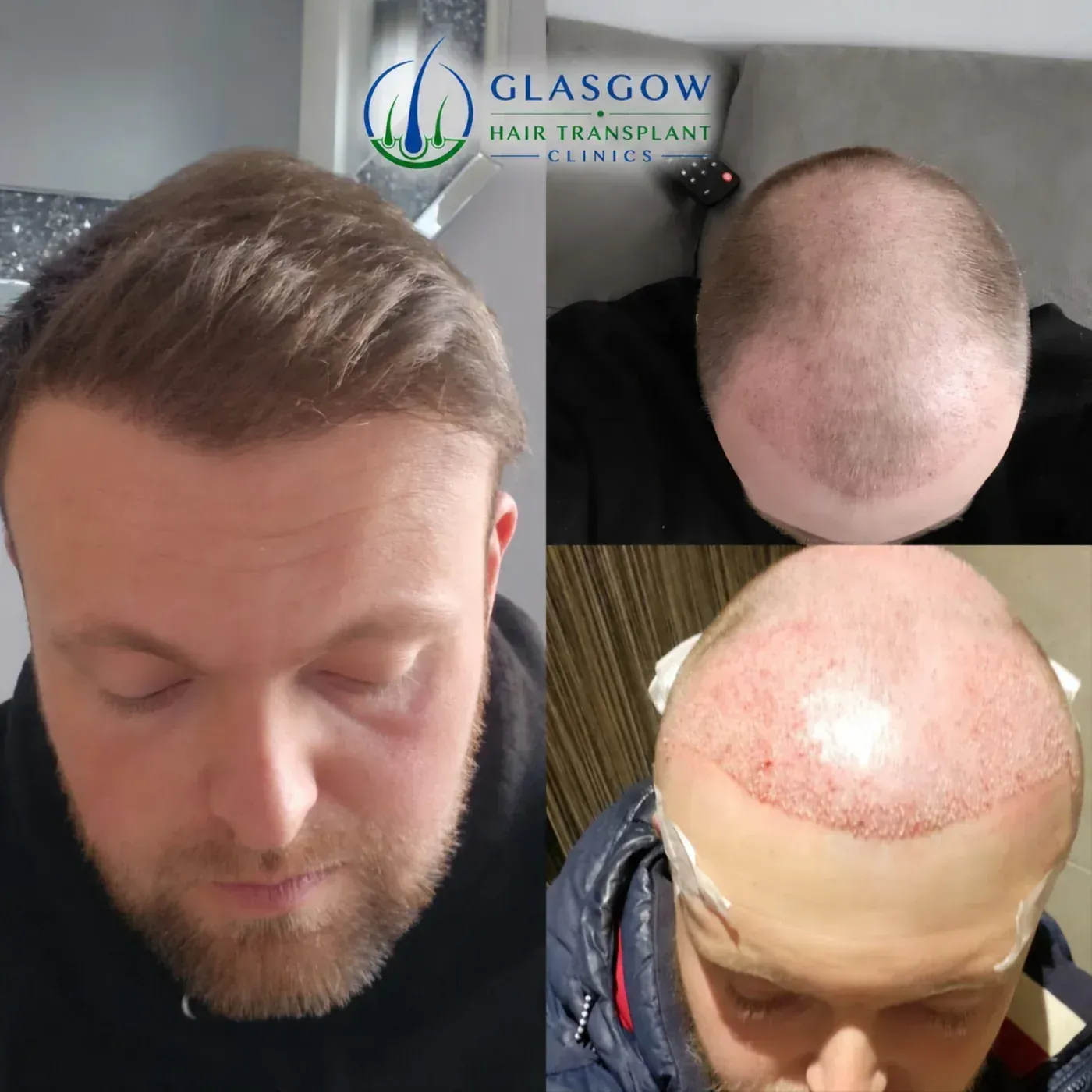
Transplanted hairs may break up the colour and texture contrast between a scar and the surrounding hair-bearing skin. The scar itself remains. The objective is camouflage, not erasure.
A stable linear scar may sometimes be softened with carefully spaced grafts.
Suitability depends on depth, vascularity, thickness, location and whether the scar is fully mature.
Repair may combine grafting, donor camouflage and a broader plan to correct earlier work.
The surgeon should review the cause and age of the scar, skin mobility, colour, thickness, sensation and blood supply. For uncertain scars, a small test session may be considered before committing a larger number of grafts.
Attempting normal-scalp density in one session can overload scar tissue. A safer plan may use conservative spacing, assess growth and add a second stage only if healing and survival justify it.
It may grow in selected scars, but survival is less predictable because scar tissue can have reduced blood supply.
It should normally be mature and stable. The required interval depends on the cause, symptoms and examination findings.
No. The aim is to camouflage the scar with hair; the underlying scar remains.
A small test can show how the scar heals and whether grafts grow before a larger session is planned.
A raised or actively growing keloid needs specialist assessment. Transplant surgery may be unsuitable because additional trauma can worsen scarring.
Start with a free, confidential suitability assessment. There is no obligation to proceed and no upfront deposit is required.
Offering various hair transplant treatments in our Glasgow HIS-registered clinic.
Copyright © 2019 – 2026 Glasgow Hair Transplant Clinics
