Glasgow Hair Transplant Clinics
BEFORE | AFTER
Case study 2,000 grafts
Hairline & temples 12 months post surgery
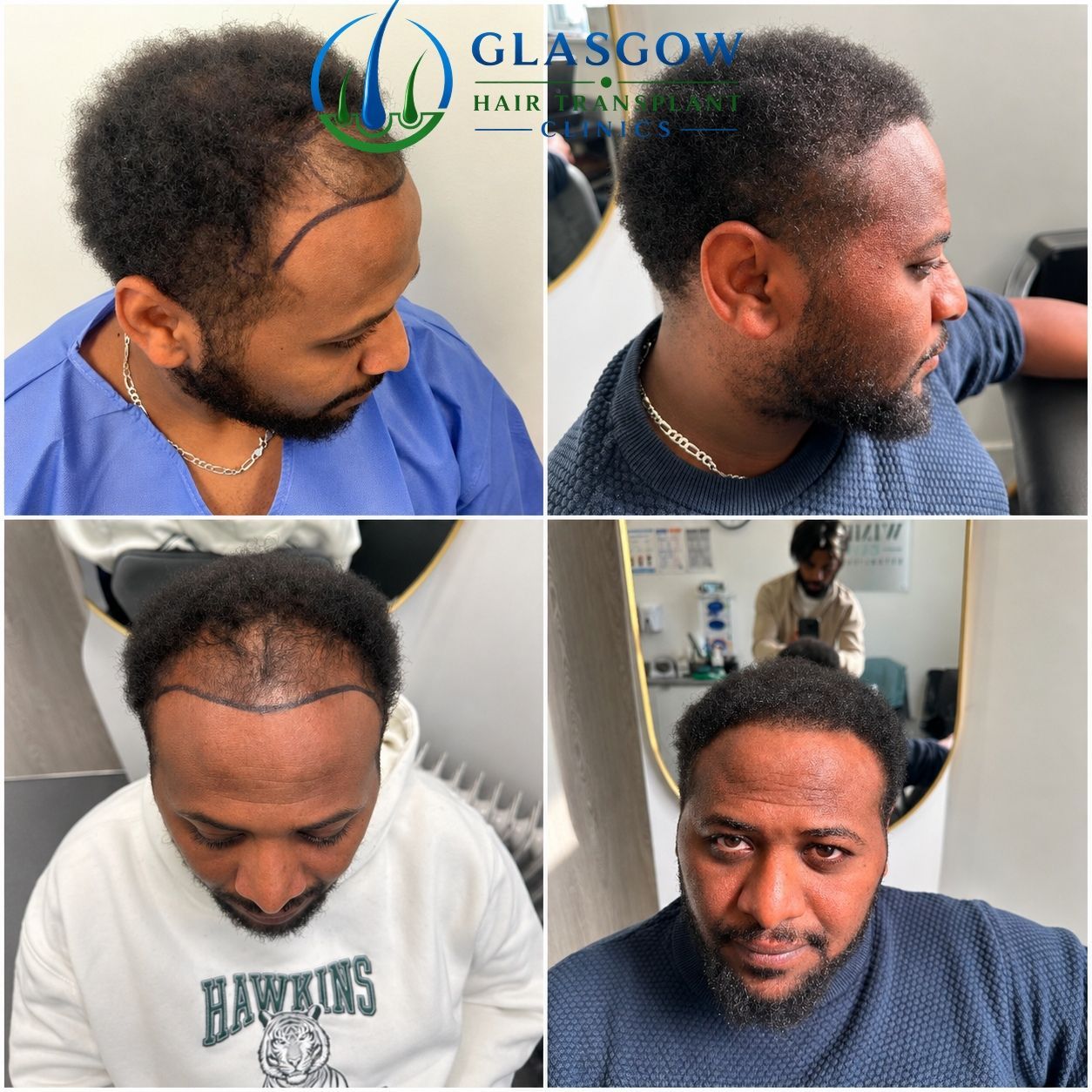


Dr Harpreet Kalra assesses temple shape, donor supply and how the design will age if the surrounding hair continues to recede.
Book a Consultation Certifications



Hairline & temples 12 months post surgery
Hair loss at the temples creates the familiar M-shaped hairline. As the corners move backwards, the forehead looks wider and the central section of the hairline becomes more exposed. This can happen while the hair behind the frontal area still appears reasonably dense.
A temple hair transplant takes healthy follicles from the permanent donor area at the back and sides of the scalp and places them into the recessed corners. The transplanted hair is positioned to reconnect the central hairline with the hair at the sides of the head.
Temple work requires more precision than filling a larger area of the scalp. Natural temple hairs grow at very flat angles and change direction as they approach the side hair. Fine single-hair grafts are used along the visible edge, with stronger follicular units placed behind them to create coverage.
Treatment can be limited to the temples or combined with a wider hairline transplant. The correct plan depends on the amount of recession, donor density, hair characteristics and how the surrounding hair is expected to change in the future.
Temple restoration can be performed using several donor-harvesting and implantation techniques. The chosen method affects how the grafts are collected and placed, but the natural appearance of the result still depends on the temple design, graft selection, angle and direction.
Individual follicular units are removed from the donor area using a small punch during a Follicular Unit Extraction procedure. This allows fine single-hair grafts to be selected for the exposed temple edge, with stronger grafts reserved for coverage behind it.
After individual grafts have been extracted, implantation can be completed using the DHI method and a specialist implanter. The tool assists with placement, while the surgeon controls the spacing, direction and final shape of the restored temples.
When temple restoration forms part of a larger frontal procedure, Follicular Unit Transplantation provides another way to obtain the required grafts. A narrow donor strip is removed and divided into individual follicular units before placement.
Hairline & temples 12 months post surgery
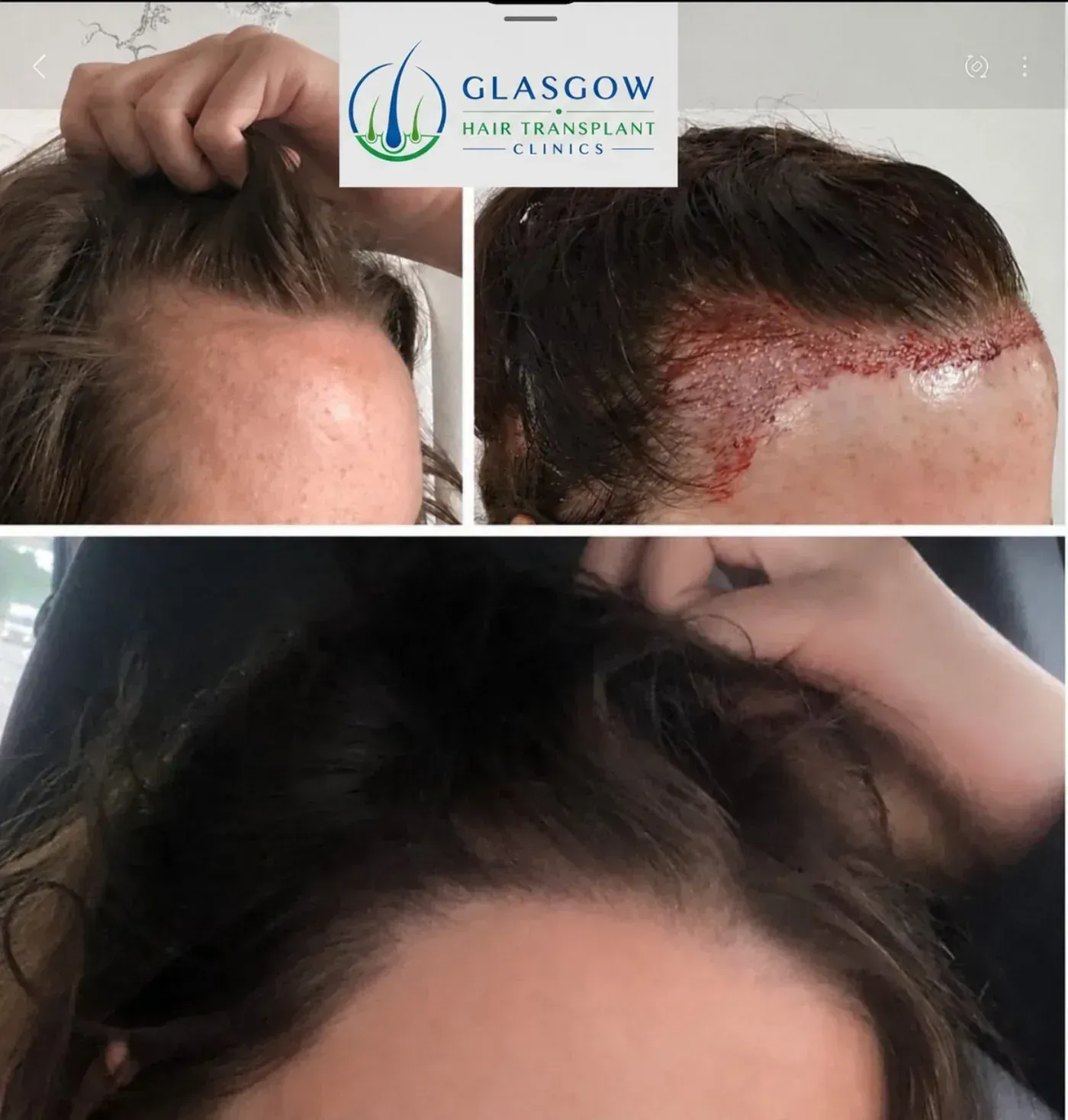
Hairline & temples 6 months post surgery
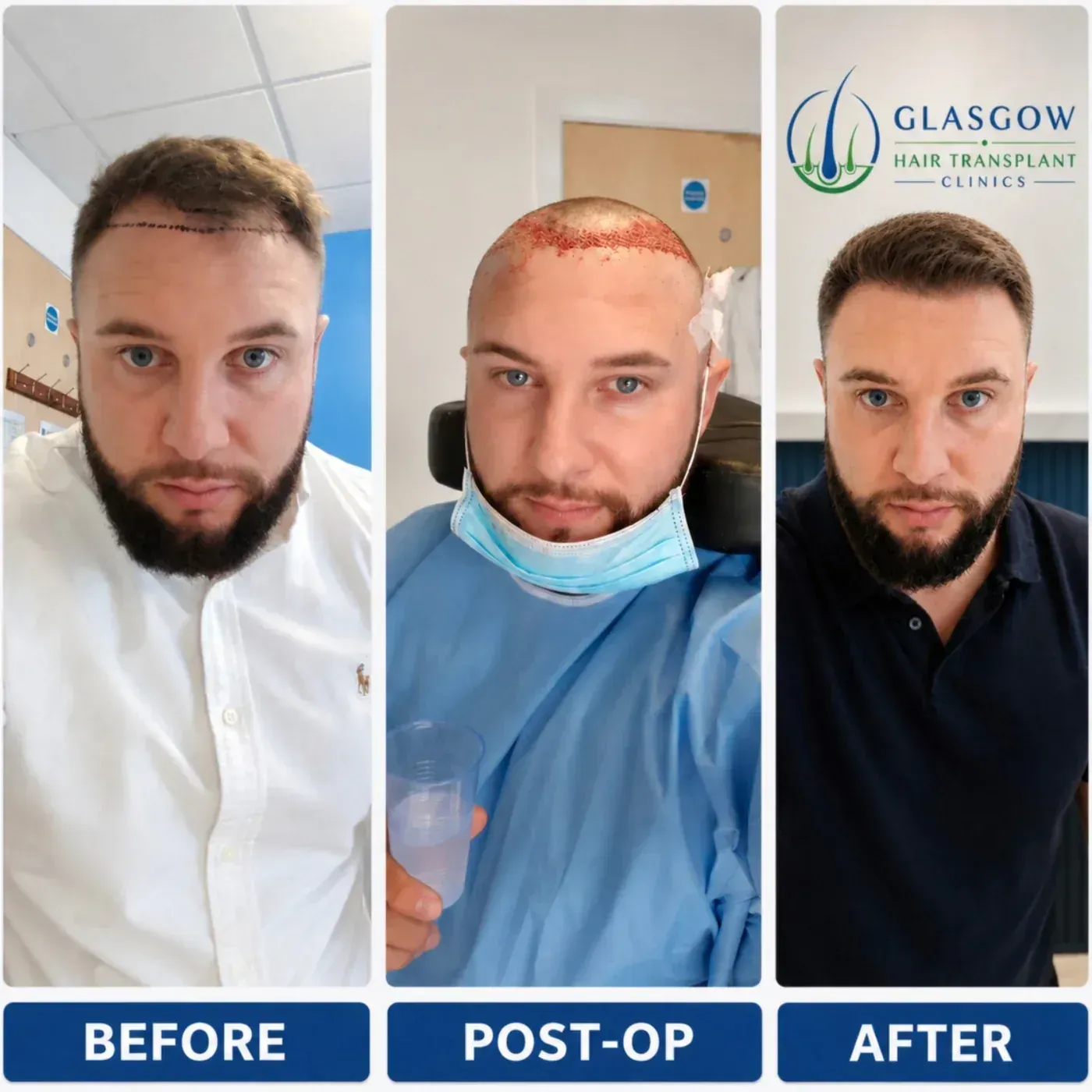
Planning starts with the shape of the complete frontal hairline. The surgeon measures how far each corner has receded, examines the surrounding hair and draws a temple design that suits the patient’s facial proportions.
The procedure is performed under local anaesthetic. Follicles are taken from the permanent donor area using the agreed FUE or FUT technique. The grafts are examined and separated according to the number and thickness of the hairs they contain.
Creating the recipient sites is the most technically important stage of temple restoration. Natural temple hair grows almost flat against the skin before changing direction as it joins the side hair.
Fine single-hair grafts are placed along the exposed border. Stronger follicular units are positioned behind them to improve coverage while keeping the visible edge soft.
Before the patient leaves, the placement and donor area are checked and the aftercare routine is explained. Instructions cover washing, sleeping, exercise and protecting the grafts during early healing.
£3,000–£5,000 Typical price for temple hair transplant surgery in Glasgow
The price depends on how much of the temple area needs to be rebuilt and whether the procedure is limited to the corners or extended across the frontal hairline. The extraction method, donor-area quality and total number of grafts also affect the final quotation.
Mild recession at both corners often requires approximately 500–800 grafts. Moderate temple loss generally falls closer to 800–1,200 grafts, while a broader procedure involving the temples and frontal hairline can require around 1,200–2,500 grafts.
Graft numbers cannot be calculated from the size of the bare skin alone. Fine or straight hair usually requires a different distribution from thick, wavy or curly hair. The contrast between the hair and scalp, the strength of the surrounding hairline and the density available in the donor area all influence how many grafts are needed.
Using more grafts does not automatically produce a better temple result. Dense placement into an aggressive design can waste donor hair and create a hairline that becomes difficult to maintain if recession continues. The graft plan must provide useful coverage while preserving enough donor hair for the future.
The clinic provides the confirmed graft estimate and full price after assessing the scalp and proposed design. Further pricing information is available in the Glasgow hair transplant cost guide, or an individual quotation can be arranged through the consultation page.
The strongest candidates have a defined area of temple recession, healthy permanent donor hair and a pattern of loss that can be planned for realistically. The surrounding frontal hairline must also be strong enough to connect with the transplanted corners without leaving an obvious gap.
Age alone does not decide suitability. What matters is whether the pattern has stabilised and whether the proposed design will continue to look appropriate as the patient gets older. A very low or aggressive temple shape can look convincing in the short term but become isolated if the native hairline continues to move backwards.
Donor density places a firm limit on what can be achieved. The surgeon examines the number of follicular units available, the calibre of the hair and whether previous surgery has already reduced the usable supply. This assessment must account for the present treatment and any future procedure that could become necessary.
Patients with rapidly progressing recession are often better served by stabilising the surrounding hair before surgery is planned. The wider pattern can be assessed using the Norwood stages of hair loss, although the final decision must be based on an examination of the individual scalp rather than the stage number alone.
Temple loss in women requires a clear diagnosis. Traction alopecia, female pattern loss and frontal fibrosing alopecia can all affect the same area but cannot be approached in the same way. Active inflammatory or scarring hair loss must be identified before transplantation is considered.
Surgery is appropriate when the cause of the loss is understood, the donor area can support the graft plan and the expected improvement can be achieved without creating an unnatural or difficult-to-maintain hairline.
Hairline & temples 10 months post surgery
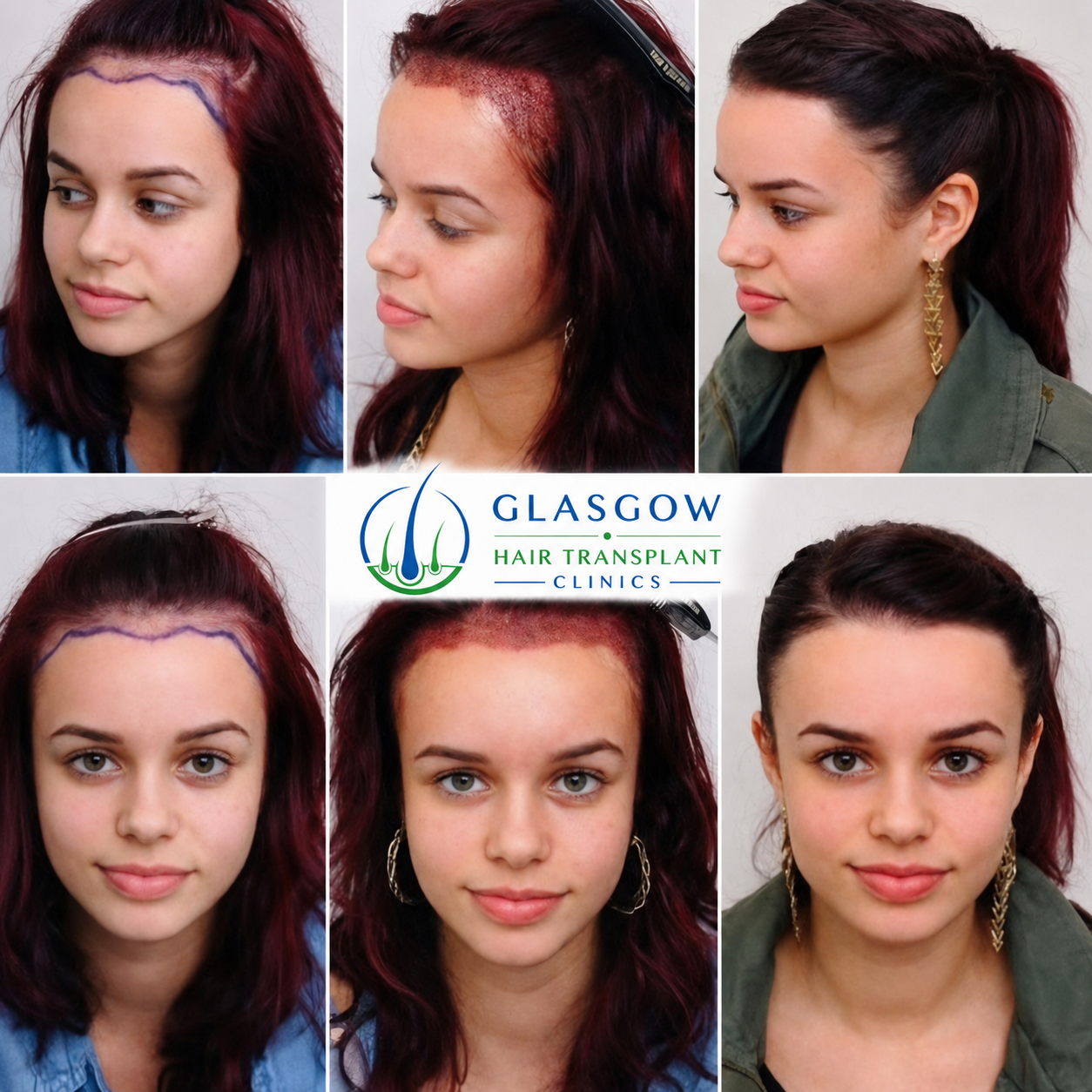
The temples form the outside corners of the frontal hairline. When they recede, the forehead appears wider and the remaining central section becomes more prominent.
Recession is rarely identical on both sides. One temple can move backwards faster or develop a sharper angle, making the hairline look uneven from the front and three-quarter views.
Restoring the temples reconnects the frontal hairline with the hair above the ears. This reduces the isolated M-shaped appearance and creates a more continuous frame around the upper face.
A natural result keeps a soft transition at the leading edge and follows the changing direction of the existing side hair. The restored corners should remain believable from every viewing angle.
The design must also account for future recession. Closing the corners too aggressively can create a low transplanted frame that becomes separated from the native hair behind it.
Temple design begins with the existing frontal hairline, not the empty corners. The new outline must connect smoothly with the central hairline and continue towards the side hair without producing a sudden change in height, density or direction.
Natural temple hairs leave the skin at a much flatter angle than hair growing farther back on the scalp. They also change direction across a short distance. Hair near the frontal corner usually points forwards and outwards before gradually turning down towards the sideburn area. Reproducing this movement is essential because grafts placed too upright remain visible even when they grow well.
The exposed border is built with fine single-hair follicular units. These create a softer transition between bare skin and the denser hair behind. Larger grafts are kept away from the leading edge and positioned farther back, where they improve coverage without creating a heavy or plug-like outline.
Density is distributed rather than applied uniformly. The strongest coverage is placed where the restored temples join the existing frontal hairline, while the outer edge remains lighter and less regular. Small variations in spacing prevent the result from looking drawn or mechanically repeated.
The height and depth of the corners must suit the patient’s age, facial proportions and wider pattern of hair loss. Rebuilding a low adolescent hairline on someone with established recession can consume unnecessary grafts and leave an isolated transplanted frame if the native hair continues to thin.
The aim is balanced improvement rather than perfect symmetry. Natural hairlines are rarely identical on both sides, and preserving a controlled amount of variation usually produces a more believable result than forcing both temples into the same shape.
The most common cause of receding temples in men is androgenetic alopecia, better known as male pattern hair loss. Genetically sensitive follicles gradually react to dihydrotestosterone, or DHT, becoming finer and shorter until the affected corners no longer provide visible coverage.
This recession often begins while the centre of the hairline still appears strong. The corners move backwards first, producing the familiar M-shaped pattern associated with the earlier Norwood stages of hair loss. As the condition advances, temple recession can extend across the frontal hairline and towards the crown.
Women can also lose hair around the temples, but the cause must be established before surgery is discussed. Female pattern hair loss often produces wider thinning rather than two clearly defined bald corners. Hormonal changes and diffuse shedding can weaken the same area without creating a stable recipient site for transplantation.
Repeated tension from tight braids, extensions, ponytails and other hairstyles can cause traction alopecia around the temples and frontal edges. Early traction damage can improve once the tension stops. Long-standing traction can permanently destroy follicles and leave a defined area that requires surgical restoration.
Frontal fibrosing alopecia is a different condition. It causes inflammation and scarring around the frontal hairline and temples, sometimes accompanied by eyebrow loss. Transplanting into active scarring disease risks poor growth and further loss, so the condition must be diagnosed and controlled before any surgical plan is considered.
Localised loss can also follow injury, burns or previous surgery. In these cases, the surgeon must examine the thickness, movement and blood supply of the scarred skin before deciding whether it can support transplanted follicles.
A diagnosis is therefore part of the transplant assessment, not a separate formality. Filling the temples without understanding why the hair disappeared can waste donor grafts and leave a result that becomes unstable as the underlying condition progresses.
When temple recession is still developing, the immediate priority is often preserving the native hair rather than moving straight to surgery. Medical treatment can slow further miniaturisation and strengthen follicles that are still present, but it cannot reliably rebuild corners where the follicles have already disappeared.
Finasteride is used for suitable men with androgenetic hair loss. It reduces the conversion of testosterone into DHT, the hormone responsible for gradually miniaturising genetically sensitive follicles. Its main role is protecting the surrounding frontal hairline and reducing the risk of continued recession behind a future transplant.
Minoxidil supports weakened follicles by prolonging their active growth phase. It is available in topical preparations, while oral minoxidil requires medical assessment and prescription. The treatment can improve the appearance of thinning temple hair, but completely bare skin will not regain a newly designed hairline through medication alone.
The clinic’s hair-loss medication guide explains how finasteride and minoxidil are used, the differences between topical and oral treatment and why ongoing use is necessary to maintain their effect.
PRP treatment uses a concentrated preparation from the patient’s own blood to support existing follicles. It is used alongside a wider hair-loss plan rather than as a replacement for transplantation. PRP does not create new follicles across an empty temple, but it can be useful when the surrounding hair is weak or miniaturising.
Scalp micropigmentation can reduce the contrast between the scalp and existing hair by placing pigment into the skin. Hair fibres and changes in styling provide a temporary cosmetic improvement where enough native hair remains. These options alter the appearance of recession without changing the position or density of the natural hairline.
Non-surgical treatment is most useful before the corners become completely bare or when the pattern is not yet stable enough for surgery. Once a defined temple shape has been lost, transplantation is the only treatment that physically places growing follicles back into that area.
The temples are highly visible, so redness and small crusts are easier to notice than they would be beneath longer hair on the crown. During the first few days, the newly placed grafts must be protected from rubbing, scratching and direct pressure.
Washing begins according to the instructions provided by the clinic. The scalp is cleaned gently without directing strong water pressure onto the recipient area. Crusts gradually loosen as the skin heals and are normally cleared during the early recovery period rather than being picked away.
Mild swelling can develop around the forehead after surgery and usually settles as healing progresses. Sleeping with the head raised and avoiding strenuous exercise during the initial recovery period helps reduce unnecessary pressure and irritation around the transplanted area.
Most transplanted hairs shed between two and eight weeks after the procedure. This is an expected stage of the growth cycle and does not mean that the follicles have been lost. The follicles remain beneath the skin while they move into a resting phase.
Early new growth usually becomes visible from the third or fourth month. The first hairs can appear fine, pale or uneven because different follicles begin growing at different times. They gradually become stronger as the growth cycle continues.
Between six and nine months, the restored temple outline becomes clearer and the new hair starts contributing meaningful coverage. The direction and connection with the existing frontal hairline are easier to assess once the hairs have gained enough length to be styled.
Temple results continue maturing over approximately 10–18 months. Density, texture and hair calibre improve gradually rather than appearing at a single fixed point. Patients with slower growth or finer hair can take longer to see the finished result.
The clinic’s hair transplant aftercare guide covers washing, sleeping, exercise and early graft protection, while the full hair transplant growth timeline explains the changes expected throughout the following months.
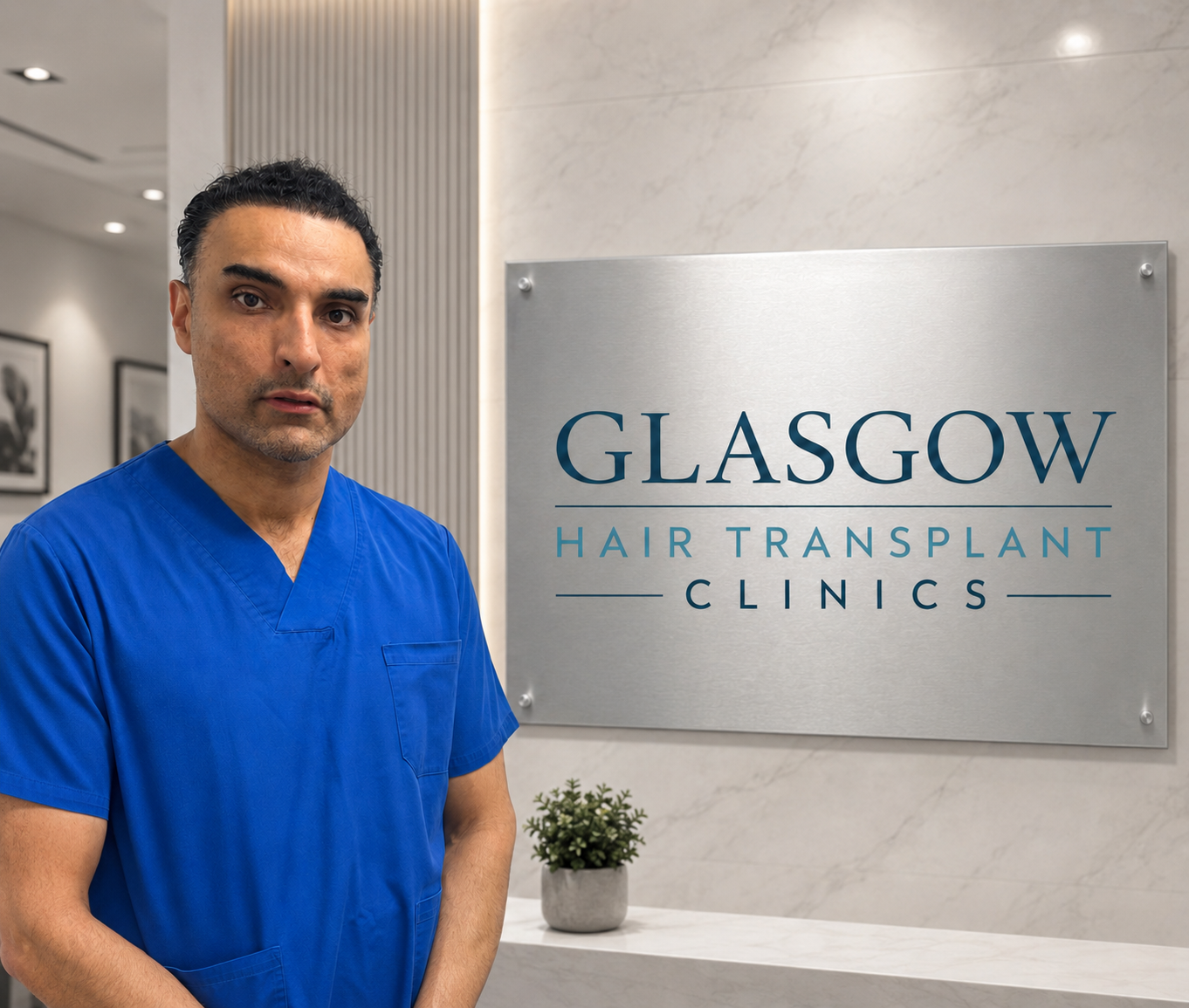
Temple restoration requires close control over the shape of the frontal corners, the choice of grafts and the direction in which each transplanted hair will grow.
Patients attending Glasgow Hair Transplant Clinics are assessed by Dr Harpreet Kalra, a GMC-registered doctor. His assessment covers the existing hairline, temple recession, scalp condition and the amount of permanent donor hair available.
The proposed design is considered from the front, side and three-quarter views. This confirms whether the corners connect properly with the central hairline and remain balanced across the face.
Dr Kalra calculates how many grafts are required and whether enough donor hair will remain available if further treatment becomes necessary later.
Patients receive an individual graft estimate, confirmed treatment price and a clear explanation of surgery, recovery and expected growth before deciding whether to proceed.
Book a ConsultationRead what patients have said about their experience with Glasgow Hair Transplant Clinics.
Yes. A hair transplant can focus specifically on the temple areas when the remaining hairline does not require restoration.
The number depends on the depth of recession, the planned shape and the required coverage. Temple-only procedures often require approximately 500–1,500 grafts, while combined hairline and temple surgery requires more.
Yes. Women with suitable donor hair can have temple restoration after the cause and pattern of the hair loss have been assessed.
The temples are designed to appear balanced rather than artificially identical. Small differences are retained because natural faces and hairlines are not perfectly symmetrical.
Temple hair transplant surgery in Glasgow typically costs between £3,000 and £5,000. The final price depends on the graft requirement and the treatment plan confirmed during consultation.
Early growth normally begins between months three and six. Density and hair calibre develop through months six to twelve and can continue maturing for approximately 12–18 months.