
The role of consultation in hair transplant surgery
The consultation in hair transplant surgery is a mandatory medical discussion conducted personally by the performing surgeon to assess your suitability, disclose risks, and plan your treatment. This is not a sales meeting or a formality. The role of consultation in hair transplant decisions is to protect you, the patient, from poor outcomes, unqualified providers, and uninformed choices. Glasgowhairtransplantclinics operates under GMC, CQC, and HIS registration standards, meaning every consultation is surgeon-led and clinically grounded from the first appointment.


The role of consultation in hair transplant surgery

The consultation in hair transplant surgery is a mandatory medical discussion conducted personally by the performing surgeon to assess your suitability, disclose risks, and plan your treatment. This is not a sales meeting or a formality. The role of consultation in hair transplant decisions is to protect you, the patient, from poor outcomes, unqualified providers, and uninformed choices. Glasgowhairtransplantclinics operates under GMC, CQC, and HIS registration standards, meaning every consultation is surgeon-led and clinically grounded from the first appointment.
What happens during a hair transplant consultation?
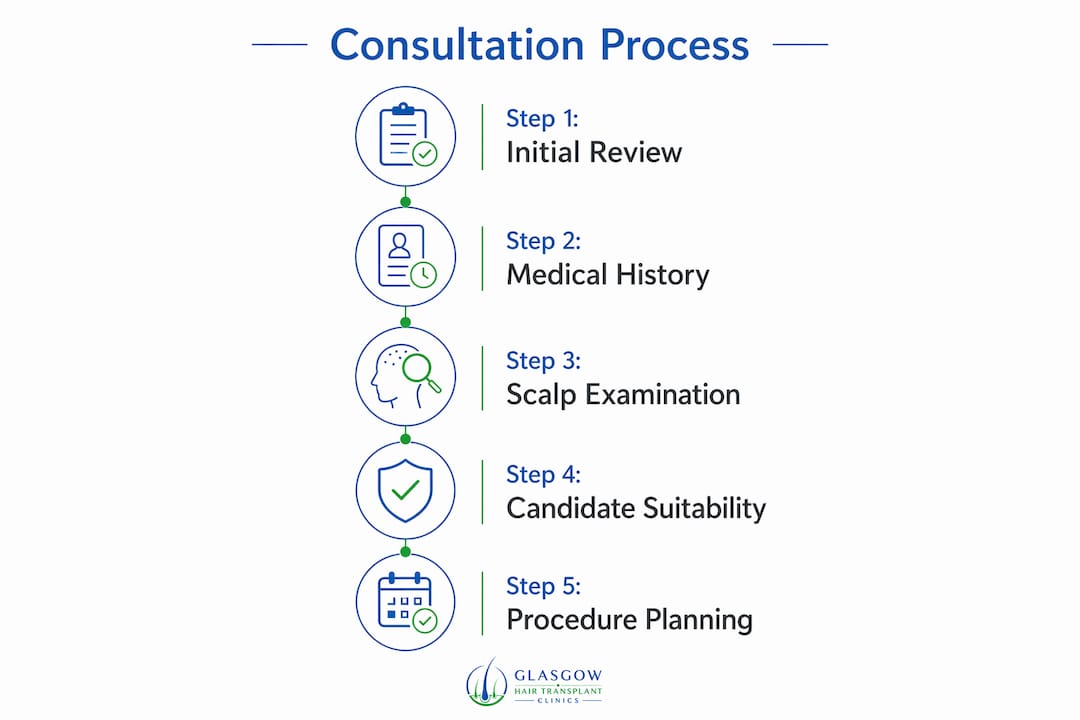
A hair transplant consultation covers far more than a quick look at your scalp. The surgeon evaluates your hair loss pattern, donor area density, medical history, and any medications that could affect the procedure or recovery. This clinical review determines whether Follicular Unit Extraction (FUE), Direct Hair Implantation (DHI), or another technique is most appropriate for your specific condition.
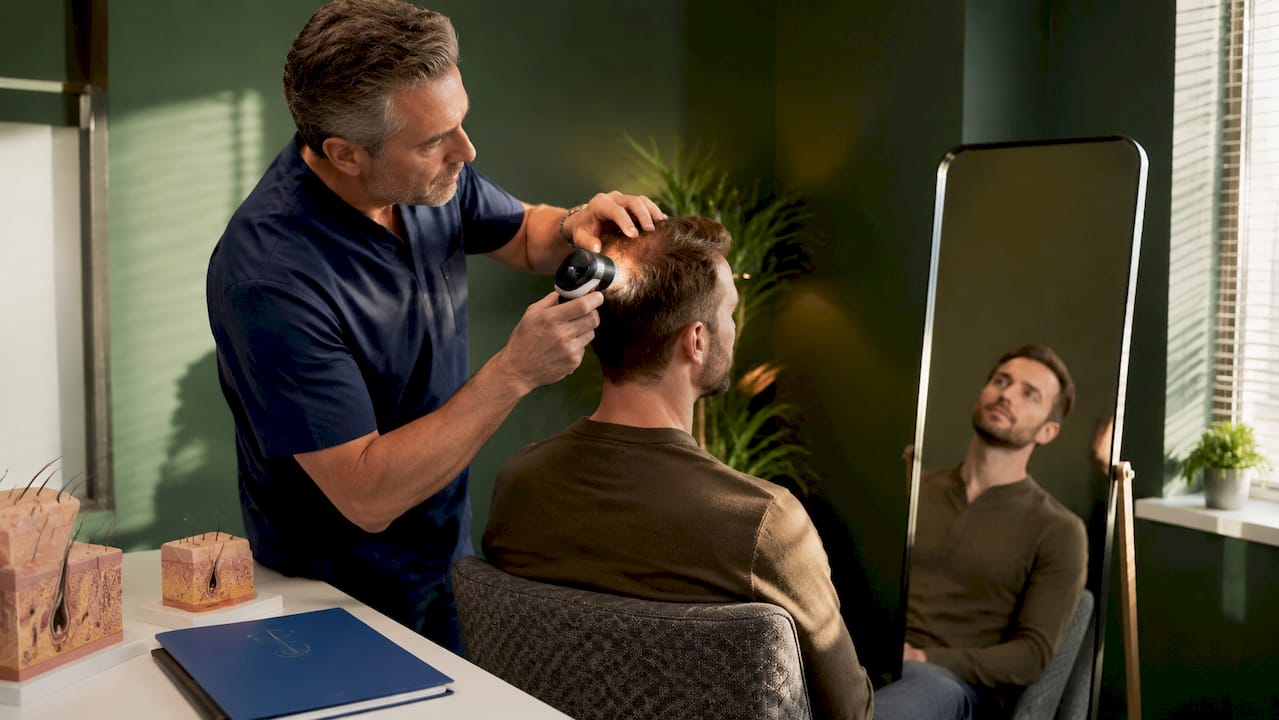
Psychological assessment is a formal part of the process, not an afterthought. Psychological screening during consultation covers anxiety, body dysmorphic disorder (BDD), and other mental health factors that are pivotal to treatment suitability. A surgeon who skips this step is not meeting the standard of care required in the UK.
The consultation also covers:
- The step-by-step procedure, including what happens on the day of surgery
- Realistic expected outcomes based on your donor supply and hair loss stage
- Possible risks, complications, and how they are managed
- Non-surgical alternatives such as Platelet Rich Plasma (PRP) therapy or Scalp Micro Pigmentation (SMP)
- Aftercare requirements and recovery timeline
- A transparent, written quote with no obligation to proceed
You are not expected to make a decision on the day. The consultation is your opportunity to ask every question you have and leave with a clear picture of what the procedure involves.
Pro Tip: Prepare a written list of questions before your appointment. Include questions about your specific hair loss pattern, the technique recommended, and what results are realistic for your donor density. Written questions help you stay focused and ensure nothing is missed.
Why must the surgeon personally conduct the consultation?
UK medical standards are unambiguous on this point. The surgeon performing your procedure must personally conduct your initial consultation and consent discussion. Delegating this to a patient coordinator, sales adviser, or any non-clinical staff member is a regulatory red flag and a violation of GMC and JCCP guidance.
Informed consent is a two-stage process: a surgeon-led clinical discussion followed by documented evidence of that conversation. A signed consent form without an accompanying discussion led by the treatment surgeon is invalid consent according to GMC and JCCP guidance.
This matters for several practical reasons:
- Accurate risk disclosure. Only the surgeon who will perform your procedure can give you a reliable assessment of your personal risks, based on your anatomy and medical history.
- Psychological screening. The surgeon is responsible for identifying signs of BDD or other conditions that would make surgery inadvisable.
- Cooling-off period. A mandatory waiting period between consultation and surgery is required under GMC and JCCP guidelines. This gives you time to reflect before consent is finalised and surgery is scheduled.
- Legal validity of consent. Consent obtained without a direct surgeon-led discussion does not meet the legal standard required in the UK.
If a clinic offers you a consultation with anyone other than your operating surgeon, treat that as a serious warning sign. The importance of hair transplant consultation is inseparable from who conducts it.
How to verify surgeon and clinic credentials during your consultation
No official register exists for hair transplant clinics in the UK. That places the responsibility for verification squarely on you. Knowing what to check before and during your consultation protects you from underqualified providers.
The key checks to make are:
- GMC Specialist Register. Surgeons on this register have completed full accredited UK surgical training. Search your surgeon’s name on the GMC website and confirm their specialty is listed as Plastic Surgery or a directly relevant field.
- BAAPS or BAPRAS membership. Membership of these bodies signals a higher professional standard and additional training in aesthetic surgery, beyond basic GMC registration.
- CQC registration. The Care Quality Commission regulates clinics in England. Confirm the clinic is registered and has no outstanding enforcement actions.
- HIS registration. In Scotland, Healthcare Improvement Scotland (HIS) performs the equivalent regulatory function. Glasgowhairtransplantclinics holds both CQC and HIS registration.
During the consultation itself, ask the surgeon directly how many hair transplant procedures they perform each year and whether you can see before-and-after photographs of their own patients. A confident, qualified surgeon will answer both questions without hesitation. Reading about due diligence before choosing a clinic gives you a fuller picture of what to look for.
| Credential | What to check | Why it matters |
|---|---|---|
| GMC Specialist Register | Surgeon’s name and specialty on GMC website | Confirms full accredited UK surgical training |
| BAAPS / BAPRAS membership | Membership listed on surgeon’s profile | Secondary quality assurance in aesthetic surgery |
| CQC registration | Clinic listed on CQC website with no enforcement | Confirms regulated clinical environment in England |
| HIS registration | Clinic listed with Healthcare Improvement Scotland | Regulatory equivalent for Scottish clinics |
What are the benefits of a thorough consultation for hair transplant candidates?
A thorough consultation produces better surgical outcomes. Patients who receive complete, honest information before their procedure make decisions free from pressure or misinformation. That clarity directly reduces post-procedure dissatisfaction.
Cosmetic surgery carries psychological dissatisfaction risks independent of technically successful results, with BDD affecting around 20% of treatment seekers. This figure underlines why psychological screening during consultation is not optional. Identifying a patient who is psychologically unsuitable before surgery protects both the patient and the clinical team.
The benefits of a well-conducted consultation include:
- Realistic expectations set before surgery, reducing the likelihood of disappointment
- Identification of medical contraindications that could affect safety or healing
- Personalised treatment planning, including graft estimates and hairline design
- Informed aftercare compliance, because patients who understand the recovery process follow it more carefully
- Reduced complication rates, because the surgeon has a complete picture of your health before operating
Pro Tip: Ask your surgeon to explain the expected hair loss progression over the next five to ten years. A good consultation accounts for future loss, not just your current pattern. This affects hairline placement and long-term results significantly.
Understanding the preparation steps before and after a hair transplant helps you arrive at your consultation ready to engage with the process fully.
Key takeaways
The consultation is the single most important step before a hair transplant, because it determines your suitability, protects your safety, and ensures your consent is legally valid.
| Point | Details |
|---|---|
| Surgeon-led consultation is mandatory | UK standards require the operating surgeon to personally conduct the consultation and consent process. |
| Psychological screening is non-negotiable | BDD affects around 20% of treatment seekers; screening before surgery protects patients and clinical teams. |
| Cooling-off period is required | GMC and JCCP guidelines mandate a waiting period between consultation and surgery for valid consent. |
| Credential verification is your responsibility | No central UK register exists for hair transplant clinics; check GMC, CQC, and HIS registration yourself. |
| Thorough consultation improves outcomes | Informed patients set realistic expectations, follow aftercare correctly, and experience fewer complications. |
What I have learned from watching consultations go wrong
Having observed the consultation process across many years in this field, the most consistent failure I see is not clinical. It is the absence of honest conversation about psychological suitability. Surgeons who rush through the psychological assessment, or skip it entirely, are not protecting their patients. They are protecting their booking numbers.
The second thing patients consistently underestimate is the cooling-off period. Many arrive at a consultation hoping to schedule surgery the same week. The mandatory waiting period feels like an obstacle. In practice, it is one of the most valuable parts of the process. Patients who use that time to ask further questions, review their quote, and reflect on their motivations make far better decisions.
I also think the credential verification burden placed on patients is genuinely unfair. Because the UK lacks a centralised hair transplant clinic register, you must do the work yourself. That is the reality. Checking the GMC Specialist Register takes five minutes and could save you from a procedure performed by someone without the training to do it safely. Do not skip that step.
The consultation is where trust is built or lost. A surgeon who listens carefully, answers your questions directly, and does not pressure you to commit on the day is demonstrating exactly the standard of care you should expect throughout your treatment.
— Harley
Glasgowhairtransplantclinics: consultations led by your surgeon
Glasgowhairtransplantclinics offers free consultations, both online and face to face, conducted by the surgeon who will perform your procedure. Every clinic meets GMC, CQC, and HIS registration standards. A cooling-off period and a transparent written quote are provided as standard, with no obligation to proceed.
Whether you are considering a hair transplant in Glasgow or exploring options across the UK, the consultation process at Glasgowhairtransplantclinics is designed to give you complete information and genuine confidence before you make any decision. Surgeons are on the GMC register, and the clinics hold HIS registration for your peace of mind. Book your free consultation today and speak directly with the surgeon who will care for you.
FAQ
What is an online hair transplant consultation?
An online hair transplant consultation is a video or telephone appointment with the operating surgeon to review your hair loss, discuss suitability, and answer your questions before an in-person assessment. It follows the same clinical and consent standards as a face-to-face consultation.
Why is the consultation so important before a hair transplant?
The consultation determines whether you are a suitable candidate, discloses all risks, and produces legally valid informed consent. Without a surgeon-led consultation, neither the patient nor the clinic is adequately protected.
What questions should I ask during a hair transplant consultation?
Ask about the surgeon’s GMC registration and case volume, the technique recommended for your hair loss pattern, realistic graft numbers, expected results, and the full aftercare protocol. Also ask what happens if complications arise.
How do I prepare for a hair transplant consultation?
Write down your medical history, current medications, and any previous hair loss treatments. Bring photographs showing your hair loss progression over time, and prepare a list of questions about the procedure, recovery, and costs.
How long after consultation can I have a hair transplant?
GMC and JCCP guidelines require a cooling-off period between the consultation and surgery to allow time for reflection before consent is finalised. The exact duration is agreed between you and your surgeon, but same-day scheduling is not compliant with UK standards.
Recommended
Certifications




What happens during a hair transplant consultation?
A hair transplant consultation covers far more than a quick look at your scalp. The surgeon evaluates your hair loss pattern, donor area density, medical history, and any medications that could affect the procedure or recovery. This clinical review determines whether Follicular Unit Extraction (FUE), Direct Hair Implantation (DHI), or another technique is most appropriate for your specific condition.
Psychological assessment is a formal part of the process, not an afterthought. Psychological screening during consultation covers anxiety, body dysmorphic disorder (BDD), and other mental health factors that are pivotal to treatment suitability. A surgeon who skips this step is not meeting the standard of care required in the UK.
The consultation also covers:
- The step-by-step procedure, including what happens on the day of surgery
- Realistic expected outcomes based on your donor supply and hair loss stage
- Possible risks, complications, and how they are managed
- Non-surgical alternatives such as Platelet Rich Plasma (PRP) therapy or Scalp Micro Pigmentation (SMP)
- Aftercare requirements and recovery timeline
- A transparent, written quote with no obligation to proceed
You are not expected to make a decision on the day. The consultation is your opportunity to ask every question you have and leave with a clear picture of what the procedure involves.
Pro Tip: Prepare a written list of questions before your appointment. Include questions about your specific hair loss pattern, the technique recommended, and what results are realistic for your donor density. Written questions help you stay focused and ensure nothing is missed.
Why must the surgeon personally conduct the consultation?
UK medical standards are unambiguous on this point. The surgeon performing your procedure must personally conduct your initial consultation and consent discussion. Delegating this to a patient coordinator, sales adviser, or any non-clinical staff member is a regulatory red flag and a violation of GMC and JCCP guidance.
Informed consent is a two-stage process: a surgeon-led clinical discussion followed by documented evidence of that conversation. A signed consent form without an accompanying discussion led by the treatment surgeon is invalid consent according to GMC and JCCP guidance.
This matters for several practical reasons:
- Accurate risk disclosure. Only the surgeon who will perform your procedure can give you a reliable assessment of your personal risks, based on your anatomy and medical history.
- Psychological screening. The surgeon is responsible for identifying signs of BDD or other conditions that would make surgery inadvisable.
- Cooling-off period. A mandatory waiting period between consultation and surgery is required under GMC and JCCP guidelines. This gives you time to reflect before consent is finalised and surgery is scheduled.
- Legal validity of consent. Consent obtained without a direct surgeon-led discussion does not meet the legal standard required in the UK.
If a clinic offers you a consultation with anyone other than your operating surgeon, treat that as a serious warning sign. The importance of hair transplant consultation is inseparable from who conducts it.
How to verify surgeon and clinic credentials during your consultation
No official register exists for hair transplant clinics in the UK. That places the responsibility for verification squarely on you. Knowing what to check before and during your consultation protects you from underqualified providers.
The key checks to make are:
- GMC Specialist Register. Surgeons on this register have completed full accredited UK surgical training. Search your surgeon’s name on the GMC website and confirm their specialty is listed as Plastic Surgery or a directly relevant field.
- BAAPS or BAPRAS membership. Membership of these bodies signals a higher professional standard and additional training in aesthetic surgery, beyond basic GMC registration.
- CQC registration. The Care Quality Commission regulates clinics in England. Confirm the clinic is registered and has no outstanding enforcement actions.
- HIS registration. In Scotland, Healthcare Improvement Scotland (HIS) performs the equivalent regulatory function. Glasgowhairtransplantclinics holds both CQC and HIS registration.
During the consultation itself, ask the surgeon directly how many hair transplant procedures they perform each year and whether you can see before-and-after photographs of their own patients. A confident, qualified surgeon will answer both questions without hesitation. Reading about due diligence before choosing a clinic gives you a fuller picture of what to look for.
| Credential | What to check | Why it matters |
|---|---|---|
| GMC Specialist Register | Surgeon’s name and specialty on GMC website | Confirms full accredited UK surgical training |
| BAAPS / BAPRAS membership | Membership listed on surgeon’s profile | Secondary quality assurance in aesthetic surgery |
| CQC registration | Clinic listed on CQC website with no enforcement | Confirms regulated clinical environment in England |
| HIS registration | Clinic listed with Healthcare Improvement Scotland | Regulatory equivalent for Scottish clinics |
What are the benefits of a thorough consultation for hair transplant candidates?
A thorough consultation produces better surgical outcomes. Patients who receive complete, honest information before their procedure make decisions free from pressure or misinformation. That clarity directly reduces post-procedure dissatisfaction.
Cosmetic surgery carries psychological dissatisfaction risks independent of technically successful results, with BDD affecting around 20% of treatment seekers. This figure underlines why psychological screening during consultation is not optional. Identifying a patient who is psychologically unsuitable before surgery protects both the patient and the clinical team.
The benefits of a well-conducted consultation include:
- Realistic expectations set before surgery, reducing the likelihood of disappointment
- Identification of medical contraindications that could affect safety or healing
- Personalised treatment planning, including graft estimates and hairline design
- Informed aftercare compliance, because patients who understand the recovery process follow it more carefully
- Reduced complication rates, because the surgeon has a complete picture of your health before operating
Pro Tip: Ask your surgeon to explain the expected hair loss progression over the next five to ten years. A good consultation accounts for future loss, not just your current pattern. This affects hairline placement and long-term results significantly.
Understanding the preparation steps before and after a hair transplant helps you arrive at your consultation ready to engage with the process fully.
Key takeaways
The consultation is the single most important step before a hair transplant, because it determines your suitability, protects your safety, and ensures your consent is legally valid.
| Point | Details |
|---|---|
| Surgeon-led consultation is mandatory | UK standards require the operating surgeon to personally conduct the consultation and consent process. |
| Psychological screening is non-negotiable | BDD affects around 20% of treatment seekers; screening before surgery protects patients and clinical teams. |
| Cooling-off period is required | GMC and JCCP guidelines mandate a waiting period between consultation and surgery for valid consent. |
| Credential verification is your responsibility | No central UK register exists for hair transplant clinics; check GMC, CQC, and HIS registration yourself. |
| Thorough consultation improves outcomes | Informed patients set realistic expectations, follow aftercare correctly, and experience fewer complications. |
What I have learned from watching consultations go wrong
Having observed the consultation process across many years in this field, the most consistent failure I see is not clinical. It is the absence of honest conversation about psychological suitability. Surgeons who rush through the psychological assessment, or skip it entirely, are not protecting their patients. They are protecting their booking numbers.
The second thing patients consistently underestimate is the cooling-off period. Many arrive at a consultation hoping to schedule surgery the same week. The mandatory waiting period feels like an obstacle. In practice, it is one of the most valuable parts of the process. Patients who use that time to ask further questions, review their quote, and reflect on their motivations make far better decisions.
I also think the credential verification burden placed on patients is genuinely unfair. Because the UK lacks a centralised hair transplant clinic register, you must do the work yourself. That is the reality. Checking the GMC Specialist Register takes five minutes and could save you from a procedure performed by someone without the training to do it safely. Do not skip that step.
The consultation is where trust is built or lost. A surgeon who listens carefully, answers your questions directly, and does not pressure you to commit on the day is demonstrating exactly the standard of care you should expect throughout your treatment.
— Harley
Glasgowhairtransplantclinics: consultations led by your surgeon
Glasgowhairtransplantclinics offers free consultations, both online and face to face, conducted by the surgeon who will perform your procedure. Every clinic meets GMC, CQC, and HIS registration standards. A cooling-off period and a transparent written quote are provided as standard, with no obligation to proceed.
Whether you are considering a hair transplant in Glasgow or exploring options across the UK, the consultation process at Glasgowhairtransplantclinics is designed to give you complete information and genuine confidence before you make any decision. Surgeons are on the GMC register, and the clinics hold HIS registration for your peace of mind. Book your free consultation today and speak directly with the surgeon who will care for you.
FAQ
What is an online hair transplant consultation?
An online hair transplant consultation is a video or telephone appointment with the operating surgeon to review your hair loss, discuss suitability, and answer your questions before an in-person assessment. It follows the same clinical and consent standards as a face-to-face consultation.
Why is the consultation so important before a hair transplant?
The consultation determines whether you are a suitable candidate, discloses all risks, and produces legally valid informed consent. Without a surgeon-led consultation, neither the patient nor the clinic is adequately protected.
What questions should I ask during a hair transplant consultation?
Ask about the surgeon’s GMC registration and case volume, the technique recommended for your hair loss pattern, realistic graft numbers, expected results, and the full aftercare protocol. Also ask what happens if complications arise.
How do I prepare for a hair transplant consultation?
Write down your medical history, current medications, and any previous hair loss treatments. Bring photographs showing your hair loss progression over time, and prepare a list of questions about the procedure, recovery, and costs.
How long after consultation can I have a hair transplant?
GMC and JCCP guidelines require a cooling-off period between the consultation and surgery to allow time for reflection before consent is finalised. The exact duration is agreed between you and your surgeon, but same-day scheduling is not compliant with UK standards.

About the author
Dr Harpreet Kalra is a GP and hair-transplant surgeon at Glasgow Hair Transplant Clinics. His consultations consider the diagnosis, donor area, existing hair and likely future pattern before treatment is discussed.
Book a hair transplant consultation in Glasgow
We assess your diagnosis, donor area, existing hair and long-term pattern before discussing whether surgery is appropriate.
Book a Free Consultation