
Best wmglondon.com alternatives for UK hair transplants
Best wmglondon.com alternatives for UK hair transplants
Top UK hair transplant clinics as alternatives to WMG London
Two clinics stand out as credible wmglondon.com alternatives for patients seeking regulated, surgeon-led hair restoration in the UK: Harley Street Hair Transplants and Glasgow Hair Transplants Clinics. Both meet the core regulatory requirements that matter most, namely Care Quality Commission or Healthcare Improvement Scotland registration, GMC-licensed surgeons, and transparent consultation processes.
UK hair transplant costs typically range from about £3,500–£4,500 for smaller procedures of 500–1,200 grafts, £4,500–£7,500 for mid-range procedures of 1,500–2,500 grafts, and may exceed £8,000 for cases exceeding 3,000 grafts. That range reflects differences in technique, surgeon experience, and clinic location rather than quality alone.
| Clinic | Location | Accreditation | Surgeon licensing | Treatments offered | Price range | Consultation |
|---|---|---|---|---|---|---|
| Harley Street Hair Transplants | London | CQC registered | GMC registered | FUE, FUT, PRP | £3,500–£9,000 depending on graft count | Online and in-person |
| Glasgow Hair Transplants Clinics | Glasgow and UK-wide | CQC and HIS registered | GMC registered | FUE, beard, eyebrow, PRP, SMP | £3,500–£9,000 depending on graft count | Free online or in-person |
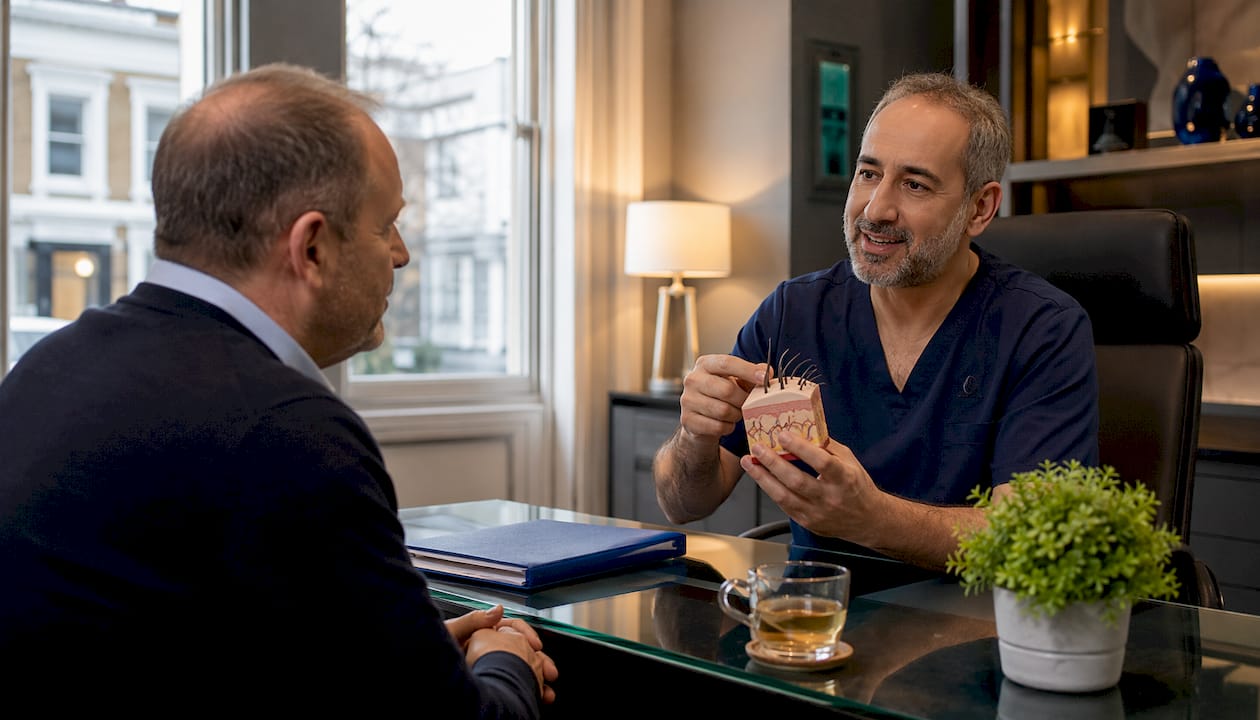
Harley Street Hair Transplants operates from central London with a clear focus on ethical practice and full regulatory compliance. The clinic suits patients who want premium, medically supervised care in the capital, with access to both Follicular Unit Excision (FUE) and Follicular Unit Transplantation (FUT). FUE harvests individual follicular units for minimal scarring, while FUT uses donor strips and may produce more consistent density for larger cases.

Glasgow Hair Transplants Clinics offers the broader treatment menu, covering hair, beard, and eyebrow transplants alongside Platelet Rich Plasma (PRP) therapy and Scalp Micro Pigmentation (SMP). Free consultations, competitive pricing, and locations across the UK make it a practical choice for patients outside London.
How do you choose the right hair transplant clinic in the UK?
Choosing between sites like wmglondon.com comes down to verifiable credentials, not marketing claims. Work through these checks before booking anywhere.
- Confirm the clinic holds CQC registration in England, or the equivalent from Healthcare Improvement Scotland, Healthcare Inspectorate Wales, or RQIA in Northern Ireland.
- Verify the operating surgeon on the GMC’s public register using their name and GMC number before paying any deposit.
- Check for British Association of Hair Restoration Surgery (BAHRS) membership, a respected quality signal beyond the legal minimum.
- Ask which technique suits your donor density and hair loss pattern, FUE or FUT, and why the clinic recommends one over the other.
- Request a written aftercare plan covering follow-up appointments, prescribed medications such as Minoxidil or Finasteride, and a clear escalation route if complications arise.
- Ask for before-and-after photographs with graft counts, density targets, and treatment timelines, not just studio portraits.
- Confirm whether financing options are available and ask for a full written quote that itemises all costs.
Pro Tip: Ask the clinic for the operating surgeon’s GMC number before your consultation ends, then search the GMC’s public register yourself. A reputable clinic will provide this without hesitation.
Transparent pricing matters as much as credentials. UK hair transplant costs for mid-range procedures of 1,500–2,500 grafts typically fall between £4,500 and £7,500. Any clinic that cannot give you a written breakdown of what is included should be treated with caution.
Long-term planning is equally important, with guidance on achieving natural hairlines for lasting and natural-looking results. A skilled surgeon designs a hairline that accounts for future hair loss, not just the patient’s current age. Reputable clinics also recommend medical management with Minoxidil or Finasteride after surgery to protect native hair and preserve overall density for years ahead.
How do you verify a hair transplant surgeon’s licence in the UK?
Every doctor performing hair transplants in the UK must hold a current licence to practise on the GMC register. This is not optional. UK guidance from BAAPS and CPSA states that all surgical steps, including incisions and FUE or FUT harvesting, must be carried out by a GMC-licensed doctor. Assistants may support the procedure but cannot replace the surgeon for these steps.
A clinic that will not name the operating surgeon before you pay a deposit is a clear warning sign. Equally, vague titles such as “technician-led surgery” or no named doctor on the consent form should prompt you to look elsewhere. You can search the GMC register free of charge at any time to confirm a doctor’s name, registration number, and current status.
BAHRS membership adds a further layer of reassurance. It is not a legal requirement, but it signals that the surgeon has committed to professional standards beyond the regulatory baseline.
What is the timeline from consultation to recovery?
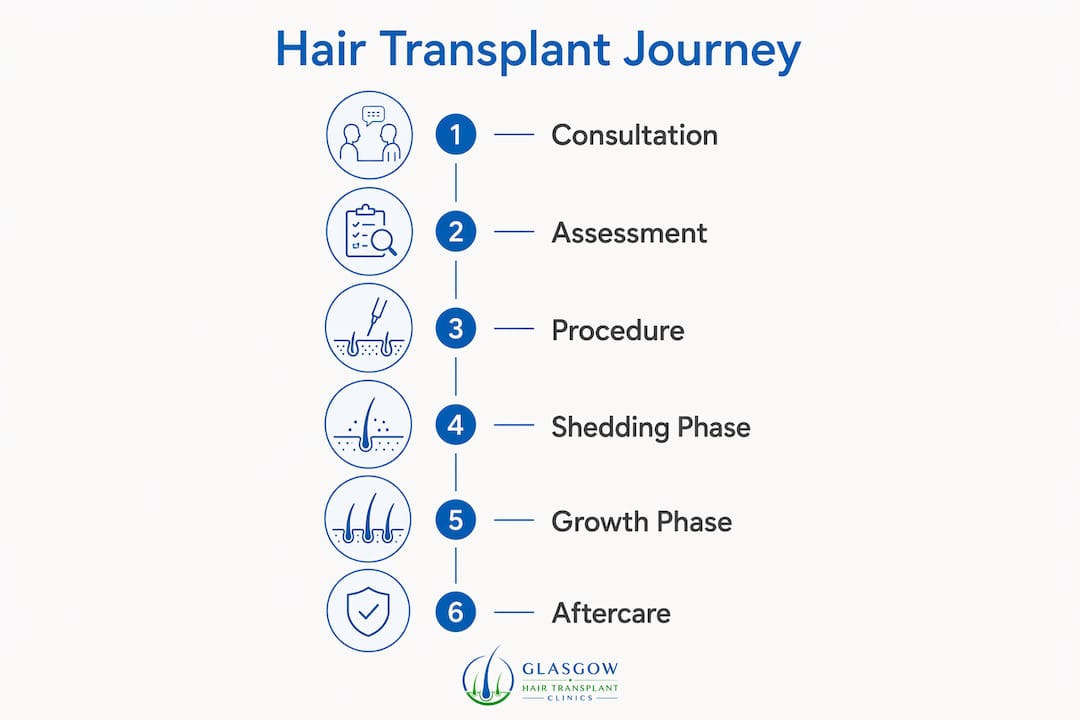
The hair transplant process follows a consistent sequence across reputable UK clinics. Understanding each stage helps you plan realistically.
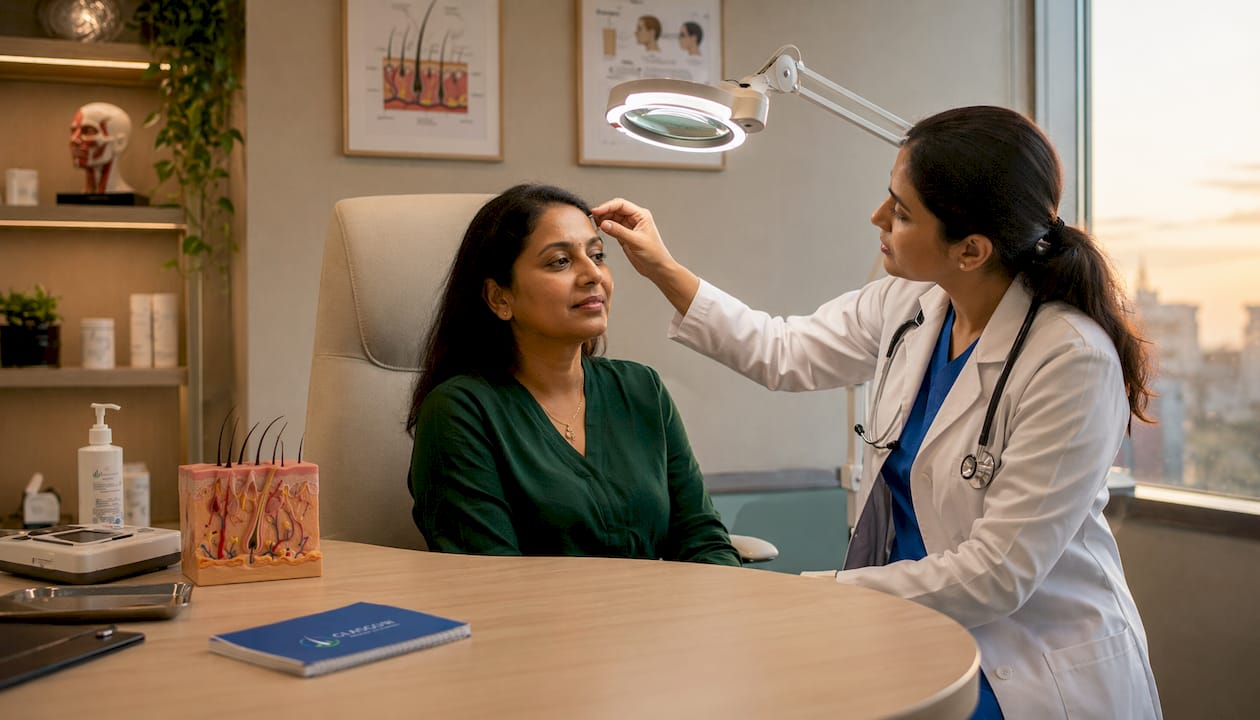
The process begins with a consultation, either online or in person, where the surgeon assesses your donor area, discusses technique options, and provides a written treatment plan. Surgery itself typically takes one full day, with local anaesthetic used throughout. Most patients return to desk-based work within a week, though the transplanted area remains sensitive for longer.
Shedding of the transplanted hairs occurs in the first four to six weeks. This is normal and expected. New growth begins to appear from around three months, with the majority of results visible at nine to twelve months. Full density and the final natural appearance generally settle by the twelve to eighteen month mark. You can find a detailed breakdown of each stage on the hair transplant timeline page.
Aftercare during this period shapes the long-term outcome. Follow-up assessments, prescribed medications, and pre and post-procedure guidance from your clinic all contribute to durable, natural results.
Glasgow Hair Transplant Clinics: a trusted UK alternative worth considering
For patients seeking an affordable, fully regulated alternative to WMG London, Glasgowhairtransplantclinics offers CQC and HIS registration, GMC-licensed surgeons, and one of the widest treatment menus available at a UK clinic.
The clinic covers hair transplants, beard transplants, eyebrow transplants, PRP therapy, and SMP across Glasgow, Newcastle, and other UK locations. Natural hairline results and a gallery of verified before-and-after outcomes give you a clear picture of what to expect. Free consultations are available online or face to face, with a personalised quote provided at no obligation. For patients who prefer to spread the cost, a no-deposit scheme is also available.
Key takeaways
The strongest wmglondon.com alternatives in the UK combine CQC or HIS registration, a named GMC-licensed surgeon, and a written aftercare plan before any deposit is paid.
| Point | Details |
|---|---|
| Verify clinic registration | Confirm CQC registration in England or the devolved equivalent before booking any procedure. |
| Check surgeon credentials | Request the GMC number and verify it on the public register; no named surgeon is a red flag. |
| Understand cost ranges | UK procedures vary considerably in cost depending on graft count and technique employed. |
| Plan for the long term | Full results take 12–18 months; aftercare with Minoxidil or Finasteride protects native hair. |
| Glasgowhairtransplantclinics | CQC and HIS registered, GMC-licensed surgeons, free consultations, and treatments across the UK. |
Recommended