
Beard follicle transplantation: what men need to know
Beard follicle transplantation is a surgical procedure that moves healthy hair follicles, typically from the occipital scalp, into the facial skin to restore or thicken beard coverage permanently. Because transplanted follicles retain their original genetic programming, a principle known as donor dominance, they continue to grow in their new location for life. If you are considering this procedure, the most important first step is a clinical assessment with a GMC-registered surgeon at an accredited clinic such as Glasgowhairtransplantclinics or one affiliated with the International Society of Hair Restoration Surgery (ISHRS).


Beard follicle transplantation: what men need to know
Beard follicle transplantation is a surgical procedure that moves healthy hair follicles, typically from the occipital scalp, into the facial skin to restore or thicken beard coverage permanently. Because transplanted follicles retain their original genetic programming, a principle known as donor dominance, they continue to grow in their new location for life. If you are considering this procedure, the most important first step is a clinical assessment with a GMC-registered surgeon at an accredited clinic such as Glasgowhairtransplantclinics or one affiliated with the International Society of Hair Restoration Surgery (ISHRS).
Table of Contents
- What beard follicle transplantation actually does
- Who makes a suitable candidate for beard transplantation?
- FUE, FUT, and DHI: which technique is right for you?
- What happens during a beard transplant: a step-by-step guide
- Recovery timeline: what to expect week by week
- How long do beard transplant results last?
- Risks and complications: what you need to know
- Beard transplant costs in the UK: what to budget
- Non-surgical alternatives to consider first
- How to choose a surgeon and clinic: the questions that matter
- What to expect from a reputable UK clinic
- Key takeaways
- A candid perspective on beard transplantation
- What most guides get wrong about beard transplants
- Glasgowhairtransplantclinics: beard restoration with clinical confidence
- Useful sources and further reading
- FAQ
What beard follicle transplantation actually does
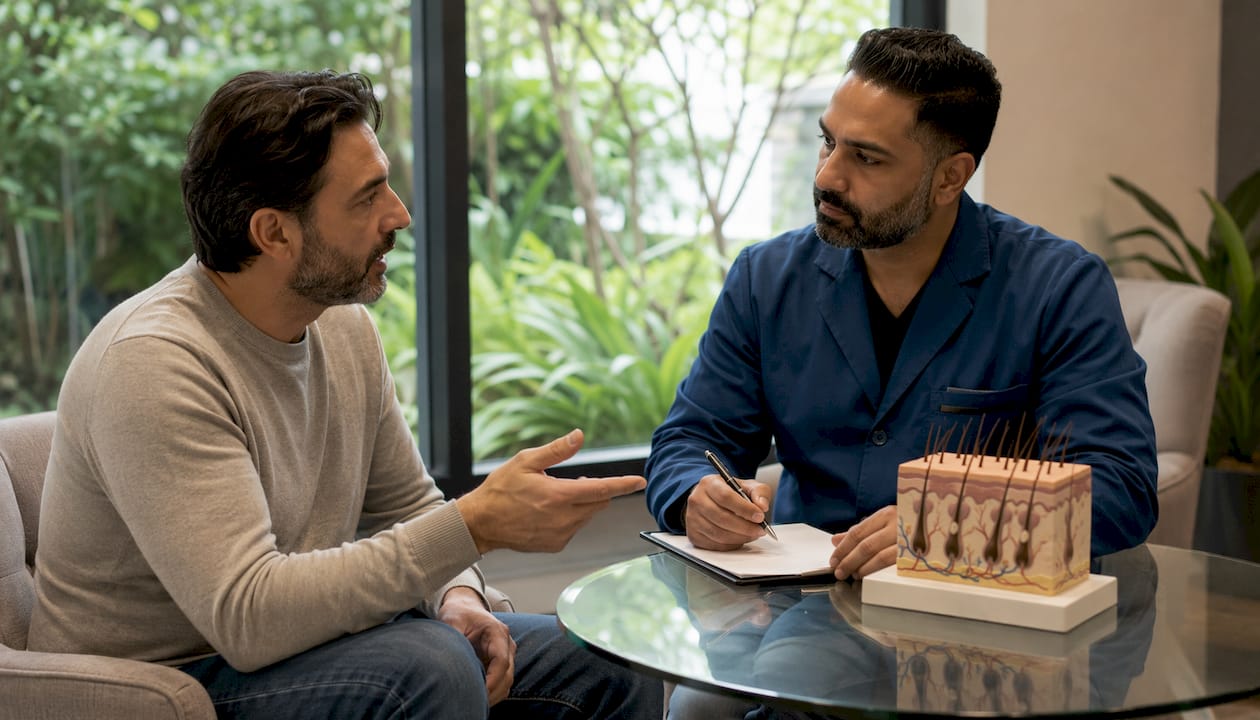
Beard follicle transplantation, more formally termed facial follicular unit transplantation, involves harvesting individual follicular units from a donor site and implanting them into recipient sites across the beard zone. The procedure is performed under local anaesthetic as a same-day outpatient treatment. No general anaesthetic is required for the vast majority of patients.
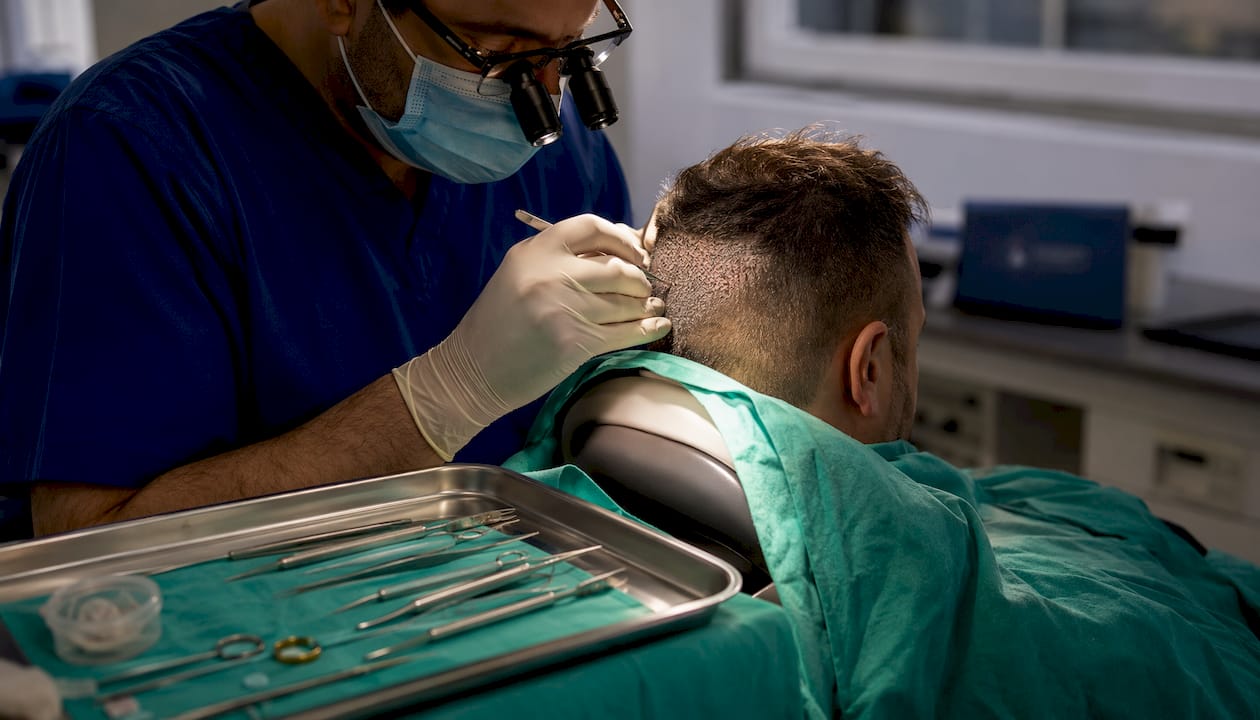
The reason results are permanent comes down to donor dominance. Scalp follicles from the occipital and lateral zones are genetically resistant to the hormonal miniaturisation that causes beard patchiness in the first place. Once implanted into the face, they retain those growth characteristics and produce terminal hair indefinitely.
Surgical artistry is equally important. Facial hair does not grow in a single uniform direction; it changes angle and orientation across zones such as the moustache, chin, sideburns and jaw. Precise angulation and density planning are critical determinants of a natural appearance, and poorly placed grafts are difficult to correct. The donor area is typically shaved to allow follicle access, while the recipient facial area is often left unshaved so the surgeon can read existing hair direction during implantation.
Key technical principles that determine whether results look natural:
- Direction matching: each graft must align with surrounding follicles in that specific facial zone
- Angle control: grafts placed at the wrong angle produce an unnatural, brush-like appearance
- Density planning: too few grafts per cm² leave visible gaps; too many risk poor graft survival
- Graft handling time: the shorter the time follicles spend outside the body, the higher the survival rate
Who makes a suitable candidate for beard transplantation?
The best candidates for beard transplant are men with a stable, clearly defined pattern of facial hair absence or patchiness, sufficient donor supply, and realistic expectations about outcomes. Suitability is not simply about wanting a fuller beard; it depends on clinical factors that a qualified surgeon must assess.
You are likely a suitable candidate if you:
- Have absent or very sparse beard hair from birth or due to genetics
- Have scarring from burns, acne, surgery (including cleft lip repair), or trauma that has destroyed follicles
- Are a transgender man seeking masculinisation of facial features
- Have a stable hair loss pattern that has not changed significantly in the past 12 months
- Are in good general health with no active autoimmune skin conditions
- Have a realistic understanding of what the procedure can and cannot achieve
You should delay or reconsider surgery if you:
- Are under 25 and your facial hair is still developing naturally
- Have active alopecia barbae or another inflammatory condition affecting the beard zone
- Smoke heavily (smoking impairs graft survival and wound healing)
- Have insufficient scalp donor supply without a viable alternative donor site
- Are seeking surgery primarily because of social pressure rather than a stable personal decision
Younger men in particular should be cautious. Spontaneous beard development can continue into the mid-twenties, and non-surgical treatments may resolve patchiness without permanent intervention. When there is any suspicion of an autoimmune or inflammatory cause, a dermatology assessment is advisable before proceeding, since active disease can cause transplant failure until it is brought under control.
FUE, FUT, and DHI: which technique is right for you?
Three main surgical techniques are used in beard restoration, each with distinct trade-offs in scarring, session length, graft yield and recovery. Understanding them helps you ask better questions at consultation.
| Technique | Scarring | Session length | Graft yield | Recovery |
|---|---|---|---|---|
| FUE (Follicular Unit Excision) | Pinpoint dot scars, diffuse | Several hours | Moderate per session | About a week |
| FUT (Follicular Unit Transplantation) | Single linear scar | Several hours | Higher yield per session | One to two weeks |
| DHI (Direct Hair Implantation) | Pinpoint dot scars | Several hours | Moderate | About a week |
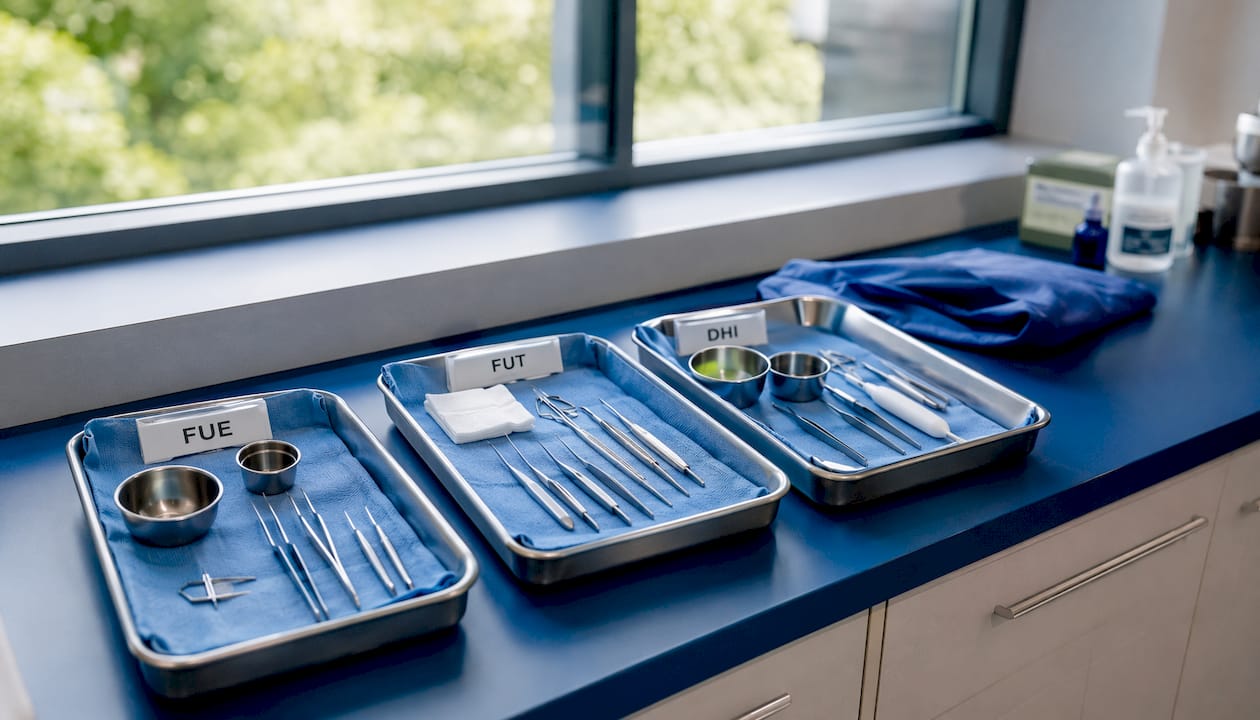
FUE leaves pinpoint dot scars and is preferred when the patient wears their hair short or when body or beard donors are being used alongside scalp follicles. FUT produces a linear scar confined to one area but can deliver a larger graft yield in a single session, which may suit men needing extensive coverage. DHI uses a Choi implanter pen to create the recipient channel and implant the graft simultaneously, reducing the time follicles spend outside the body and allowing precise angle control.
Donor source options and their trade-offs:
- Occipital scalp (preferred): genetically resistant to androgenetic miniaturisation; produces durable, thick terminal hair; the first-choice donor site when supply is adequate
- Sub-jawline beard hair: excellent physical match for facial hair; limited in total extractable units; chosen when scalp supply is insufficient or fewer grafts are needed
- Chest or body hair: finer texture, different growth cycle; used as a supplementary source when scalp and beard donors are limited
- Pubic hair: a last-resort donor source due to different texture and growth characteristics; reserved for cases where all other donor sites are inadequate
When scalp supply is limited, beard grafts from the sub-jawline area are a strong secondary option. Some clinical series report that beard graft survival at one year can match or exceed scalp graft survival rates, making them a clinically sound choice rather than a compromise.
Pro Tip: Ask your surgeon specifically which donor site they plan to use and why. The answer reveals both their planning depth and their familiarity with your individual donor profile.
What happens during a beard transplant: a step-by-step guide
A typical beard transplant follows a structured sequence from initial design through to post-operative checks. Knowing what each stage involves removes uncertainty and helps you prepare practically.
- Initial consultation and design: The surgeon maps the areas to be grafted, determines the number of follicular units required per zone, and photographs the donor and recipient areas. A written treatment plan is produced.
- Pre-operative checks: Blood pressure, medical history review and any required blood tests are completed. Consent forms are signed. You are advised on medications to avoid (aspirin, anti-inflammatories) in the days prior.
- Local anaesthetic administration: Anaesthetic is injected into both the donor and recipient areas. Most patients report the injections as the most uncomfortable part of the day; once numb, the procedure itself is well tolerated.
- Donor extraction: The donor area is shaved and follicular units are extracted individually (FUE/DHI) or as a strip (FUT). Extracted grafts are placed in a chilled holding solution to preserve viability.
- Graft preparation: A trained technician examines and sorts grafts under magnification, trimming excess tissue and grading units by follicle count.
- Recipient site creation: The surgeon makes precise incisions or channels in the beard zone, following the natural direction and angle of existing facial hair. This stage is the most technically demanding.
- Implantation: Grafts are placed into recipient sites using forceps or a Choi implanter pen. The DHI method combines steps 6 and 7, reducing graft exposure time.
- Immediate post-operative checks: The treated area is inspected, any minor bleeding is addressed, and aftercare instructions are provided in writing. Most patients leave the clinic within an hour of the final graft being placed.
Practical day-of advice:
- Wear a loose, button-front shirt so you do not pull fabric over your face when dressing
- Arrange a driver; you should not drive after sedation, and fatigue is common after a long session
- Bring photo ID and any pre-signed consent documents
- Expect to be at the clinic for 5–10 hours depending on graft count
Larger procedures (above roughly 2,000 grafts) are sometimes staged across two sessions to protect graft survival and reduce operative time. Your surgeon will advise whether a single or staged approach suits your case.
Recovery timeline: what to expect week by week
Recovery from beard follicle transplantation follows a predictable pattern, though individual variation is normal. The most important thing to understand is that visible growth does not begin immediately, and an early shedding phase is part of the process, not a sign of failure.
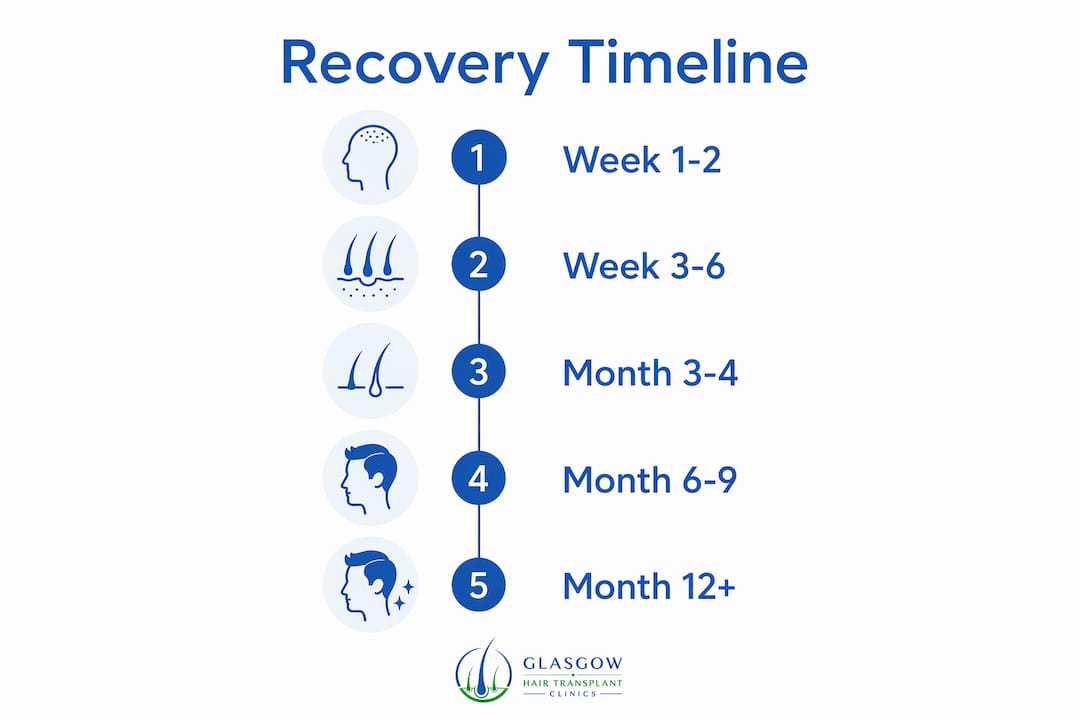
Week 1–2: Redness, mild swelling and small crusts form around each graft site. Sleep with your head slightly elevated to reduce swelling. Avoid touching or scratching the recipient area. Gentle saline sprays are typically recommended to keep the area clean.
Weeks 3–6: Transplanted hairs begin to shed. This is shock loss, a normal and expected phase in which the hair shaft falls away while the follicle remains alive beneath the skin. Many patients find this phase psychologically difficult; understanding it in advance makes it easier to manage.
Months 3–4: Fine new hairs begin to emerge from the transplanted follicles. Growth is often uneven at this stage, with some areas appearing ahead of others.
Months 6–9: Coverage becomes noticeably fuller. Hair texture and calibre continue to mature.
Months 9–18: Full, mature results are typically evident by 9–12 months, though some patients see continued maturation up to 18 months. This is the point at which the final outcome can be properly assessed.
Aftercare checklist:
- Avoid vigorous exercise for at least two weeks post-procedure
- Do not shave the recipient area for the first three to four weeks
- Take any prescribed antibiotics and anti-inflammatory medication as directed
- Avoid alcohol for at least 48 hours post-surgery
- Protect the area from direct sun exposure for the first month
- Contact the clinic promptly if you notice signs of infection: increasing redness, heat, discharge or fever
Detailed pre- and post-operative guidance is available through Glasgowhairtransplantclinics’s before and after care page.
How long do beard transplant results last?
Beard transplant results are intended to be permanent. Because transplanted scalp follicles carry their original genetic resistance to hormonal miniaturisation, they continue to produce hair in the facial zone for life under normal circumstances. Donor dominance is the biological principle that underpins this durability.
Graft survival rates vary by donor source, technique and surgeon experience. Clinical series report that well-executed procedures using occipital scalp donors achieve high one-year survival rates. Beard-to-beard grafts have shown comparable or superior survival in some series, making them a sound option when scalp supply is limited.
Factors that influence outcome quality:
- Surgeon skill and experience: the single most important variable; precise angulation and density planning determine whether results look natural
- Graft handling time: follicles stored outside the body for extended periods show reduced viability; techniques that minimise this (such as DHI) are associated with improved survival
- Patient health: smoking, poor nutrition and uncontrolled systemic conditions all impair healing and graft take
- Recipient site technique: the depth, angle and spacing of incisions directly affect how grafts settle and grow
- Post-operative care: following aftercare instructions consistently reduces infection risk and supports optimal graft survival
Most patients do not require further sessions once their primary procedure has fully matured. However, some men choose a second session to increase density beyond what was achievable in the first, particularly when donor supply limited the initial graft count. Adjunct treatments such as PRP (Platelet Rich Plasma therapy) are sometimes used alongside surgery to support healing and potentially improve graft survival, though they are not a substitute for surgical technique.
Risks and complications: what you need to know
Beard follicle transplantation is a minimally invasive surgical procedure, and serious complications are uncommon when performed by a qualified surgeon in a registered clinic. That said, all surgical procedures carry risk, and informed consent requires a clear understanding of what can go wrong.
Common, temporary side effects:
- Swelling of the face and forehead (typically resolves within 5–7 days)
- Bruising around the donor and recipient areas
- Temporary numbness or altered sensation in treated zones
- Crusting and mild itching during the healing phase
- Shock loss (expected shedding of transplanted hairs at 3–6 weeks)
Less common complications:
- Infection at donor or recipient sites (managed with antibiotics if caught early)
- Poor graft take resulting in patchy or uneven coverage
- Folliculitis (inflammation of hair follicles) in the weeks following surgery
- Cyst formation at recipient sites
- Unattractive hair angulation if grafts are placed incorrectly
Rare but serious risks:
- Necrosis (tissue death) at recipient sites, usually associated with over-dense packing or compromised blood supply
- Permanent scarring at the donor site if extraction is too aggressive
- Persistent numbness in the donor area
Risk is reduced substantially through careful patient selection, aseptic surgical technique, precise angle placement, and structured follow-up care. Clinics registered with the Care Quality Commission (CQC) or Healthcare Improvement Scotland (HIS) are subject to regulatory oversight that supports consistent standards.
Contact your clinic immediately if you experience: a fever above 38°C, rapidly spreading redness, purulent discharge, or severe pain that is not controlled by prescribed analgesia.
Beard transplant costs in the UK: what to budget
UK pricing for beard follicle transplantation varies considerably depending on graft count, technique, clinic location and the experience of the operating surgeon. There is no single fixed price, but the following bands give a realistic planning framework.
| Graft count | Typical use case | Approximate UK cost band |
|---|---|---|
| 500–1,000 grafts | Filling small patches, moustache area, scar coverage | £1,500 |
| 1,000–2,000 grafts | Moderate beard restoration, fuller coverage of chin and jaw | £3,000 |
| 2,000–3,500 grafts | Full beard creation, extensive scarring, dense coverage | £9,000 |
These figures reflect the general UK market range. Prices in London and major cities tend to sit at the higher end; clinics in Glasgow, Newcastle and other regional locations often offer comparable clinical standards at more accessible price points. For a transparent breakdown of what fees cover at Glasgowhairtransplantclinics, the pricing page sets out current options clearly.
Factors that move the price:
- Technique chosen (DHI typically costs more than standard FUE due to longer operative time)
- Whether the procedure is staged across multiple sessions
- Clinic registration status and surgeon seniority
- Whether PRP or SMP adjuncts are included
- Geographic location of the clinic
Most reputable clinics include the initial consultation, graft count assessment, the operative procedure, immediate aftercare and at least one follow-up appointment within the quoted price. Clarify in writing what is and is not included before committing, particularly regarding revision procedures if graft take is below expectations.
Non-surgical alternatives to consider first
Surgery is not always the right first step, particularly for younger men or those whose patchiness has a treatable underlying cause. Several non-surgical options are worth considering before committing to a permanent procedure.
- Topical minoxidil: applied directly to the beard zone, minoxidil can stimulate growth in follicles that are present but dormant; results require consistent daily use and typically take 3–6 months to assess
- Oral and medical therapies: in some cases, a dermatologist may recommend systemic treatments for inflammatory or autoimmune causes of beard loss; addressing the root cause first protects any subsequent surgical investment
- PRP (Platelet Rich Plasma therapy): injections of concentrated growth factors from the patient’s own blood can support follicle health and are sometimes used as a preparatory or adjunct treatment; Glasgowhairtransplantclinics offers PRP treatment as a standalone or combined option
- Scalp Micro Pigmentation (SMP): a non-surgical cosmetic tattooing technique that creates the visual impression of beard stubble; suitable for men who want the appearance of a short beard without surgery, or to improve perceived density between sessions
- Beard-to-beard donor grafting: when scalp supply is limited, using sub-jawline beard hair as the donor source is a surgical option that avoids scalp harvesting entirely
Non-surgical routes are most appropriate for men under 25 whose beard is still developing, men with active dermatological conditions that need treatment first, and those who want to improve density modestly rather than create a full beard from scratch. A combination approach, such as PRP alongside surgery or SMP to enhance perceived density post-transplant, can produce results that neither method achieves alone.
How to choose a surgeon and clinic: the questions that matter
Choosing the right surgeon is the single most consequential decision in the entire process. The outcome of beard follicle transplantation depends more on surgical planning and execution than on any other variable, which makes due diligence at the selection stage non-negotiable.
Credentials to verify before booking:
- GMC registration (check the GMC register at gmc-uk.org)
- Surgical qualification in hair restoration or plastic/reconstructive surgery
- Clinic registration with CQC (England) or HIS (Scotland)
- Membership of or affiliation with ISHRS
- A consistent, well-documented before-and-after gallery with standardised lighting and angles
Questions to ask at consultation:
- How many beard transplant procedures have you personally performed, and can I see recent before-and-after photographs?
- Who will perform the surgery: the consulting surgeon, or a technician?
- What graft count do you recommend for my case, and how did you arrive at that figure?
- Which technique (FUE, FUT or DHI) do you recommend for me, and why?
- What is your expected graft survival rate, and how do you measure it?
- What does the quoted price include, and what would trigger additional charges?
- What is your revision policy if I am not satisfied with the result?
- What follow-up appointments are included, and how long after surgery is the final review?
Red flags that should prompt you to look elsewhere:
- Vague or absent before-and-after evidence
- Pressure to book on the day of consultation
- Inability to confirm who performs the surgery
- No written consent process or documented aftercare plan
- Promises of guaranteed results or unusually low graft counts for the coverage described
- No clear explanation of anaesthesia, session duration or staging plan
Pro Tip: Request that the clinic’s before-and-after photographs include cases with a similar beard zone and hair type to yours. Generic gallery images from different patient profiles tell you very little about what your result might look like.
What to expect from a reputable UK clinic
A well-run UK beard transplant clinic follows a structured patient pathway that prioritises clinical safety, informed consent and realistic outcome planning at every stage. Understanding what that pathway looks like helps you recognise whether a clinic you are considering meets the standard.
At the initial consultation, the surgeon conducts a detailed assessment of both donor and recipient areas, photographs the beard zone under consistent lighting, and produces a written design showing where grafts will be placed and in what density. Graft count estimates are provided with a clear rationale, not as a sales figure.
Before surgery, the clinic provides written pre-operative instructions, confirms the anaesthetic plan, and obtains signed informed consent that covers risks, alternatives and the revision policy. On the day, a qualified GMC-registered surgeon performs the procedure, with trained support staff handling graft preparation under magnification.
Post-operatively, patients receive written aftercare instructions, a follow-up appointment schedule and a direct contact route for any concerns. Clinics registered with CQC or HIS are subject to inspection and must demonstrate consistent standards of care.
At Glasgowhairtransplantclinics, every beard restoration patient receives a personalised donor assessment, a transparent graft count and a documented aftercare plan. Our surgeons are GMC-registered, our clinics are CQC and HIS registered, and we offer free online or face-to-face consultations so you can make an informed decision without pressure. Our before-and-after gallery documents real patient outcomes with consistent photography, and our donor area guidance supports every stage of your planning.
The donor area assessment is a particularly important step that less thorough clinics sometimes rush. A proper evaluation determines not just how many grafts are available, but which donor site is most appropriate for your specific beard restoration goals.
Key takeaways
Beard follicle transplantation offers a permanent solution for men with absent or patchy facial hair, provided the procedure is performed by a qualified surgeon with precise planning and realistic expectations from the outset.
| Point | Details |
|---|---|
| Permanence through donor dominance | Transplanted scalp follicles retain their genetic programming and continue growing on the face for life. |
| Candidate suitability matters | Stable hair loss, sufficient donor supply and realistic expectations are the core criteria; younger men should often wait. |
| Timeline to final results | Visible growth begins around three months; full, mature results are typically evident by 9–12 months, sometimes up to 18 months. |
| UK cost range | Procedures typically range from approximately £1,500 for small patch work to £9,000 or more for full beard creation. |
| Glasgowhairtransplantclinics | Offers GMC-registered surgeons, CQC and HIS registered clinics, free consultations, and transparent pricing across UK locations. |
A candid perspective on beard transplantation
What most guides get wrong about beard transplants
The majority of online content about beard follicle transplantation focuses on the procedure itself: the technique, the timeline, the cost. What it consistently underplays is the design phase, and that omission leads men into consultations where they are evaluating the wrong things.
The surgical artistry in beard restoration is not about how many grafts are extracted. It is about where each one is placed, at what angle, and in what sequence across a facial zone where hair direction changes continuously from the sideburn to the chin to the moustache. A surgeon who places 2,000 grafts with poor angulation will produce a result that looks unnatural regardless of graft survival rate. A surgeon who places 1,200 grafts with precise micro-planning can produce a result that is indistinguishable from natural growth.
This matters practically because it changes what you should be evaluating at consultation. The question is not “how many grafts do I get?” It is “can I see examples of your angulation work in the moustache and chin zones specifically?” Most men do not ask this. Most clinics do not volunteer it.
There is also a psychological dimension that deserves more attention. The shock-loss phase, typically weeks three to six, is genuinely distressing for men who were not prepared for it. Hairs shed, coverage looks worse than before surgery, and the temptation to conclude the procedure has failed is strong. Clinics that prepare patients thoroughly for this phase, with written timelines and a direct contact route, produce patients who manage the recovery far better than those who encounter it as a surprise.
The final point worth making: beard design trends change. The sharp-edged, high-density beard that is fashionable now may not be in ten years. A responsible surgeon will raise this with you at the design stage, because the placement you agree to today is permanent. That conversation is a mark of clinical integrity, not a sales obstacle.
Glasgowhairtransplantclinics: beard restoration with clinical confidence
For men who are ready to move from research to action, Glasgowhairtransplantclinics offers beard restoration procedures across Glasgow, Newcastle and other UK locations, with GMC-registered surgeons, CQC and HIS registered clinics, and pricing that is transparent from the first conversation.
The clinic’s beard transplant service covers FUE and DHI techniques, personalised donor assessment, and access to PRP therapy and SMP as adjunct options where appropriate. Consultations are free, available online or face-to-face, and include a full graft count estimate and written treatment plan. There is no obligation to proceed, and no pressure to book on the day.
Pricing is set out clearly on the cost page, with a breakdown of what each package includes. Follow-up appointments and aftercare guidance are part of the standard patient pathway, not optional extras. To see documented patient outcomes before making any decision, the before-and-after gallery provides a consistent photographic record of real results across a range of beard restoration cases.
Book your free consultation with Glasgowhairtransplantclinics today and receive a personalised assessment from a qualified surgeon who will tell you honestly what is achievable for your specific donor profile and beard goals.
Useful sources and further reading
The following resources provide primary clinical evidence, professional guidance and practical patient information for men researching beard follicle transplantation.
| Source | Why it is useful |
|---|---|
| ISHRS — Beard and Moustache Transplant | Professional society guidance on candidacy, technique and design principles from the leading international hair restoration body |
| PMC — Using Non-Scalp Hair in Scalp Hair Restoration | Peer-reviewed clinical review of donor-source options, survival rates and technical considerations for non-scalp grafts |
| Glasgowhairtransplantclinics — Donor area guide | Practical guidance on donor suitability assessment and zone management relevant to beard restoration planning |
| Glasgowhairtransplantclinics — Before and after gallery | Documented patient outcomes with consistent photography to support realistic expectation-setting |
| Glasgowhairtransplantclinics — Aftercare guide | Detailed post-operative instructions covering hygiene, activity restrictions and signs of complications |
| Glasgowhairtransplantclinics — Shock loss and shedding | Explains the shock-loss phase and expected growth milestones to support patient understanding during recovery |
This article provides general information about beard follicle transplantation and does not constitute medical advice. Confirm your individual suitability and current clinical guidance with a qualified, GMC-registered surgeon before making any treatment decision.
FAQ
How long does a beard transplant last?
Beard transplant results are permanent for most patients. Transplanted scalp follicles retain their genetic growth programming through donor dominance and continue producing hair in the facial zone for life, provided the procedure is performed correctly and aftercare instructions are followed.
How much does a beard transplant cost in the UK?
UK costs typically range from approximately £1,500 for small patch procedures (500–1,000 grafts) to £9,000 or more for full beard creation requiring 2,000–3,500 grafts. Technique, clinic location, surgeon experience and what is included in the package all affect the final figure.
Do surgeons use pubic hair for beard transplants?
Pubic hair can technically be used but is considered a last-resort donor source due to its different texture and growth characteristics. Surgeons prefer occipital scalp or sub-jawline beard hair; pubic hair is only considered when all other donor sites are inadequate.
Is a beard transplant successful?
Well-executed beard transplants using occipital scalp donors achieve high graft survival rates at one year, and the procedure is considered reliable when performed by an experienced, qualified surgeon. Success depends significantly on surgical planning, precise angulation, graft handling time and post-operative care.
When will I see results after a beard transplant?
Initial growth typically begins around three months after surgery, following the expected shock-loss and shedding phase. Full, mature results are usually evident between 9–12 months, with some patients seeing continued maturation up to 18 months post-procedure.
Recommended
Certifications




Table of Contents
- What beard follicle transplantation actually does
- Who makes a suitable candidate for beard transplantation?
- FUE, FUT, and DHI: which technique is right for you?
- What happens during a beard transplant: a step-by-step guide
- Recovery timeline: what to expect week by week
- How long do beard transplant results last?
- Risks and complications: what you need to know
- Beard transplant costs in the UK: what to budget
- Non-surgical alternatives to consider first
- How to choose a surgeon and clinic: the questions that matter
- What to expect from a reputable UK clinic
- Key takeaways
- A candid perspective on beard transplantation
- What most guides get wrong about beard transplants
- Glasgowhairtransplantclinics: beard restoration with clinical confidence
- Useful sources and further reading
- FAQ
What beard follicle transplantation actually does
Beard follicle transplantation, more formally termed facial follicular unit transplantation, involves harvesting individual follicular units from a donor site and implanting them into recipient sites across the beard zone. The procedure is performed under local anaesthetic as a same-day outpatient treatment. No general anaesthetic is required for the vast majority of patients.
The reason results are permanent comes down to donor dominance. Scalp follicles from the occipital and lateral zones are genetically resistant to the hormonal miniaturisation that causes beard patchiness in the first place. Once implanted into the face, they retain those growth characteristics and produce terminal hair indefinitely.
Surgical artistry is equally important. Facial hair does not grow in a single uniform direction; it changes angle and orientation across zones such as the moustache, chin, sideburns and jaw. Precise angulation and density planning are critical determinants of a natural appearance, and poorly placed grafts are difficult to correct. The donor area is typically shaved to allow follicle access, while the recipient facial area is often left unshaved so the surgeon can read existing hair direction during implantation.
Key technical principles that determine whether results look natural:
- Direction matching: each graft must align with surrounding follicles in that specific facial zone
- Angle control: grafts placed at the wrong angle produce an unnatural, brush-like appearance
- Density planning: too few grafts per cm² leave visible gaps; too many risk poor graft survival
- Graft handling time: the shorter the time follicles spend outside the body, the higher the survival rate
Who makes a suitable candidate for beard transplantation?
The best candidates for beard transplant are men with a stable, clearly defined pattern of facial hair absence or patchiness, sufficient donor supply, and realistic expectations about outcomes. Suitability is not simply about wanting a fuller beard; it depends on clinical factors that a qualified surgeon must assess.
You are likely a suitable candidate if you:
- Have absent or very sparse beard hair from birth or due to genetics
- Have scarring from burns, acne, surgery (including cleft lip repair), or trauma that has destroyed follicles
- Are a transgender man seeking masculinisation of facial features
- Have a stable hair loss pattern that has not changed significantly in the past 12 months
- Are in good general health with no active autoimmune skin conditions
- Have a realistic understanding of what the procedure can and cannot achieve
You should delay or reconsider surgery if you:
- Are under 25 and your facial hair is still developing naturally
- Have active alopecia barbae or another inflammatory condition affecting the beard zone
- Smoke heavily (smoking impairs graft survival and wound healing)
- Have insufficient scalp donor supply without a viable alternative donor site
- Are seeking surgery primarily because of social pressure rather than a stable personal decision
Younger men in particular should be cautious. Spontaneous beard development can continue into the mid-twenties, and non-surgical treatments may resolve patchiness without permanent intervention. When there is any suspicion of an autoimmune or inflammatory cause, a dermatology assessment is advisable before proceeding, since active disease can cause transplant failure until it is brought under control.
FUE, FUT, and DHI: which technique is right for you?
Three main surgical techniques are used in beard restoration, each with distinct trade-offs in scarring, session length, graft yield and recovery. Understanding them helps you ask better questions at consultation.
| Technique | Scarring | Session length | Graft yield | Recovery |
|---|---|---|---|---|
| FUE (Follicular Unit Excision) | Pinpoint dot scars, diffuse | Several hours | Moderate per session | About a week |
| FUT (Follicular Unit Transplantation) | Single linear scar | Several hours | Higher yield per session | One to two weeks |
| DHI (Direct Hair Implantation) | Pinpoint dot scars | Several hours | Moderate | About a week |
FUE leaves pinpoint dot scars and is preferred when the patient wears their hair short or when body or beard donors are being used alongside scalp follicles. FUT produces a linear scar confined to one area but can deliver a larger graft yield in a single session, which may suit men needing extensive coverage. DHI uses a Choi implanter pen to create the recipient channel and implant the graft simultaneously, reducing the time follicles spend outside the body and allowing precise angle control.
Donor source options and their trade-offs:
- Occipital scalp (preferred): genetically resistant to androgenetic miniaturisation; produces durable, thick terminal hair; the first-choice donor site when supply is adequate
- Sub-jawline beard hair: excellent physical match for facial hair; limited in total extractable units; chosen when scalp supply is insufficient or fewer grafts are needed
- Chest or body hair: finer texture, different growth cycle; used as a supplementary source when scalp and beard donors are limited
- Pubic hair: a last-resort donor source due to different texture and growth characteristics; reserved for cases where all other donor sites are inadequate
When scalp supply is limited, beard grafts from the sub-jawline area are a strong secondary option. Some clinical series report that beard graft survival at one year can match or exceed scalp graft survival rates, making them a clinically sound choice rather than a compromise.
Pro Tip: Ask your surgeon specifically which donor site they plan to use and why. The answer reveals both their planning depth and their familiarity with your individual donor profile.
What happens during a beard transplant: a step-by-step guide
A typical beard transplant follows a structured sequence from initial design through to post-operative checks. Knowing what each stage involves removes uncertainty and helps you prepare practically.
- Initial consultation and design: The surgeon maps the areas to be grafted, determines the number of follicular units required per zone, and photographs the donor and recipient areas. A written treatment plan is produced.
- Pre-operative checks: Blood pressure, medical history review and any required blood tests are completed. Consent forms are signed. You are advised on medications to avoid (aspirin, anti-inflammatories) in the days prior.
- Local anaesthetic administration: Anaesthetic is injected into both the donor and recipient areas. Most patients report the injections as the most uncomfortable part of the day; once numb, the procedure itself is well tolerated.
- Donor extraction: The donor area is shaved and follicular units are extracted individually (FUE/DHI) or as a strip (FUT). Extracted grafts are placed in a chilled holding solution to preserve viability.
- Graft preparation: A trained technician examines and sorts grafts under magnification, trimming excess tissue and grading units by follicle count.
- Recipient site creation: The surgeon makes precise incisions or channels in the beard zone, following the natural direction and angle of existing facial hair. This stage is the most technically demanding.
- Implantation: Grafts are placed into recipient sites using forceps or a Choi implanter pen. The DHI method combines steps 6 and 7, reducing graft exposure time.
- Immediate post-operative checks: The treated area is inspected, any minor bleeding is addressed, and aftercare instructions are provided in writing. Most patients leave the clinic within an hour of the final graft being placed.
Practical day-of advice:
- Wear a loose, button-front shirt so you do not pull fabric over your face when dressing
- Arrange a driver; you should not drive after sedation, and fatigue is common after a long session
- Bring photo ID and any pre-signed consent documents
- Expect to be at the clinic for 5–10 hours depending on graft count
Larger procedures (above roughly 2,000 grafts) are sometimes staged across two sessions to protect graft survival and reduce operative time. Your surgeon will advise whether a single or staged approach suits your case.
Recovery timeline: what to expect week by week
Recovery from beard follicle transplantation follows a predictable pattern, though individual variation is normal. The most important thing to understand is that visible growth does not begin immediately, and an early shedding phase is part of the process, not a sign of failure.
Week 1–2: Redness, mild swelling and small crusts form around each graft site. Sleep with your head slightly elevated to reduce swelling. Avoid touching or scratching the recipient area. Gentle saline sprays are typically recommended to keep the area clean.
Weeks 3–6: Transplanted hairs begin to shed. This is shock loss, a normal and expected phase in which the hair shaft falls away while the follicle remains alive beneath the skin. Many patients find this phase psychologically difficult; understanding it in advance makes it easier to manage.
Months 3–4: Fine new hairs begin to emerge from the transplanted follicles. Growth is often uneven at this stage, with some areas appearing ahead of others.
Months 6–9: Coverage becomes noticeably fuller. Hair texture and calibre continue to mature.
Months 9–18: Full, mature results are typically evident by 9–12 months, though some patients see continued maturation up to 18 months. This is the point at which the final outcome can be properly assessed.
Aftercare checklist:
- Avoid vigorous exercise for at least two weeks post-procedure
- Do not shave the recipient area for the first three to four weeks
- Take any prescribed antibiotics and anti-inflammatory medication as directed
- Avoid alcohol for at least 48 hours post-surgery
- Protect the area from direct sun exposure for the first month
- Contact the clinic promptly if you notice signs of infection: increasing redness, heat, discharge or fever
Detailed pre- and post-operative guidance is available through Glasgowhairtransplantclinics’s before and after care page.
How long do beard transplant results last?
Beard transplant results are intended to be permanent. Because transplanted scalp follicles carry their original genetic resistance to hormonal miniaturisation, they continue to produce hair in the facial zone for life under normal circumstances. Donor dominance is the biological principle that underpins this durability.
Graft survival rates vary by donor source, technique and surgeon experience. Clinical series report that well-executed procedures using occipital scalp donors achieve high one-year survival rates. Beard-to-beard grafts have shown comparable or superior survival in some series, making them a sound option when scalp supply is limited.
Factors that influence outcome quality:
- Surgeon skill and experience: the single most important variable; precise angulation and density planning determine whether results look natural
- Graft handling time: follicles stored outside the body for extended periods show reduced viability; techniques that minimise this (such as DHI) are associated with improved survival
- Patient health: smoking, poor nutrition and uncontrolled systemic conditions all impair healing and graft take
- Recipient site technique: the depth, angle and spacing of incisions directly affect how grafts settle and grow
- Post-operative care: following aftercare instructions consistently reduces infection risk and supports optimal graft survival
Most patients do not require further sessions once their primary procedure has fully matured. However, some men choose a second session to increase density beyond what was achievable in the first, particularly when donor supply limited the initial graft count. Adjunct treatments such as PRP (Platelet Rich Plasma therapy) are sometimes used alongside surgery to support healing and potentially improve graft survival, though they are not a substitute for surgical technique.
Risks and complications: what you need to know
Beard follicle transplantation is a minimally invasive surgical procedure, and serious complications are uncommon when performed by a qualified surgeon in a registered clinic. That said, all surgical procedures carry risk, and informed consent requires a clear understanding of what can go wrong.
Common, temporary side effects:
- Swelling of the face and forehead (typically resolves within 5–7 days)
- Bruising around the donor and recipient areas
- Temporary numbness or altered sensation in treated zones
- Crusting and mild itching during the healing phase
- Shock loss (expected shedding of transplanted hairs at 3–6 weeks)
Less common complications:
- Infection at donor or recipient sites (managed with antibiotics if caught early)
- Poor graft take resulting in patchy or uneven coverage
- Folliculitis (inflammation of hair follicles) in the weeks following surgery
- Cyst formation at recipient sites
- Unattractive hair angulation if grafts are placed incorrectly
Rare but serious risks:
- Necrosis (tissue death) at recipient sites, usually associated with over-dense packing or compromised blood supply
- Permanent scarring at the donor site if extraction is too aggressive
- Persistent numbness in the donor area
Risk is reduced substantially through careful patient selection, aseptic surgical technique, precise angle placement, and structured follow-up care. Clinics registered with the Care Quality Commission (CQC) or Healthcare Improvement Scotland (HIS) are subject to regulatory oversight that supports consistent standards.
Contact your clinic immediately if you experience: a fever above 38°C, rapidly spreading redness, purulent discharge, or severe pain that is not controlled by prescribed analgesia.
Beard transplant costs in the UK: what to budget
UK pricing for beard follicle transplantation varies considerably depending on graft count, technique, clinic location and the experience of the operating surgeon. There is no single fixed price, but the following bands give a realistic planning framework.
| Graft count | Typical use case | Approximate UK cost band |
|---|---|---|
| 500–1,000 grafts | Filling small patches, moustache area, scar coverage | £1,500 |
| 1,000–2,000 grafts | Moderate beard restoration, fuller coverage of chin and jaw | £3,000 |
| 2,000–3,500 grafts | Full beard creation, extensive scarring, dense coverage | £9,000 |
These figures reflect the general UK market range. Prices in London and major cities tend to sit at the higher end; clinics in Glasgow, Newcastle and other regional locations often offer comparable clinical standards at more accessible price points. For a transparent breakdown of what fees cover at Glasgowhairtransplantclinics, the pricing page sets out current options clearly.
Factors that move the price:
- Technique chosen (DHI typically costs more than standard FUE due to longer operative time)
- Whether the procedure is staged across multiple sessions
- Clinic registration status and surgeon seniority
- Whether PRP or SMP adjuncts are included
- Geographic location of the clinic
Most reputable clinics include the initial consultation, graft count assessment, the operative procedure, immediate aftercare and at least one follow-up appointment within the quoted price. Clarify in writing what is and is not included before committing, particularly regarding revision procedures if graft take is below expectations.
Non-surgical alternatives to consider first
Surgery is not always the right first step, particularly for younger men or those whose patchiness has a treatable underlying cause. Several non-surgical options are worth considering before committing to a permanent procedure.
- Topical minoxidil: applied directly to the beard zone, minoxidil can stimulate growth in follicles that are present but dormant; results require consistent daily use and typically take 3–6 months to assess
- Oral and medical therapies: in some cases, a dermatologist may recommend systemic treatments for inflammatory or autoimmune causes of beard loss; addressing the root cause first protects any subsequent surgical investment
- PRP (Platelet Rich Plasma therapy): injections of concentrated growth factors from the patient’s own blood can support follicle health and are sometimes used as a preparatory or adjunct treatment; Glasgowhairtransplantclinics offers PRP treatment as a standalone or combined option
- Scalp Micro Pigmentation (SMP): a non-surgical cosmetic tattooing technique that creates the visual impression of beard stubble; suitable for men who want the appearance of a short beard without surgery, or to improve perceived density between sessions
- Beard-to-beard donor grafting: when scalp supply is limited, using sub-jawline beard hair as the donor source is a surgical option that avoids scalp harvesting entirely
Non-surgical routes are most appropriate for men under 25 whose beard is still developing, men with active dermatological conditions that need treatment first, and those who want to improve density modestly rather than create a full beard from scratch. A combination approach, such as PRP alongside surgery or SMP to enhance perceived density post-transplant, can produce results that neither method achieves alone.
How to choose a surgeon and clinic: the questions that matter
Choosing the right surgeon is the single most consequential decision in the entire process. The outcome of beard follicle transplantation depends more on surgical planning and execution than on any other variable, which makes due diligence at the selection stage non-negotiable.
Credentials to verify before booking:
- GMC registration (check the GMC register at gmc-uk.org)
- Surgical qualification in hair restoration or plastic/reconstructive surgery
- Clinic registration with CQC (England) or HIS (Scotland)
- Membership of or affiliation with ISHRS
- A consistent, well-documented before-and-after gallery with standardised lighting and angles
Questions to ask at consultation:
- How many beard transplant procedures have you personally performed, and can I see recent before-and-after photographs?
- Who will perform the surgery: the consulting surgeon, or a technician?
- What graft count do you recommend for my case, and how did you arrive at that figure?
- Which technique (FUE, FUT or DHI) do you recommend for me, and why?
- What is your expected graft survival rate, and how do you measure it?
- What does the quoted price include, and what would trigger additional charges?
- What is your revision policy if I am not satisfied with the result?
- What follow-up appointments are included, and how long after surgery is the final review?
Red flags that should prompt you to look elsewhere:
- Vague or absent before-and-after evidence
- Pressure to book on the day of consultation
- Inability to confirm who performs the surgery
- No written consent process or documented aftercare plan
- Promises of guaranteed results or unusually low graft counts for the coverage described
- No clear explanation of anaesthesia, session duration or staging plan
Pro Tip: Request that the clinic’s before-and-after photographs include cases with a similar beard zone and hair type to yours. Generic gallery images from different patient profiles tell you very little about what your result might look like.
What to expect from a reputable UK clinic
A well-run UK beard transplant clinic follows a structured patient pathway that prioritises clinical safety, informed consent and realistic outcome planning at every stage. Understanding what that pathway looks like helps you recognise whether a clinic you are considering meets the standard.
At the initial consultation, the surgeon conducts a detailed assessment of both donor and recipient areas, photographs the beard zone under consistent lighting, and produces a written design showing where grafts will be placed and in what density. Graft count estimates are provided with a clear rationale, not as a sales figure.
Before surgery, the clinic provides written pre-operative instructions, confirms the anaesthetic plan, and obtains signed informed consent that covers risks, alternatives and the revision policy. On the day, a qualified GMC-registered surgeon performs the procedure, with trained support staff handling graft preparation under magnification.
Post-operatively, patients receive written aftercare instructions, a follow-up appointment schedule and a direct contact route for any concerns. Clinics registered with CQC or HIS are subject to inspection and must demonstrate consistent standards of care.
At Glasgowhairtransplantclinics, every beard restoration patient receives a personalised donor assessment, a transparent graft count and a documented aftercare plan. Our surgeons are GMC-registered, our clinics are CQC and HIS registered, and we offer free online or face-to-face consultations so you can make an informed decision without pressure. Our before-and-after gallery documents real patient outcomes with consistent photography, and our donor area guidance supports every stage of your planning.
The donor area assessment is a particularly important step that less thorough clinics sometimes rush. A proper evaluation determines not just how many grafts are available, but which donor site is most appropriate for your specific beard restoration goals.
Key takeaways
Beard follicle transplantation offers a permanent solution for men with absent or patchy facial hair, provided the procedure is performed by a qualified surgeon with precise planning and realistic expectations from the outset.
| Point | Details |
|---|---|
| Permanence through donor dominance | Transplanted scalp follicles retain their genetic programming and continue growing on the face for life. |
| Candidate suitability matters | Stable hair loss, sufficient donor supply and realistic expectations are the core criteria; younger men should often wait. |
| Timeline to final results | Visible growth begins around three months; full, mature results are typically evident by 9–12 months, sometimes up to 18 months. |
| UK cost range | Procedures typically range from approximately £1,500 for small patch work to £9,000 or more for full beard creation. |
| Glasgowhairtransplantclinics | Offers GMC-registered surgeons, CQC and HIS registered clinics, free consultations, and transparent pricing across UK locations. |
A candid perspective on beard transplantation
What most guides get wrong about beard transplants
The majority of online content about beard follicle transplantation focuses on the procedure itself: the technique, the timeline, the cost. What it consistently underplays is the design phase, and that omission leads men into consultations where they are evaluating the wrong things.
The surgical artistry in beard restoration is not about how many grafts are extracted. It is about where each one is placed, at what angle, and in what sequence across a facial zone where hair direction changes continuously from the sideburn to the chin to the moustache. A surgeon who places 2,000 grafts with poor angulation will produce a result that looks unnatural regardless of graft survival rate. A surgeon who places 1,200 grafts with precise micro-planning can produce a result that is indistinguishable from natural growth.
This matters practically because it changes what you should be evaluating at consultation. The question is not “how many grafts do I get?” It is “can I see examples of your angulation work in the moustache and chin zones specifically?” Most men do not ask this. Most clinics do not volunteer it.
There is also a psychological dimension that deserves more attention. The shock-loss phase, typically weeks three to six, is genuinely distressing for men who were not prepared for it. Hairs shed, coverage looks worse than before surgery, and the temptation to conclude the procedure has failed is strong. Clinics that prepare patients thoroughly for this phase, with written timelines and a direct contact route, produce patients who manage the recovery far better than those who encounter it as a surprise.
The final point worth making: beard design trends change. The sharp-edged, high-density beard that is fashionable now may not be in ten years. A responsible surgeon will raise this with you at the design stage, because the placement you agree to today is permanent. That conversation is a mark of clinical integrity, not a sales obstacle.
Glasgowhairtransplantclinics: beard restoration with clinical confidence
For men who are ready to move from research to action, Glasgowhairtransplantclinics offers beard restoration procedures across Glasgow, Newcastle and other UK locations, with GMC-registered surgeons, CQC and HIS registered clinics, and pricing that is transparent from the first conversation.
The clinic’s beard transplant service covers FUE and DHI techniques, personalised donor assessment, and access to PRP therapy and SMP as adjunct options where appropriate. Consultations are free, available online or face-to-face, and include a full graft count estimate and written treatment plan. There is no obligation to proceed, and no pressure to book on the day.
Pricing is set out clearly on the cost page, with a breakdown of what each package includes. Follow-up appointments and aftercare guidance are part of the standard patient pathway, not optional extras. To see documented patient outcomes before making any decision, the before-and-after gallery provides a consistent photographic record of real results across a range of beard restoration cases.
Book your free consultation with Glasgowhairtransplantclinics today and receive a personalised assessment from a qualified surgeon who will tell you honestly what is achievable for your specific donor profile and beard goals.
Useful sources and further reading
The following resources provide primary clinical evidence, professional guidance and practical patient information for men researching beard follicle transplantation.
| Source | Why it is useful |
|---|---|
| ISHRS — Beard and Moustache Transplant | Professional society guidance on candidacy, technique and design principles from the leading international hair restoration body |
| PMC — Using Non-Scalp Hair in Scalp Hair Restoration | Peer-reviewed clinical review of donor-source options, survival rates and technical considerations for non-scalp grafts |
| Glasgowhairtransplantclinics — Donor area guide | Practical guidance on donor suitability assessment and zone management relevant to beard restoration planning |
| Glasgowhairtransplantclinics — Before and after gallery | Documented patient outcomes with consistent photography to support realistic expectation-setting |
| Glasgowhairtransplantclinics — Aftercare guide | Detailed post-operative instructions covering hygiene, activity restrictions and signs of complications |
| Glasgowhairtransplantclinics — Shock loss and shedding | Explains the shock-loss phase and expected growth milestones to support patient understanding during recovery |
FAQ
How long does a beard transplant last?
Beard transplant results are permanent for most patients. Transplanted scalp follicles retain their genetic growth programming through donor dominance and continue producing hair in the facial zone for life, provided the procedure is performed correctly and aftercare instructions are followed.
How much does a beard transplant cost in the UK?
UK costs typically range from approximately £1,500 for small patch procedures (500–1,000 grafts) to £9,000 or more for full beard creation requiring 2,000–3,500 grafts. Technique, clinic location, surgeon experience and what is included in the package all affect the final figure.
Do surgeons use pubic hair for beard transplants?
Pubic hair can technically be used but is considered a last-resort donor source due to its different texture and growth characteristics. Surgeons prefer occipital scalp or sub-jawline beard hair; pubic hair is only considered when all other donor sites are inadequate.
Is a beard transplant successful?
Well-executed beard transplants using occipital scalp donors achieve high graft survival rates at one year, and the procedure is considered reliable when performed by an experienced, qualified surgeon. Success depends significantly on surgical planning, precise angulation, graft handling time and post-operative care.
When will I see results after a beard transplant?
Initial growth typically begins around three months after surgery, following the expected shock-loss and shedding phase. Full, mature results are usually evident between 9–12 months, with some patients seeing continued maturation up to 18 months post-procedure.

About the author
Dr Harpreet Kalra is a GP and hair-transplant surgeon at Glasgow Hair Transplant Clinics. His consultations consider the diagnosis, donor area, existing hair and likely future pattern before treatment is discussed.
Discuss beard restoration with our Glasgow team
We can assess your donor hair, facial-hair pattern and goals before explaining whether a beard transplant is suitable.
Book a Free Consultation