
Transgender Hair Transplant Glasgow
Gender-affirming hair transplantation changes the way the hair frames the face. Treatment can feminise a receded hairline, create a stronger masculine frontal shape, restore temple recession or build facial hair through the beard, moustache and sideburn areas.
The design starts with the result you want to achieve. Dr Harpreet Kalra considers your existing hairline, facial proportions, donor density, current pattern of hair loss and future donor requirements when planning how that result should be built.




Transgender Hair Transplant in Glasgow
A transgender hair transplant uses the same donor-hair principles as any other hair transplant, but the design is different. Follicles are taken from the permanent donor region at the back and sides of the scalp and moved into the areas where the shape or density of the hair needs to change.
For many transgender women, the main concern is an M-shaped hairline or deep recession through the temples. Simply adding hair to the existing outline is not enough. The frontal shape normally needs to be redesigned so that the corners are softer and the transition around the temples works with the proportions of the face.
Transgender men can have a different set of priorities. Some want to restore scalp hair after recession has developed, while others are more interested in creating stronger beard, moustache or sideburn growth. These areas can all be treated with transplanted follicles, but the direction and density of the grafts have to follow the natural growth pattern of the area.
At Glasgow Hair Transplant Clinics, Dr Harpreet Kalra assesses the hairline, donor area and wider pattern of hair loss before the design is agreed. This matters because a lower hairline, temple restoration and beard transplant can all draw from the same finite donor supply.
The procedure itself can be carried out using FUE or FUT, with DHI also available as an implantation approach. The technique is chosen around the donor area, hairstyle and the amount of work being planned rather than around the label of the procedure.
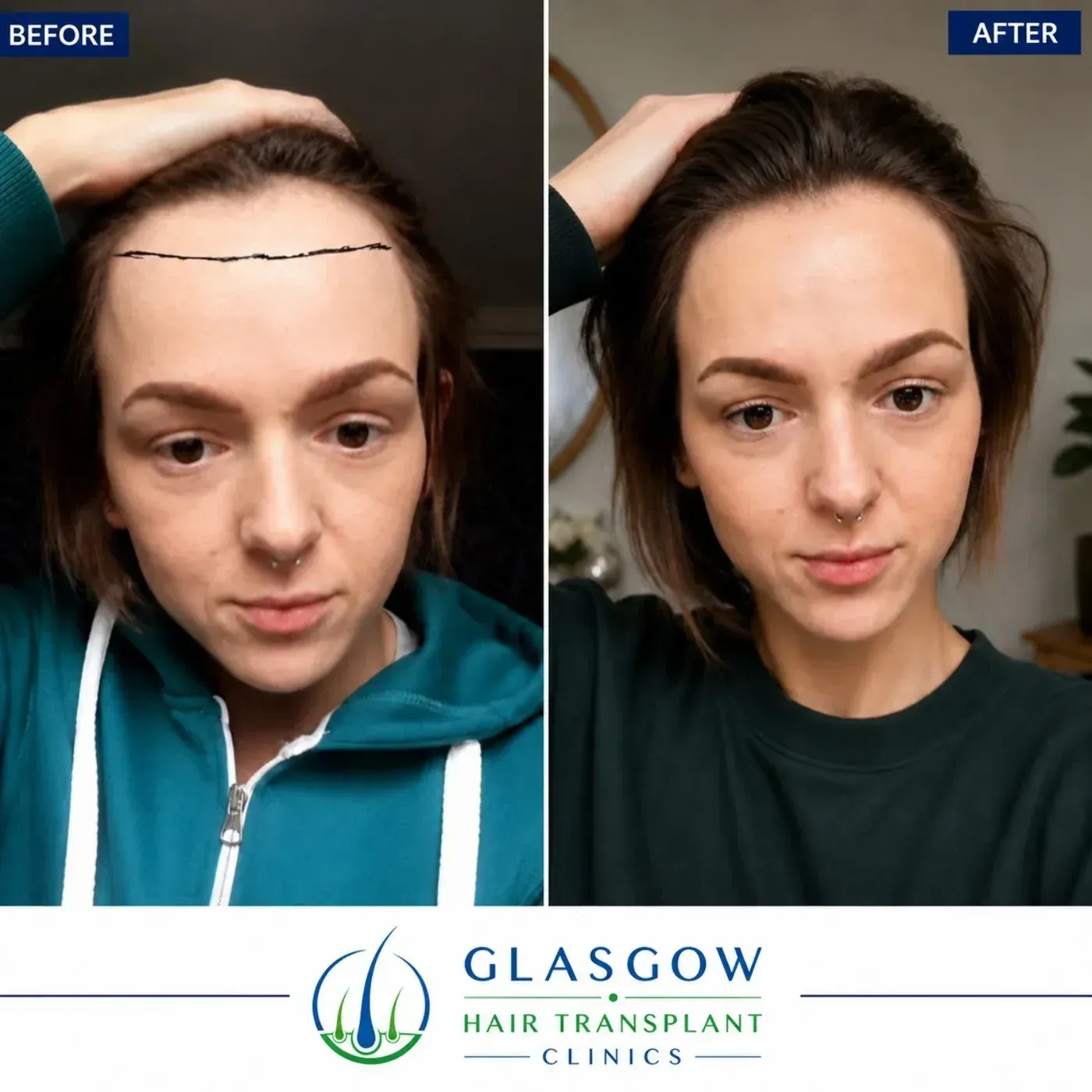
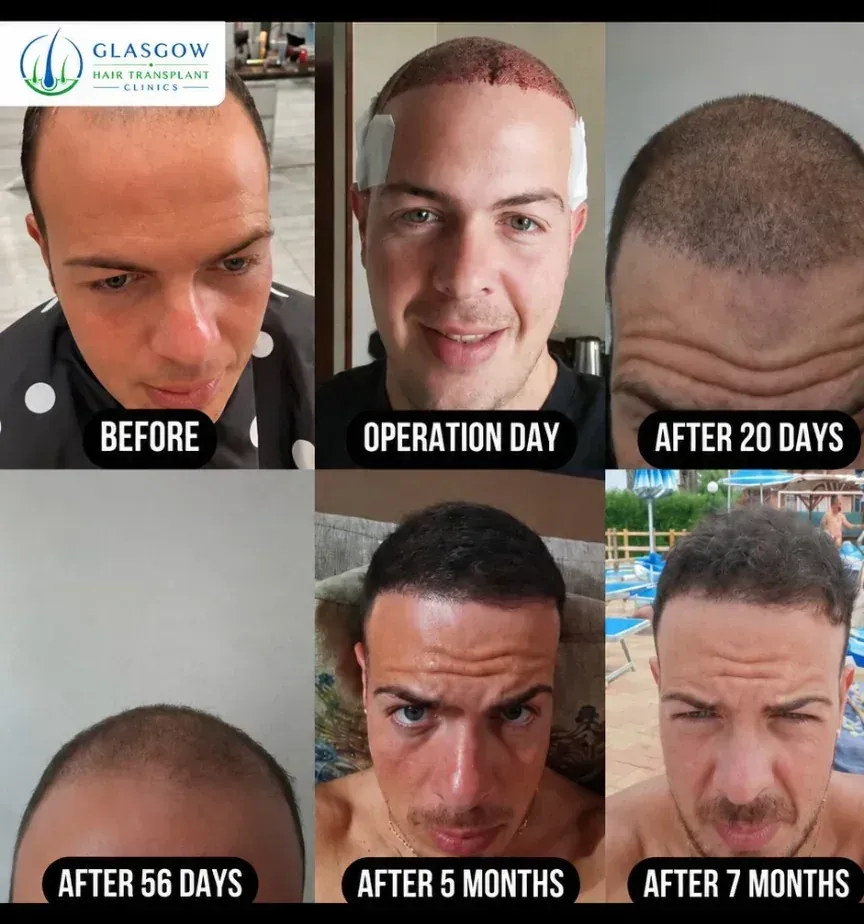
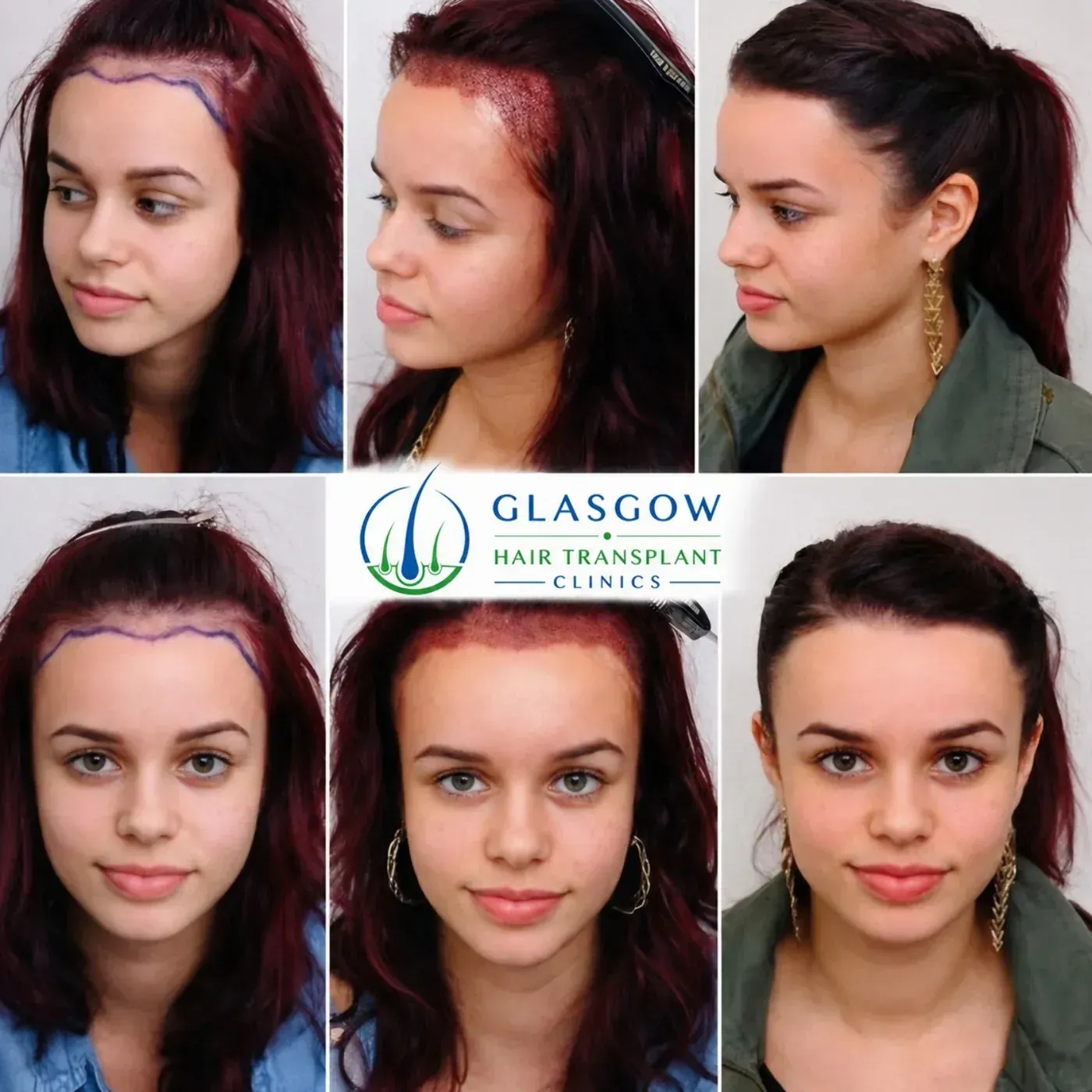
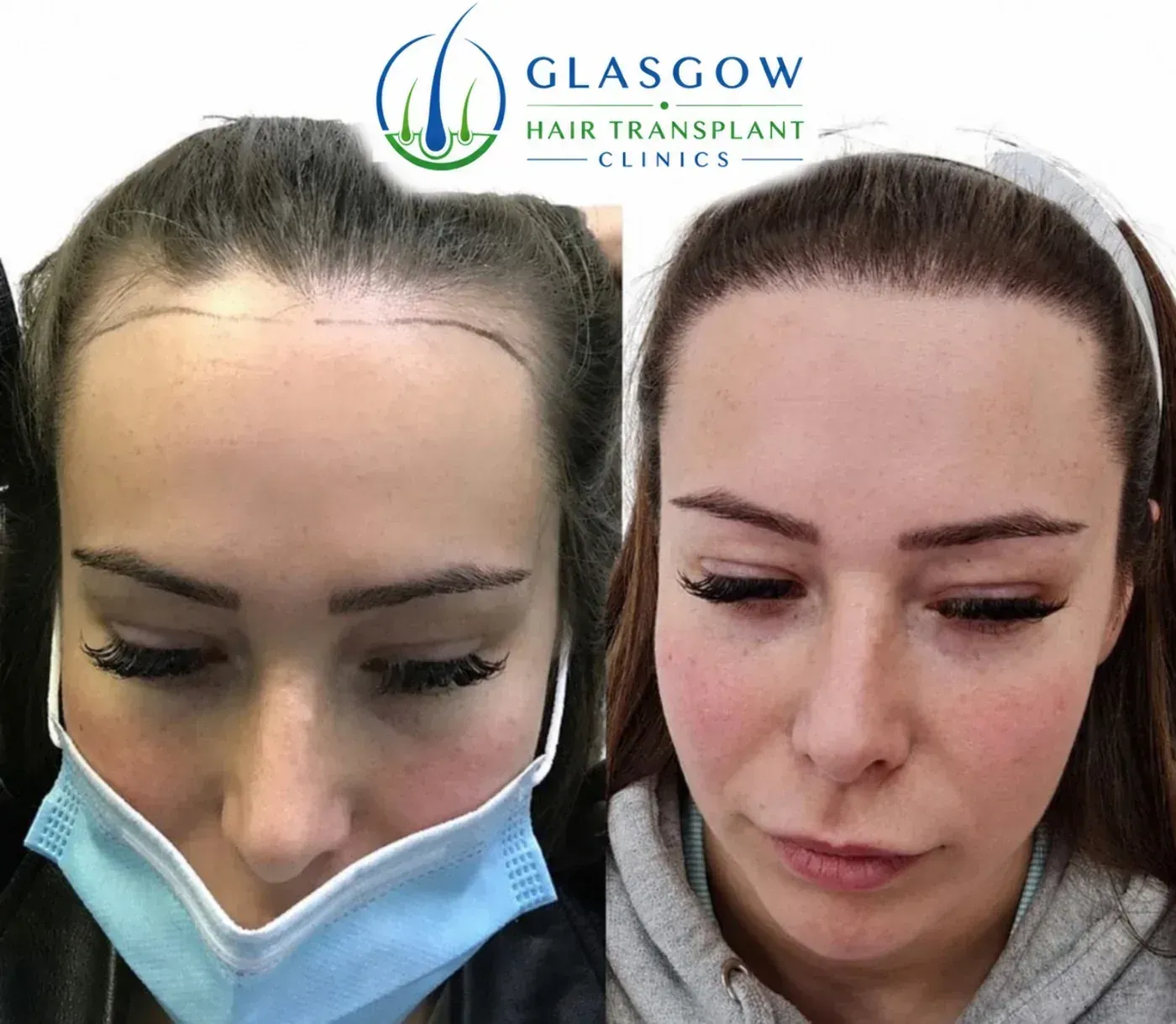

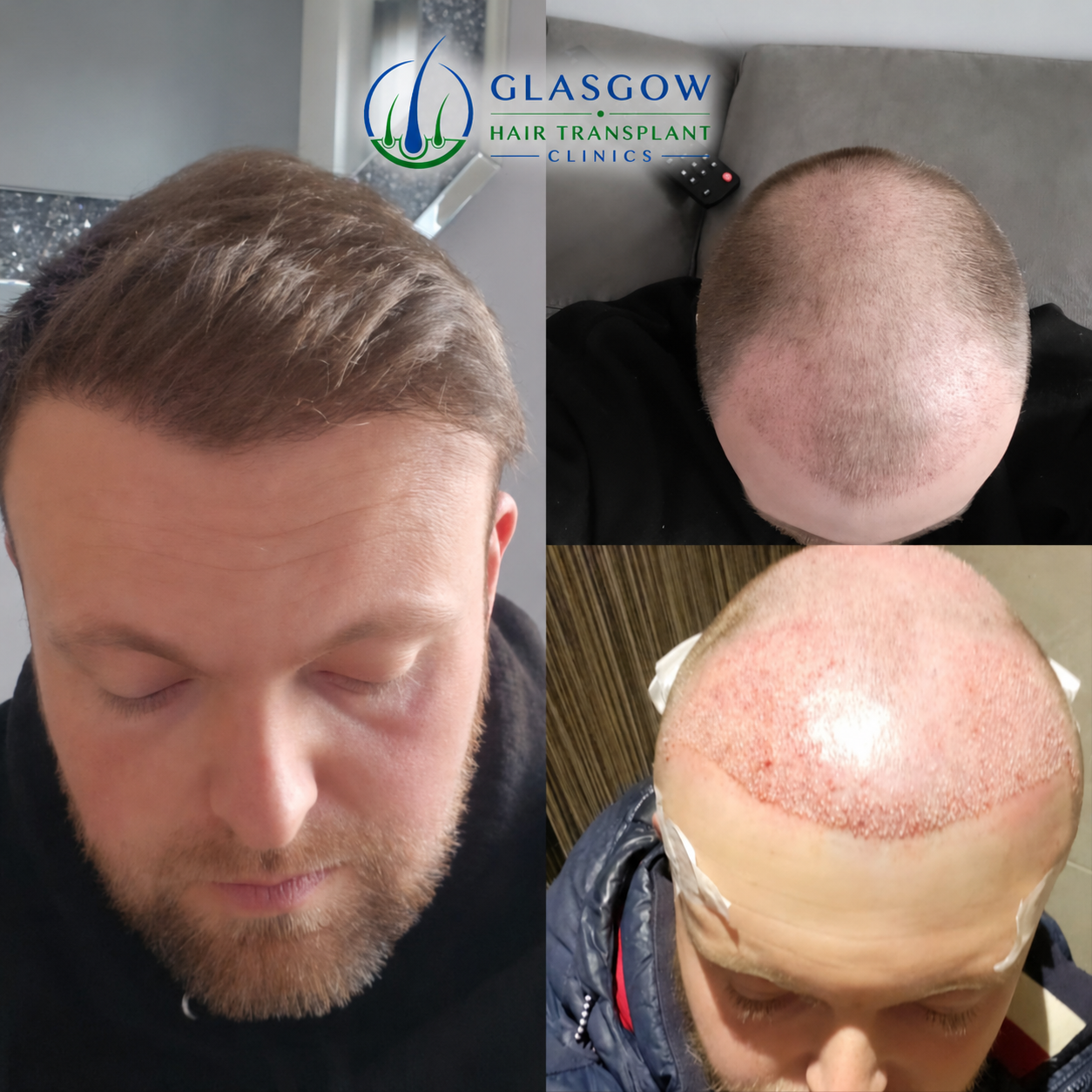
MTF Transgender Hair Transplant
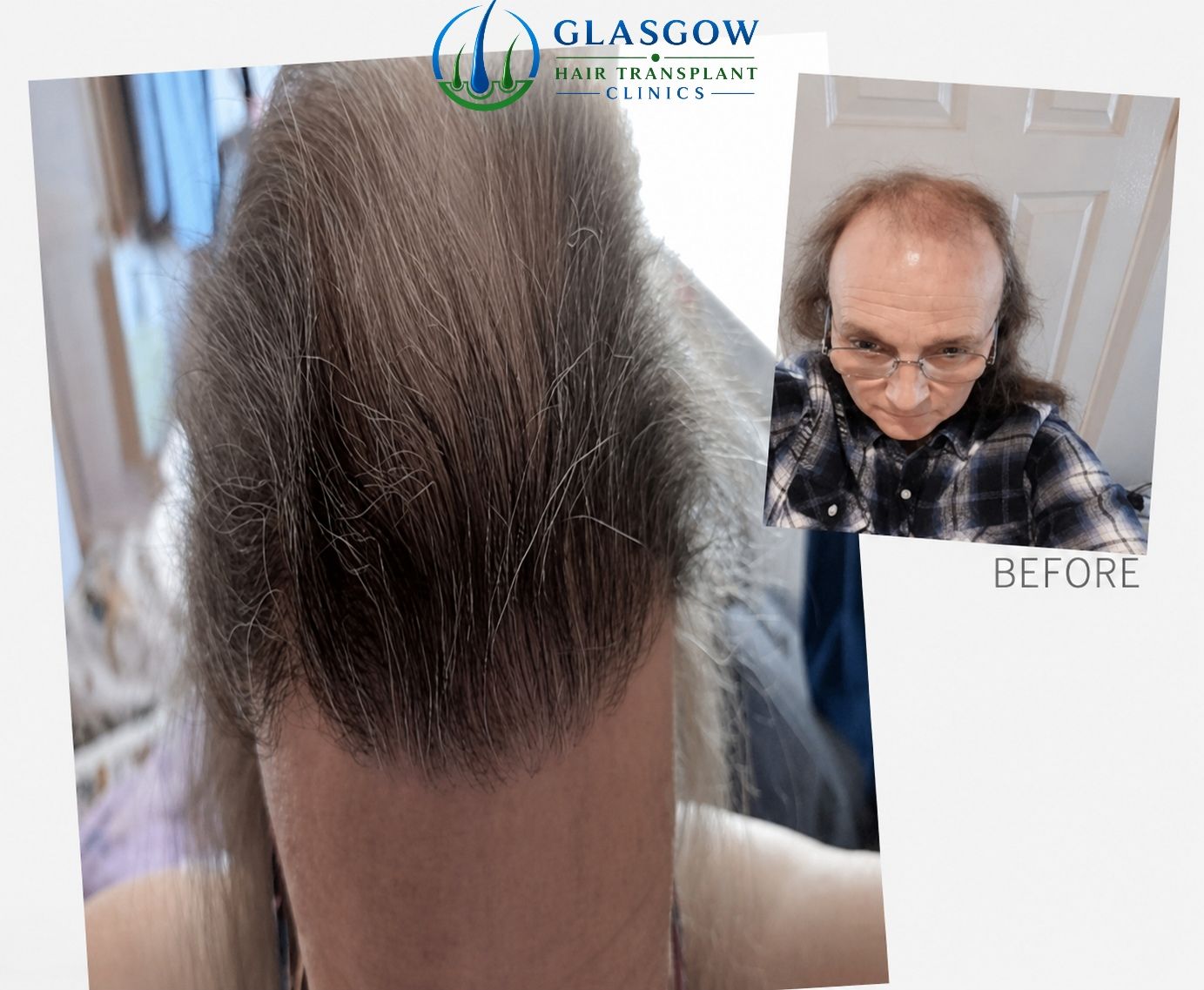
A common reason transgender women look into hair transplantation is frontal recession that developed before transition. Once the corners of the hairline have moved backwards, the original shape can remain visible even when the hair behind it is otherwise healthy.
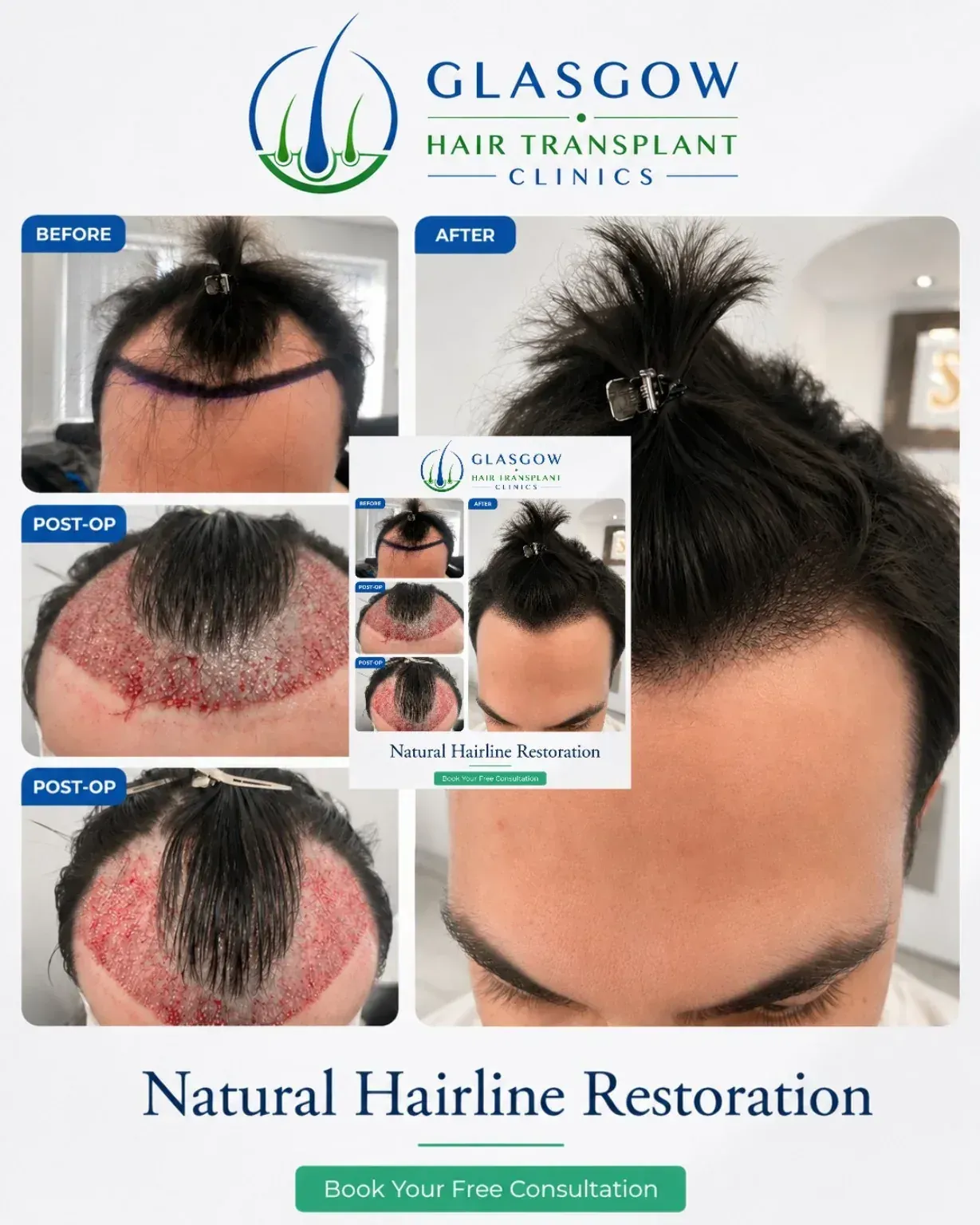
Restoring that area involves more than increasing density. The hairline has to be redrawn. A softer frontal curve, reduced recession through the corners and careful treatment of the temple areas can change the way the forehead is framed.
The very front of the new hairline is built differently from the hair behind it. Finer single-hair grafts are used through the leading edge so the transition does not look heavy or perfectly straight. Stronger follicular units can then be positioned farther back to build coverage.
The amount of donor hair required depends heavily on how far forward the hairline is being brought. Lowering a hairline across the full width of the forehead creates a much larger treatment area than filling two small temple corners, so graft planning needs to be done before the final position is agreed.
FUE is commonly used for detailed frontal work because individual follicular units are harvested separately and can then be allocated through the hairline according to their size. FUT remains another option where the donor characteristics and hairstyle make strip harvesting the better fit.
During consultation, Dr Kalra also looks beyond the frontal hairline. If there is thinning through the mid-scalp or crown, that future demand on the donor area needs to be taken into account before committing a large number of grafts to hairline lowering.
You can read more about the design itself on our hairline transplant page.
FTM Transgender Hair Transplant
Testosterone can change both facial hair and scalp hair. For somebody with the genetic tendency towards androgenetic hair loss, recession can begin at the temples and frontal hairline and later extend through the mid-scalp or crown.
When that happens, a transplant can rebuild the areas that have lost density. The frontal design can also be adjusted so that the hairline has a stronger, more angular shape rather than simply recreating the previous outline.
The extent of the work depends on the pattern that has developed. Restoring two receded corners is a relatively focused procedure. Rebuilding the hairline and continuing into the frontal scalp requires more donor hair and a different distribution of grafts.
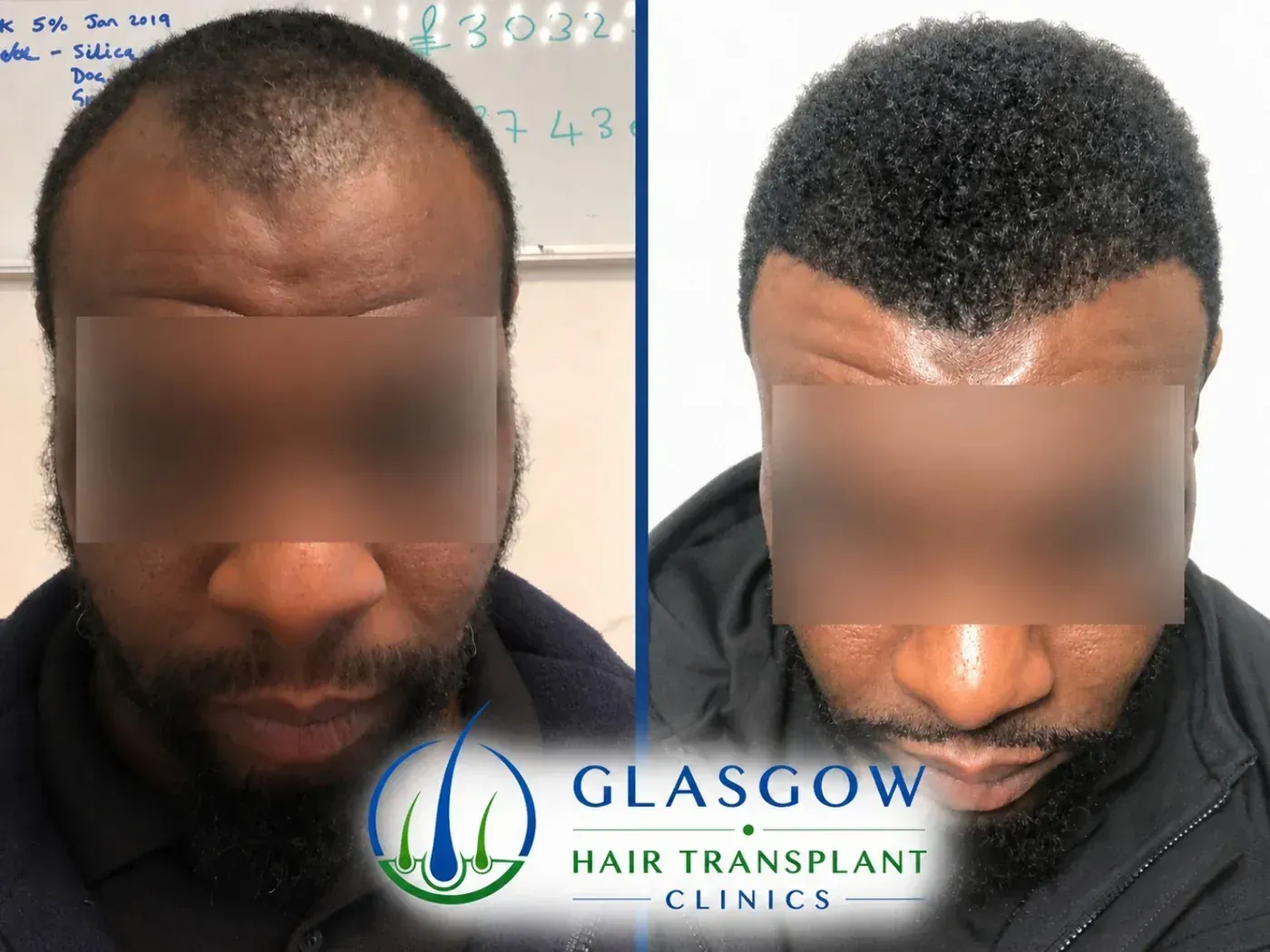
Facial hair is another major part of FTM hair restoration. FUE donor grafts can be used through the beard, jawline, chin, moustache and sideburn areas to increase coverage where facial hair remains light or uneven.
Beard work has its own technical demands. Hair on the cheek sits much flatter against the skin than scalp hair, while the direction changes again around the jaw, chin and moustache. Those angles have to be recreated during implantation or the growth can look unnatural even when the grafts have taken well.
Dr Kalra assesses scalp and facial-hair priorities together when both are being considered. This avoids using a large proportion of the donor supply on one area without accounting for the other.
More detail is available on our beard transplant page.
Which Technique Is Used?
FUE and FUT are the two main ways donor follicles can be obtained for a transgender hair transplant. DHI can also be used during the implantation stage. The choice is made from the donor area and the treatment being planned rather than from gender identity.
With FUE , follicular units are extracted individually from the donor region. This avoids one continuous linear scar and gives the surgeon access to individual grafts that can be sorted for different parts of the recipient design.
That is particularly useful around a hairline. Single-hair grafts can be reserved for the very front, while stronger grafts are positioned behind them. The same ability to select individual follicular units is useful in beard and sideburn work.
FUT takes a narrow strip from the donor area and the follicular units are then prepared from that strip. It leaves a linear scar, but patients who normally wear their donor hair longer can often keep that area covered by the surrounding hair.
DHI describes the way prepared grafts can be implanted using an implanter device. It can be combined with individually harvested grafts when that placement method suits the recipient design.
There is no advantage in choosing a technique before the donor area has been examined. Dr Kalra looks at donor density, hairstyle, the number of grafts required and where those grafts need to go before recommending the surgical approach.
Hormones, Hair Loss and Donor Planning
Hormone treatment is part of the discussion because it affects the way scalp and facial hair behave. It does not change the basic transplant principle: established areas of loss still need donor follicles if they are going to be physically rebuilt.
Testosterone can bring out androgenetic hair loss in somebody who is genetically susceptible to it. This normally shows first around the temples and frontal scalp and can progress backwards with time.
Feminising hormone treatment reduces androgen exposure and can improve the behaviour of existing hair, but a deeply receded hairline does not simply return to its previous shape. Where the frontal frame needs to be restored, the missing area has to be addressed directly.
This is where donor planning becomes important. A patient might want the hairline lowered now but still have native hair through the mid-scalp that could thin later. Another patient might want both scalp restoration and a beard transplant. In both situations, every graft used today affects what is available tomorrow.
Dr Kalra therefore looks at the donor area as a whole rather than quoting a large graft number simply because that number can be harvested. The grafts need to be used where they create the greatest improvement while keeping the longer-term pattern in view.
Further information about retaining existing hair is available in our hair-loss medication guide.
Recovery After a Transgender Hair Transplant
Recovery depends more on where the grafts have been placed and how they were harvested than on whether the procedure is feminising or masculinising. A transplanted frontal hairline, for example, heals in the same way as other frontal hair transplant work.
The newly implanted area is obvious at first. Small crusts form around the grafts and the skin can look red while the recipient sites heal. If FUE has been used, the extraction points are also visible through the donor area during the early stage of recovery.
As the first week progresses, the scalp begins to settle and the crusting gradually loosens. The grafts should not be picked or rubbed during this period, which is why the washing instructions supplied after surgery are important.
The transplanted shafts then shed. This often makes the hairline look thinner again before new growth starts, but it is part of the normal transplant cycle rather than the final appearance of the procedure.
New hairs emerge gradually over the following months. They do not all grow at the same time, so early density can look uneven. As more follicles become active, the design becomes clearer and the earlier hairs gain length and thickness.
The result continues to develop through the first year and can mature beyond that point. Our aftercare guide, shedding guide and hair transplant timeline cover the stages in more detail.
Transgender Hair Transplant Cost in Glasgow
There is no separate transgender price. The cost comes from the amount of work being carried out.
Filling two temple corners is a smaller operation than lowering and reshaping the complete frontal hairline. A beard transplant involving the cheeks, jawline, moustache and chin creates another treatment area again, while combining scalp and facial-hair work increases the demand on the donor supply.
The quote is therefore based on the recipient area, estimated graft requirement, donor characteristics and whether FUE, FUT or another implantation approach forms part of the plan.
Dr Kalra can give a meaningful graft estimate after the donor area and the proposed design have been assessed. That is more useful than applying one standard graft package to every patient.
Current pricing is available in our hair transplant cost guide and information about payment is available on the no-deposit information.
Book a Free ConsultationGender-Affirming Hair Restoration With Dr Kalra
Treatment planning starts with the change the patient wants to achieve. This may involve the frontal hairline, temples, crown, beard or another area where transplantation is being considered.
Dr Harpreet Kalra can assess the donor region, existing hair, facial proportions and medical history before discussing whether the proposed design and graft requirement are realistic.
Where several areas may require treatment, donor use can also be planned with later procedures in mind rather than committing the entire supply to the first operation.
Dr Kalra is registered with the General Medical Council under reference 7126076.
Frequently Asked Questions
What is a transgender hair transplant?
It is hair restoration planned around the patient's own gender presentation and treatment goals. This may involve the hairline, temples, scalp density, beard, moustache, sideburns or eyebrows.
Can a transplant create a more feminine hairline?
In suitable patients, transplantation can be used to soften frontal recession, fill the temple corners and create a rounder hairline shape. The design still needs to remain realistic for the available donor hair.
Can a hairline be made more masculine?
Selected patients may consider a stronger or more angular frontal outline. The appropriate shape depends on the existing hairline, facial proportions and wider pattern of scalp hair.
Can transgender men have beard transplants?
Some patients may be suitable for beard, moustache, sideburn, chin or jawline restoration. Donor hair, existing facial hair, skin condition and the intended design need to be assessed first.
Can non-binary patients have gender-affirming hair restoration?
Yes. Treatment should be based on the individual's goals rather than forcing the design into a conventionally masculine or feminine template.
Is FUE suitable for transgender hair restoration?
FUE can be considered where individual follicular-unit harvesting suits the donor area and treatment plan. It can provide grafts for scalp, hairline and selected facial-hair procedures.
Is DHI better for transgender patients?
Not automatically. DHI is an implantation approach and does not create additional donor hair. Whether it is useful depends on the individual recipient area and treatment plan.
Can hormone treatment affect my hair?
Hormone therapy can influence scalp and facial-hair patterns, but the effects vary between individuals. Your current treatment and medical history should be discussed during the consultation.
Can existing scalp hair continue thinning after surgery?
Yes. Transplantation relocates selected donor follicles but does not guarantee that surrounding non-transplanted hair will remain unchanged.
How many grafts will I need?
This depends on the size and location of the treatment area, the design, existing hair, donor density and the amount of coverage being planned. An assessment is needed before giving a sensible estimate.
How long does growth take?
Transplanted hair shafts commonly shed first. New growth then develops gradually over the following months, with further maturation through the first year and sometimes beyond.
How much does a transgender hair transplant cost in Glasgow?
Cost depends on the treatment area, graft requirement, donor characteristics, technique and complexity. Current information is available on our hair transplant cost page .
Will my consultation be private?
Your consultation is an opportunity to discuss your goals, medical history and treatment options privately with the clinic.
Your consultation and surgery locations
Consultations for gender-affirming hair restoration take place at Tay House, 300 Bath Street, Glasgow, G2 4JR. This is where you attend to discuss your hairline or facial-hair goals; your surgery booking will confirm the hospital for the procedure.
Glasgow surgery: St. Ellen’s Daycase Hospital, 410 Sauchiehall St, Glasgow, G2 3JD.
Livingston surgery: St. Ellen’s Hospital Livingston, 2 Garbett Road, Livingston, EH54 7DL.
Check the hospital on your booking before making travel or accommodation arrangements. The consultation and surgery locations page brings the addresses together. You can also contact the clinic to confirm where your appointment will take place.
Transgender Hair Transplant Planning With Dr Kalra
At Glasgow Hair Transplant Clinics, Dr Harpreet Kalra assesses the existing hairline, facial proportions, donor hair and the areas the patient wants to change before the transplant design is agreed. This can include hairline feminisation, a stronger masculine frontal shape, scalp restoration or facial-hair transplantation.
The consultation is used to decide how the available donor hair should be used and to plan the position, shape and density of the restoration. Where more than one area is being treated, the scalp and facial-hair requirements are considered together rather than as separate procedures.
Dr Kalra is registered with the General Medical Council under reference 7126076.
Glasgow Google reviews
Considering a Transgender Hair Transplant in Glasgow?
Book a consultation to discuss the hairline, scalp or facial-hair changes you want to make and how the available donor hair can be used to create the result.
Book a Free Consultation