
Glasgow Hair Transplant Clinics · Hair loss advice
Female pattern baldness
If your parting looks wider or your ponytail feels thinner, you may be wondering why. Find out what could be causing the change and discuss suitable treatment with our Glasgow clinic.
Request a Consultation Explore treatment options ↓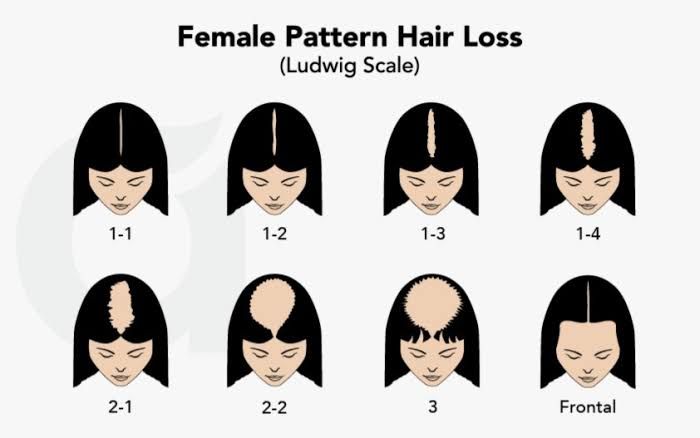




Female pattern baldness usually causes gradual thinning along the parting and across the top of the scalp. It is also called female pattern hair loss, or androgenetic alopecia. The front hairline often stays in place, even as the hair behind it becomes finer and gives less coverage.
One photograph can make it difficult to judge whether your parting has widened. How long has your hair been changing? Are you shedding more, and does your scalp feel normal? These details help tell hereditary thinning apart from causes that need different treatment.
The British Association of Dermatologists describes female pattern hair loss as a long-term condition without a cure. Treatment may preserve hair and improve coverage, but the response varies. You can discuss the changes you have noticed and the options available at a consultation with our Glasgow clinic.
How common is female pattern hair loss?
Alopecia UK estimates that around half of women over 65 have pattern hair loss. It can also begin in younger adults. The estimate applies to pattern hair loss in women over 65, not to all women or other forms of alopecia.
Thinning is often noticed around or after menopause, although there is no single age at which it starts. How much hair thins, and how quickly, varies from woman to woman. Our UK hair loss facts and statistics page explains the different groups covered by commonly quoted figures.
Changes you may notice in your hair
You may first notice a change when parting or tying your hair, before there is any obvious bald area. The American Academy of Dermatology identifies a widening part and a thinner ponytail as possible signs. A scalp examination can help establish what is causing them.
A parting that looks wider
More scalp may show along the centre parting, particularly towards the front or crown. Photos taken with the same parting, lighting and hair condition make a more useful comparison than pictures taken under different conditions.
Less volume or a thinner ponytail
Your hair may feel thinner when tied back, or your usual style may leave more scalp showing. A recent haircut, breakage and shedding can also alter volume, so describe those changes at your appointment.
Finer hair through the top and crown
Affected follicles gradually produce finer, shorter strands. This process is called miniaturisation. It can leave a mixture of hair thicknesses across the scalp, with the parting becoming more visible even when the front hairline has changed little.
Shedding, soreness or patches
Increased shedding can accompany pattern loss, but sudden heavy shedding or clearly defined patches need checking for other causes. Persistent redness, scale, pain or eyebrow loss also deserves medical assessment. These changes should not simply be attributed to age.
Why thinning develops
Genes inherited from either side of the family can make you more likely to develop female pattern hair loss. The hormonal explanation is less straightforward than it is in men: DermNet notes that most women with the condition have normal androgen levels. A normal hormone result therefore does not rule it out.
Family history and changes through life
Inherited follicle changes
The growing phase becomes shorter and the hair produced by affected follicles becomes finer. Several genes can contribute; the condition is not passed down only through the mother’s family. A relative’s hair loss cannot tell you exactly how your own hair will change.
Menopause and hormone symptoms
Pattern thinning becomes more common after menopause, but the precise role of oestrogen is still uncertain. Hair loss by itself does not establish a hormone disorder. Mention irregular periods, new facial hair or acne, as these can change the investigations your clinician considers. The Primary Care Dermatology Society recommends further assessment where there are signs of androgen excess.
Other changes that can add to hair loss
Illness, childbirth and marked stress
These can trigger telogen effluvium, in which more hairs enter the resting phase and are shed a few months later. It may occur alongside hereditary thinning. The timing of illness, surgery, childbirth or a stressful period can therefore be relevant even if the shedding began after you felt better.
Thyroid problems and nutrition
Thyroid disease, iron deficiency and restrictive diets can contribute to shedding. Your symptoms and medical history should guide which tests and treatments are considered. Correcting a confirmed deficiency is different from taking supplements without evidence that anything is missing. DermNet’s guidance on telogen effluvium explains these possible triggers.
Tension, heat and chemical damage
Tight styles can pull on follicles, while repeated heat or chemical processing can damage the hair shaft and cause breakage. These problems need treatment in their own right and can occur alongside pattern loss. Changing hair care can reduce further damage, although it does not remove inherited susceptibility.
Other types of hair loss in women
Women can lose hair for several reasons. When the loss began, where it appears and how the scalp looks help distinguish female pattern baldness from other conditions. Our alopecia guide gives an overview of the terminology.
Telogen effluvium
This is widespread shedding of resting hairs, often following a trigger such as illness, childbirth or weight loss. It commonly becomes noticeable two to four months later. Many episodes settle as the trigger resolves, although persistent shedding needs review. It can also reveal previously less obvious pattern thinning.
Traction alopecia
Repeated pulling from tight hairstyles or extensions can damage follicles, often around the edges of the hairline. Traction alopecia may improve when tension stops early enough; longstanding damage can scar. Pain or tightness from a hairstyle is a reason to loosen it.
Alopecia areata
The immune system targets hair follicles, often producing smooth, round patches. Eyebrows and other body hair may also be affected. Alopecia areata is not the same as hereditary thinning and has a different treatment approach. Some cases cause more diffuse loss, making examination particularly useful.
Anagen effluvium
This affects hairs during their active growth phase and can cause rapid loss, particularly during chemotherapy. Anagen effluvium may involve eyebrows or body hair as well as the scalp. Advice about recovery and treatment should come from the team managing the underlying illness.
Scarring alopecia
Inflammation can permanently damage follicles. One example, frontal fibrosing alopecia, can affect the front hairline and eyebrows. Prompt assessment matters when recession accompanies soreness, scaling or eyebrow loss. Treatment aims to control the underlying disease before cosmetic restoration is considered.
Trichotillomania
This involves repeated hair pulling that can be difficult to resist, leaving uneven areas of loss or broken hairs. It deserves supportive treatment. The NHS information on trichotillomania describes talking therapies, including habit reversal training, that may help.
What an assessment should cover
An assessment starts with a discussion of your health and a close look at your hair and scalp. There may be more than one cause. The American Academy of Dermatology’s diagnostic guidance explains when blood tests or a biopsy may help. These tests are chosen according to the findings; they are not needed for everyone.
Your health and previous treatments
Discuss when thinning began, whether it has been steady or sudden, family history and changes in your health. Bring details of medication and supplements, previous hair treatments and any side effects. Tell the clinician about pregnancy plans or breastfeeding before discussing medicines.
Scalp examination and trichoscopy
Trichoscopy uses magnification to inspect the scalp and hairs. Differences in strand thickness and the appearance of follicle openings can help distinguish pattern loss from other conditions. The PCDS description of dermoscopic findings explains how miniaturised hairs appear during examination.
Blood tests where indicated
Tests may be considered for possible iron deficiency, thyroid disease or hormone abnormalities. The choice depends on the symptoms and examination. Hair thinning with irregular periods or increased facial hair may need a different work-up from gradual thinning without those features.
When a dermatologist or biopsy is needed
An uncertain diagnosis, suspected scarring or persistent scalp inflammation may need dermatology review. A small scalp biopsy can sometimes clarify the cause. Photographs can help with an initial discussion. An examination or tissue sample may reveal details they cannot show.
Understanding the Ludwig scale
The Ludwig scale describes increasing central thinning in three grades. It helps record the amount of visible loss and follow changes over time; it is not a test for the cause or a treatment prescription. NICE’s assessment guidance includes it as a way to describe severity.
Grade I
Mild thinning through the central scalp, often first noticed as a wider parting. The frontal hairline is generally preserved.
Grade II
More noticeable thinning and reduced density across the top. The scalp is easier to see through the remaining hair.
Grade III
Extensive loss of coverage over the crown and central scalp. The available donor hair and the condition of the remaining follicles need careful assessment.
Your clinician may use another grading system or standardised photographs alongside this scale. The pattern, donor area and rate of change all matter when discussing treatment.
Treatment options for female pattern baldness
Treatment may aim to maintain the hair you have, improve thickness or restore coverage where suitable donor hair is available. Once the cause is clear, you can discuss the likely benefits, side effects and time involved in each option. Pregnancy plans can change which options are appropriate.
Medication for female pattern hair loss
Topical minoxidil
Minoxidil is applied to the scalp and may slow loss or improve growth in some women. UK products include a 5% foam licensed for women aged 18–65. Follow the instructions for the exact product and check suitability with a pharmacist or clinician, especially if you have a heart condition or an unhealthy scalp.
The foam’s product information advises that growth may take 12–24 weeks, with treatment stopped if there is no improvement after 24 weeks. Continued use is needed to maintain benefit. Irritation, unwanted facial hair and temporary early shedding can occur. Do not use minoxidil during pregnancy or breastfeeding. Persistent irritation, dizziness, palpitations or swelling needs medical advice.
Low-dose oral minoxidil
A clinician may consider minoxidil tablets off label for hair loss. This means the medicine is being used outside its licensed indication. Tablets may be an option if scalp treatment is difficult to use. They affect the whole body, so a clinician needs to decide whether they are suitable for you.
Gloucestershire Hospitals NHS guidance covers pulse and blood-pressure monitoring and possible effects such as extra facial or body hair, dizziness, ankle swelling and palpitations. Pregnancy, breastfeeding, heart health and other medicines must be discussed. A prescription and follow-up plan are needed; do not use another person’s tablets.
Spironolactone and other anti-androgens
Spironolactone is sometimes prescribed off label for female pattern hair loss. It can improve thickness in some women, with benefits taking months to assess. Possible effects include irregular periods, breast tenderness and dizziness. Kidney function, potassium levels and interactions influence whether it is appropriate and what monitoring is needed.
It should be avoided in pregnancy, and plans to conceive should be discussed with the prescriber. Finasteride and other anti-androgens are not routine over-the-counter treatments for women. A specialist may consider them in selected circumstances, with particular attention to pregnancy risk.
Treating an additional cause
If tests identify iron deficiency, thyroid disease or another contributor, that condition needs appropriate treatment. More than one approach may be needed when shedding overlaps with hereditary thinning. Review any medicines suspected of contributing with the prescriber; do not stop essential treatment on your own. Our hair-loss medication page explains how a treatment discussion is arranged.
Other options and their limitations
Platelet-rich plasma (PRP)
PRP involves taking a blood sample, separating a platelet-rich portion and injecting it into the scalp. It may be discussed as an additional option, but preparation methods and treatment schedules vary. The British Association of Dermatologists notes that evidence remains limited. Ask what improvement is realistic, how many sessions are proposed and how benefit will be measured. Read about PRP at the Glasgow clinic.
Low-level laser therapy
Light devices such as caps or combs are used regularly over several months. Some studies report improved hair density, but results vary and evidence for one device cannot establish the performance of every product. DermNet’s review of laser therapy describes both the research and its limitations. Consider the cost, treatment commitment and medical suitability before buying a device.
Hair fibres, toppers and wigs
Camouflage fibres and hair pieces can make thinning less noticeable while treatment is being assessed, or can be used on their own. They do not change the underlying condition. Choose a comfortable fit and avoid attachment methods that repeatedly pull on fragile hair. There is no obligation to have medication or surgery if another approach suits you better.
When a hair transplant may be suitable
Surgery redistributes a limited supply of donor follicles. The International Society of Hair Restoration Surgery emphasises a stable pattern, adequate donor hair and realistic expectations when assessing women. Widespread thinning through the donor area can make transplantation unsuitable.
FUE and donor-area assessment
Follicular unit extraction (FUE) removes individual follicular units before they are placed in the recipient area. It leaves small scars and still requires recovery. Assessment should include the back and sides of the scalp, because visibly thin hair at the top does not tell us whether the donor supply is strong enough.
FUT and implantation techniques
FUT obtains grafts from a strip of donor scalp and leaves a linear scar. DHI describes an approach to graft placement using an implanter; it does not create additional donor hair. The ISHRS explanation of surgical techniques distinguishes harvesting from implantation. Ask how the proposed approach fits your scalp, hairstyle and future loss.
Recovery, risks and continuing hair loss
Bleeding, infection, scarring, temporary shedding and grafts failing to grow are possible. A transplant does not stop the surrounding original hair from thinning. The NHS hair transplant guide explains recovery and risks. Discuss aftercare and how the result may change over time before committing to surgery.
Our hair transplants for women page explains the Glasgow service and includes patient results. You can also read the cost guide and aftercare guidance before your consultation.
Caring for thinning hair day to day
Small changes to your routine can protect fragile strands and make your hair easier to manage. They support hair care but do not cure female pattern baldness. The American Academy of Dermatology’s hair-care advice recommends gentle handling and limiting practices that cause breakage.
Washing, conditioning and styling
Use a gentle shampoo and a conditioner suited to your hair. Detangle carefully and reduce repeated high heat, bleaching and chemical straightening if the hair is breaking. Avoid tight styles or heavy extensions that pull on the scalp. A stylist experienced with thinning hair may help you find a cut that needs less daily handling.
Nutrition and supplements
A balanced diet supports general health. Supplements are useful when there is a reason to replace a missing nutrient, but high-dose hair supplements are not a substitute for diagnosing the problem. Tell your clinician what you take, including products bought online, so interactions and unnecessary treatment can be considered.
Following treatment and tracking changes
Use prescribed treatment as directed and attend the agreed reviews. Occasional photographs taken with consistent lighting, hair condition and parting can help you compare progress. Tell your clinician about irritation or other side effects if treatment is difficult to tolerate.
Confidence and support
If hair loss affects your confidence, relationships or daily life, it is reasonable to ask for support as well as treatment advice. Alopecia UK offers information and community support. You can discuss the emotional effect with your GP without needing to wait until the thinning is severe.
When to seek medical advice
Arrange an assessment for sudden loss, distinct patches, a painful or inflamed scalp, or eyebrow changes. These findings may point to a condition that needs prompt treatment. You can also seek advice about gradual thinning whenever it concerns you.
The NHS recommends seeing your GP to establish the cause before approaching a commercial hair clinic. If the diagnosis is unclear, further investigation or dermatology referral may be needed. Once the cause is understood, a consultation can focus on suitable options and what you would like to achieve.
How female and male pattern loss differ
The usual pattern
Women more often develop a wider parting and thinning through the central scalp, with the frontal hairline relatively preserved. Male pattern baldness more commonly begins with recession at the temples or a thinning crown. These are usual patterns, not rigid rules.
Hormones and treatment choices
Androgens have a well-established role in male pattern loss. Their role in female pattern loss is less clear. Many women with the condition have normal androgen levels. Medication needs to be chosen for you. A treatment prescribed to a male partner is not automatically suitable for a woman.
Planning surgery
In both sexes, surgery depends on a suitable donor supply. Women with diffuse thinning may also have reduced density at the back or sides. A surgeon needs to examine those areas before estimating graft numbers or offering a plan for improved coverage.
Questions about female hair loss
Does female pattern baldness mean I will lose all my hair?
Usually not. It commonly causes progressive thinning rather than complete baldness. The extent varies, and an assessment can help establish your pattern and discuss whether treatment may preserve coverage.
Can it start before menopause?
Yes. It is more common later in life but can start in younger women. Age alone cannot confirm the diagnosis, especially where loss is sudden, patchy or accompanied by scalp symptoms.
Can female pattern hair loss be reversed?
Some women gain thickness with treatment, while others mainly maintain existing hair. There is no cure, and benefit usually depends on continuing an effective treatment. Temporary shedding from another cause can have a different outlook.
Is hair loss after childbirth the same condition?
Postpartum shedding is commonly telogen effluvium. It can coexist with or make hereditary thinning more noticeable. Persistent loss, a widening parting or uncertainty about the cause should be assessed before choosing treatment.
How soon should I expect treatment results?
Think in months rather than weeks. The review period depends on the medicine or procedure. For example, the licensed women’s 5% minoxidil foam describes a 12–24 week period for evidence of growth. Follow its instructions and the review plan agreed with your clinician.
Can I use hair-loss medication when pregnant or breastfeeding?
Do not start minoxidil or anti-androgen treatment without discussing pregnancy plans and breastfeeding with a clinician. Minoxidil should be avoided in these circumstances, and anti-androgens have pregnancy-related risks. Ask the prescriber about any existing treatment if your circumstances change.
Will a hair transplant stop future thinning?
No. A transplant moves donor follicles but does not stop the condition affecting your remaining original hair. Long-term planning should account for that hair, donor limits and any appropriate medical treatment.
Do I need surgery to improve the appearance of my hair?
No. Depending on the diagnosis and your preferences, options include medication, treatment of another contributing cause, camouflage or a hair piece. Surgery is considered only where the scalp and donor hair are suitable and the likely benefit fits your goals.
Glasgow Google reviews
Read feedback from patients of Glasgow Hair Transplant Clinics, including their experience of the team and their treatment. More feedback is available on our reviews page.

Dr Harpreet Kalra
Dr Kalra is the surgeon at Glasgow Hair Transplant Clinics, GMC reference 7126076. A consultation considers your pattern of loss, donor hair and previous treatment before discussing the options.
Bring your questions about medication, surgical methods, recovery and cost. The plan should explain what is achievable, what the risks are and how follow-up will work. If the cause needs further investigation, that should be addressed before a procedure is arranged.
Discuss the changes in your hair
Bring your questions about thinning, treatment and recovery to a consultation with our Glasgow clinic.
Request a Consultation