Donor Area for Hair Transplant
The donor area provides every follicular-unit graft used in a hair transplant. Its density, stability and size determine how much hair can be moved without leaving the back and sides looking visibly depleted.
Certifications




Anyone researching hair transplant surgery will quickly come across the term “donor area”. It is the source of the hair used during treatment, but that simple description leaves several important questions unanswered. Where is the donor area, why is hair usually taken from around the rear of the scalp, how does a surgeon judge what can safely be removed, and what should the region look like afterwards? Those answers determine whether the proposed surgery is realistic.
What is the donor area?
The donor area is the region from which follicular-unit grafts are taken during a hair transplant and transferred to a recipient area, such as a receding hairline, thinning mid-scalp or crown. Most procedures use scalp hair. In unusual repair cases, a surgeon may consider hair from outside the scalp.
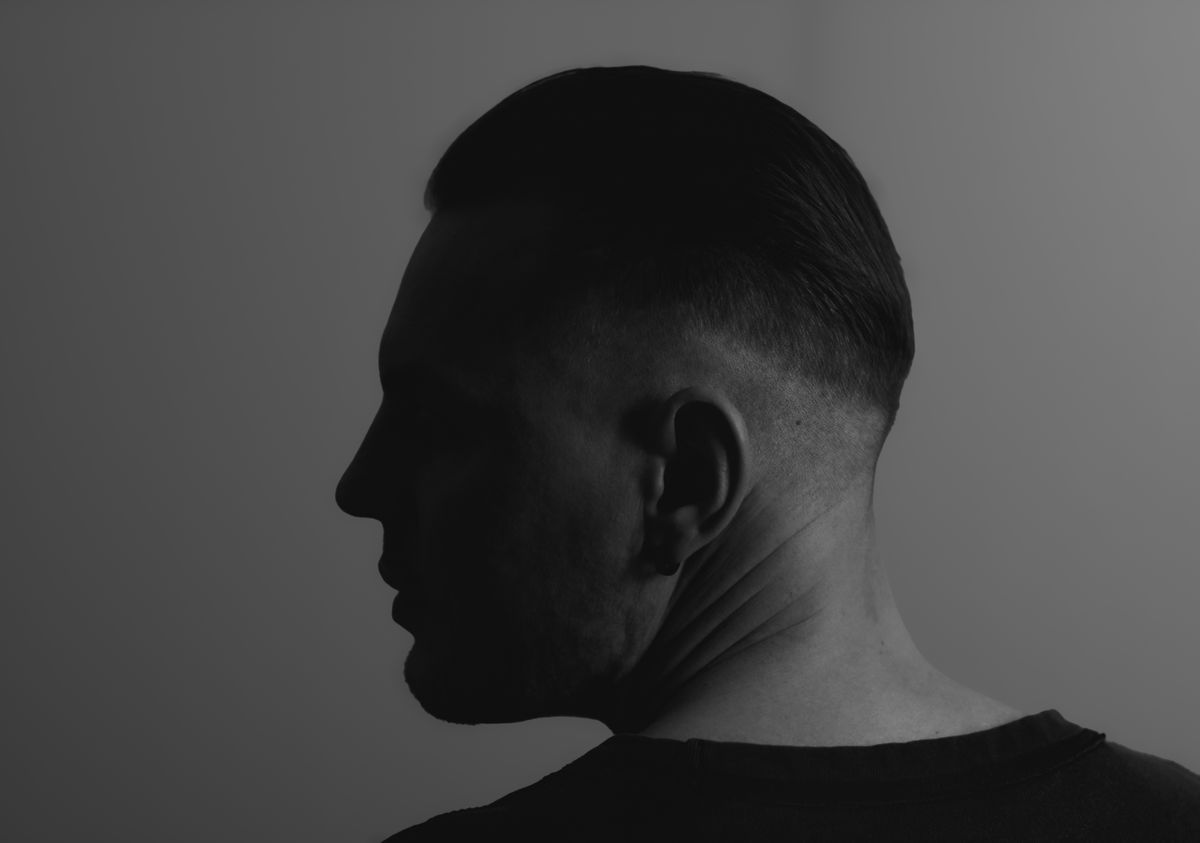
For most patients, the usable donor region runs across the back of the head and continues above the ears. Follicles in this occipital and lateral band are often less sensitive to the effects of dihydrotestosterone (DHT) than follicles over the top of the scalp. This relative stability is why the back and sides are normally assessed first. The lower edge near the nape is not automatically permanent.
There are two established ways to harvest scalp grafts. Follicular Unit Extraction (FUE) removes selected follicular units individually with a small punch. Follicular Unit Transplantation (FUT) removes a narrow strip of donor scalp, which is then divided into individual follicular-unit grafts under magnification. FUE spreads small extraction wounds across the harvest zone; FUT concentrates removal within one strip. That difference changes the scar pattern, shaving requirements and the way the remaining donor reserve is managed.
The location alone does not make every follicle safe to transplant. The surgeon must decide where the stable zone begins and ends, whether any hair is miniaturising, how much density can be reduced without showing, and which extraction method makes best use of the available reserve. No standard boundary works for everyone; hair characteristics, scalp size and the likely future pattern all change the plan.
Can you lose hair in the donor area?
The conventional donor band often remains fuller while hair elsewhere becomes thinner. In men, pattern loss is usually noticed around the temples, hairline or crown; in women, it more often reduces density over the top and widens the parting. This makes obvious donor thinning less common, but it does not make the region immune from every form of hair loss.
When the safe zone becomes smaller
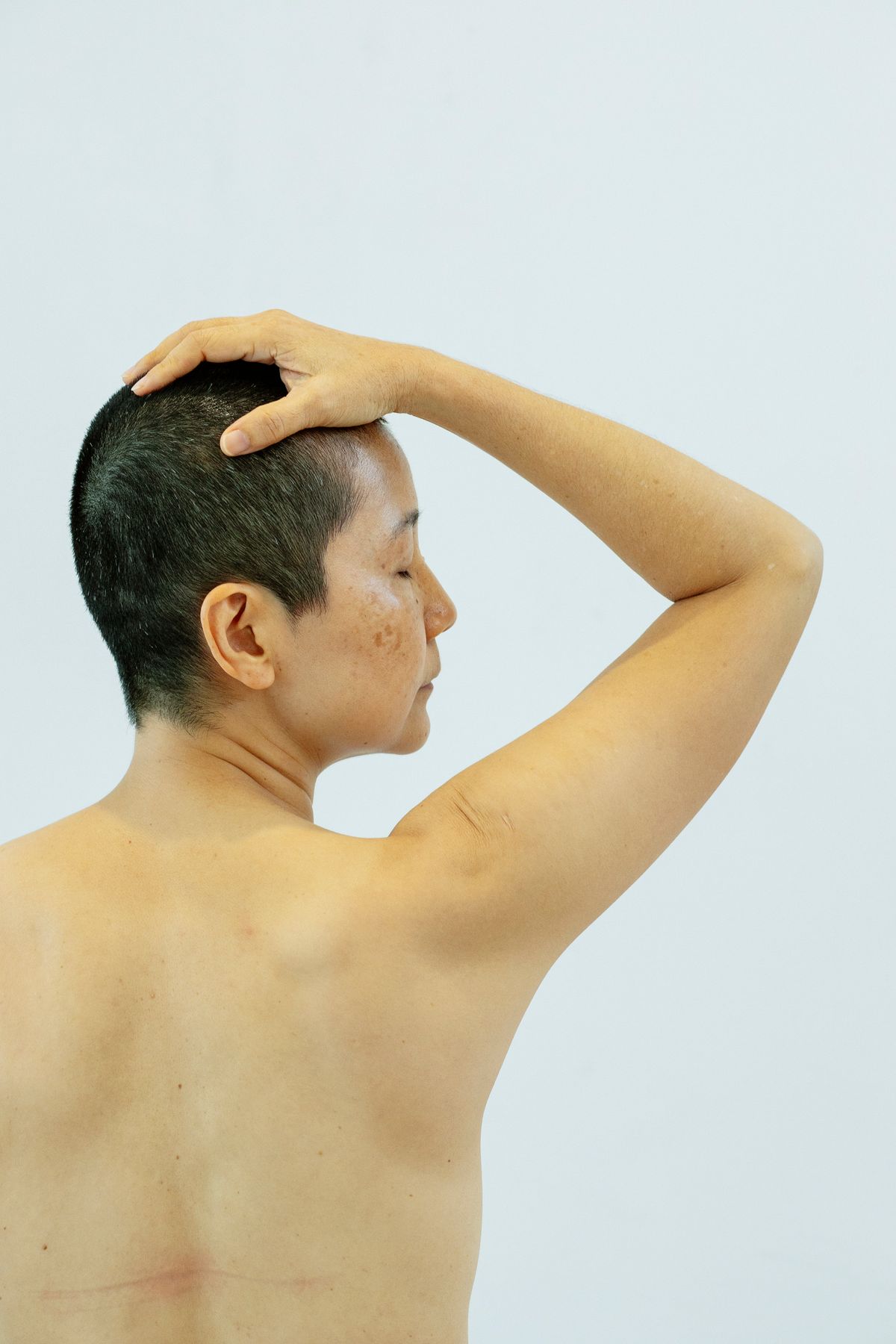
Retrograde alopecia changes the lower or side borders of the usual donor zone. Thinning can move upwards from the nape or develop above the ears, leaving a narrower band of dependable hair. If miniaturising follicles are harvested from that border, their long-term growth may be less reliable.
This deserves particular attention in extensive Norwood patterns, including stages 6 and 7. A stage number still cannot draw the extraction boundary on its own. The surgeon needs to inspect density, calibre and miniaturisation across the precise part of the scalp being considered.
Patchy loss can also affect the donor region. Alopecia areata, for example, may produce one smooth area ranging from about 10p-coin size to 50p-coin size, or several patches, after the immune system interrupts normal hair growth. Active alopecia areata is not managed like ordinary pattern loss. A photograph cannot establish surgical suitability, so assessment by a GP or dermatologist may need to come first.
Other causes include diffuse unpatterned alopecia, scarring hair loss, previous surgery and age-related miniaturisation. Donor thinning is not the most common presentation, but it changes the entire treatment plan when it is present. The usable zone may need to be reduced, graft numbers lowered, surgery delayed for investigation or ruled out altogether.
What makes a good donor area?
A good donor area is not judged by one number or by how thick the hair looks in a single photograph. The surgeon assesses follicular-unit density, shaft diameter, the number of hairs within each unit, curl, colour contrast, scalp visibility and the width of the stable zone. That examination estimates what can be removed and the density that needs to be left behind.
Density is only part of the calculation
Coarse, wavy or curly hair can create more visual coverage than fine, straight hair because each shaft occupies more space and may reveal less scalp. Low contrast between hair and skin can also help. A patient with a strong-looking donor area may still need a conservative plan if the usable band is narrow or early miniaturisation is present.
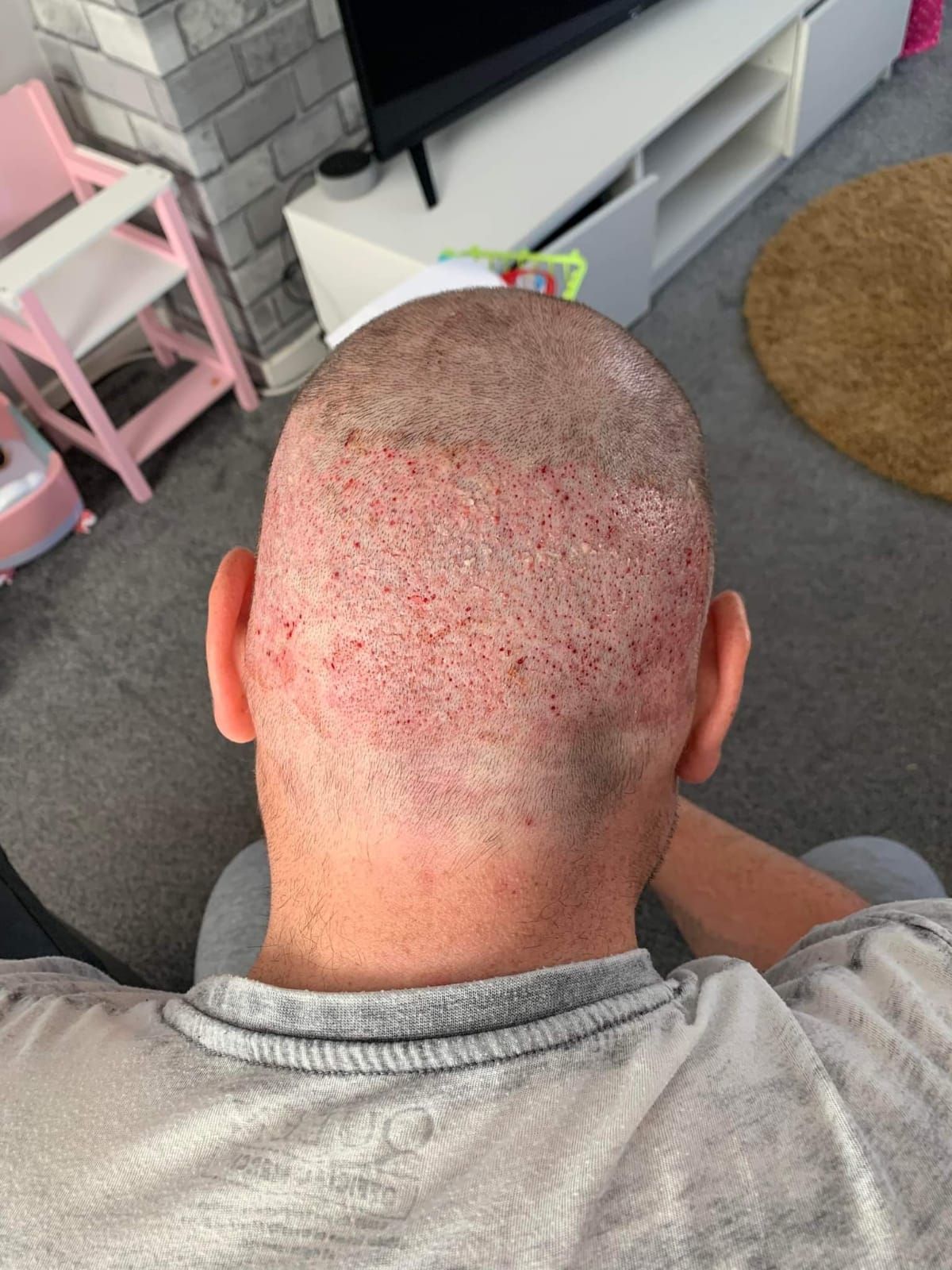
In this patient, the crown is visibly thinner than the occipital band below it. The lower hair may provide donor grafts, but a surgeon would still need to map the extraction boundary before treatment. Looking at the whole pattern prevents crown loss from being confused with weakness across the true donor zone.
Patients often see about 6,000 scalp grafts quoted as a broad lifetime donor estimate. A hairline procedure may be illustrated at roughly 1,500–2,000 grafts, while wider hairline, mid-scalp and crown work may be illustrated at 3,000–3,500 or more. These are planning examples, not personal allowances or promises. Head size, density, hair characteristics, future loss, previous procedures and the extraction method can move the safe number substantially in either direction.
A reserve that supports one procedure does not automatically support unlimited further surgery. A second session may be possible when density and the remaining safe zone allow it, but the first plan should already protect future options. Donor planning comes down to improving the recipient area without leaving an uneven or visibly thinned band behind.
Dr Harpreet Kalra considers the hair-loss pattern, donor quality, previous surgery and the likely long-term demand before agreeing a graft number. A quoted graft total without a proper donor examination is not a reliable assessment.
Can beard or body hair be used?
Beard or body hair can be discussed when the scalp donor reserve is very limited, but it is not the routine starting point for a scalp transplant. A surgeon first needs to establish what can be achieved safely with stable scalp hair; when that supply is weak, switching to another body area does not by itself make the requested coverage achievable.
Beard hair is generally coarser than scalp hair, while chest and other body hair may differ in diameter, curl, colour, growth cycle and maximum length. Those differences can remain after transplantation. Non-scalp grafts do not automatically blend with the hair around them.
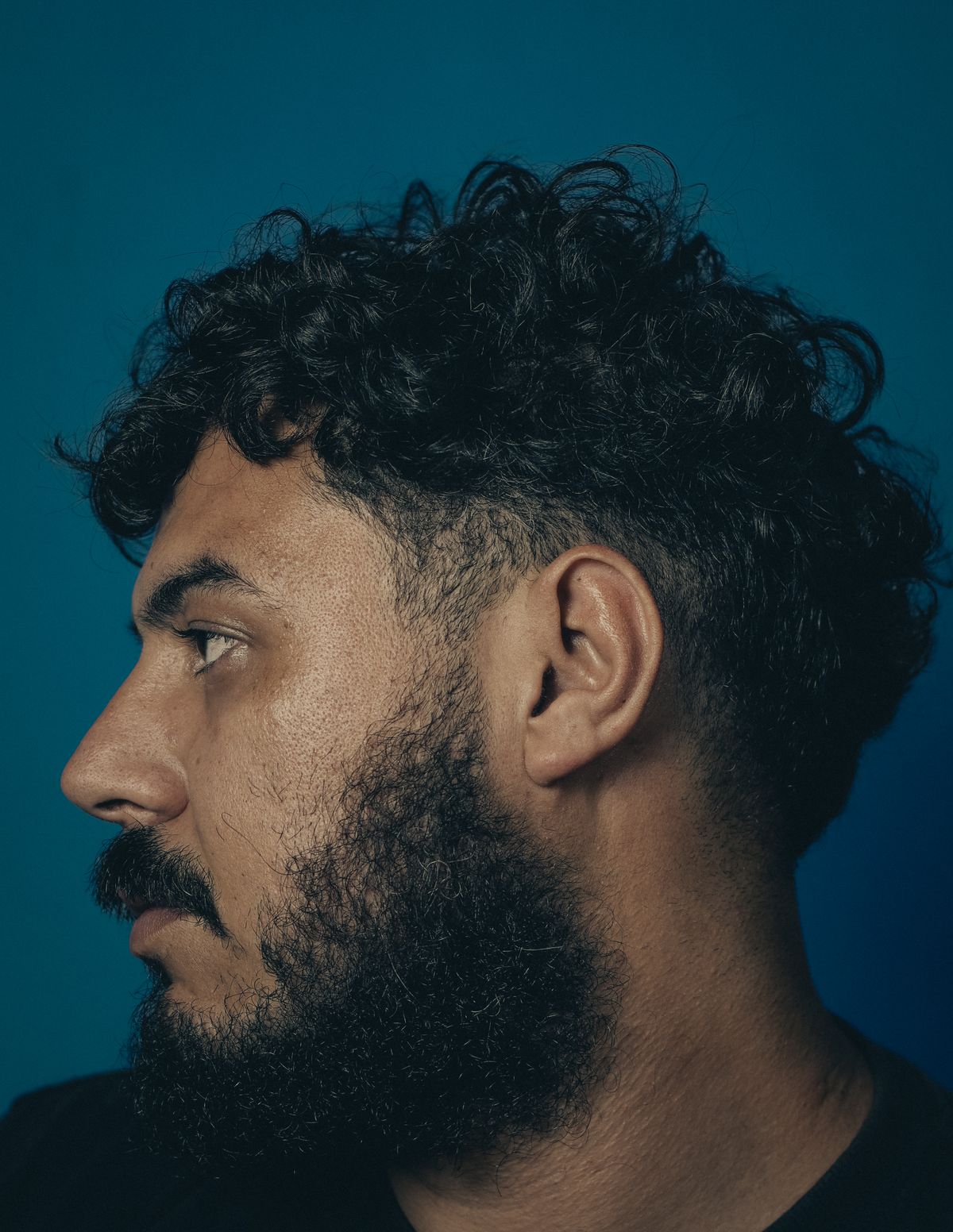
Where beard grafts are used by a specialist, they are more likely to support density within an established area than provide the only material for a soft front hairline. Coarse beard shafts placed at the leading edge can look out of character. Body hair can be even less predictable because its growth phase and length may be shorter.
Natural blending matters as much as the number of follicles available. The transplanted area should resemble the patient’s existing scalp hair when it grows, moves and is cut. A technically possible source is not necessarily a good cosmetic match, and harvesting the beard or body also creates extraction marks in those areas.
Patients who are considering non-scalp hair have often been told that their scalp reserve cannot support the coverage they want. That limit needs to be stated clearly. A smaller surgical plan, a different hairstyle, scalp micropigmentation or a well-fitted hair system may produce a better overall outcome than using mismatched grafts to chase an unrealistic density target.
Non-scalp hair is not a replacement for assessment
The presence of beard or chest hair does not make a patient suitable for extensive surgery. The likely match, the number of usable grafts, scarring, healing and the appearance of both donor and recipient sites still have to be considered. When those factors do not support a natural result, surgery should not go ahead.
How the donor area affects surgery
The size and quality of the donor reserve are central to deciding whether surgery is possible. Enough stable follicles must be available to improve the treatment area while leaving the back and sides evenly covered. A patient can have a clear area of hair loss and still be unsuitable if the donor hair is too sparse, unstable or already depleted by earlier procedures.
A strong donor area alone is not enough to approve treatment. The diagnosis, age, health, speed and pattern of loss, scalp condition, expectations and likely future demand for grafts all form part of the decision. Once those issues have been considered, donor capacity sets the practical limit of the operation.
Does the donor area need shaving?
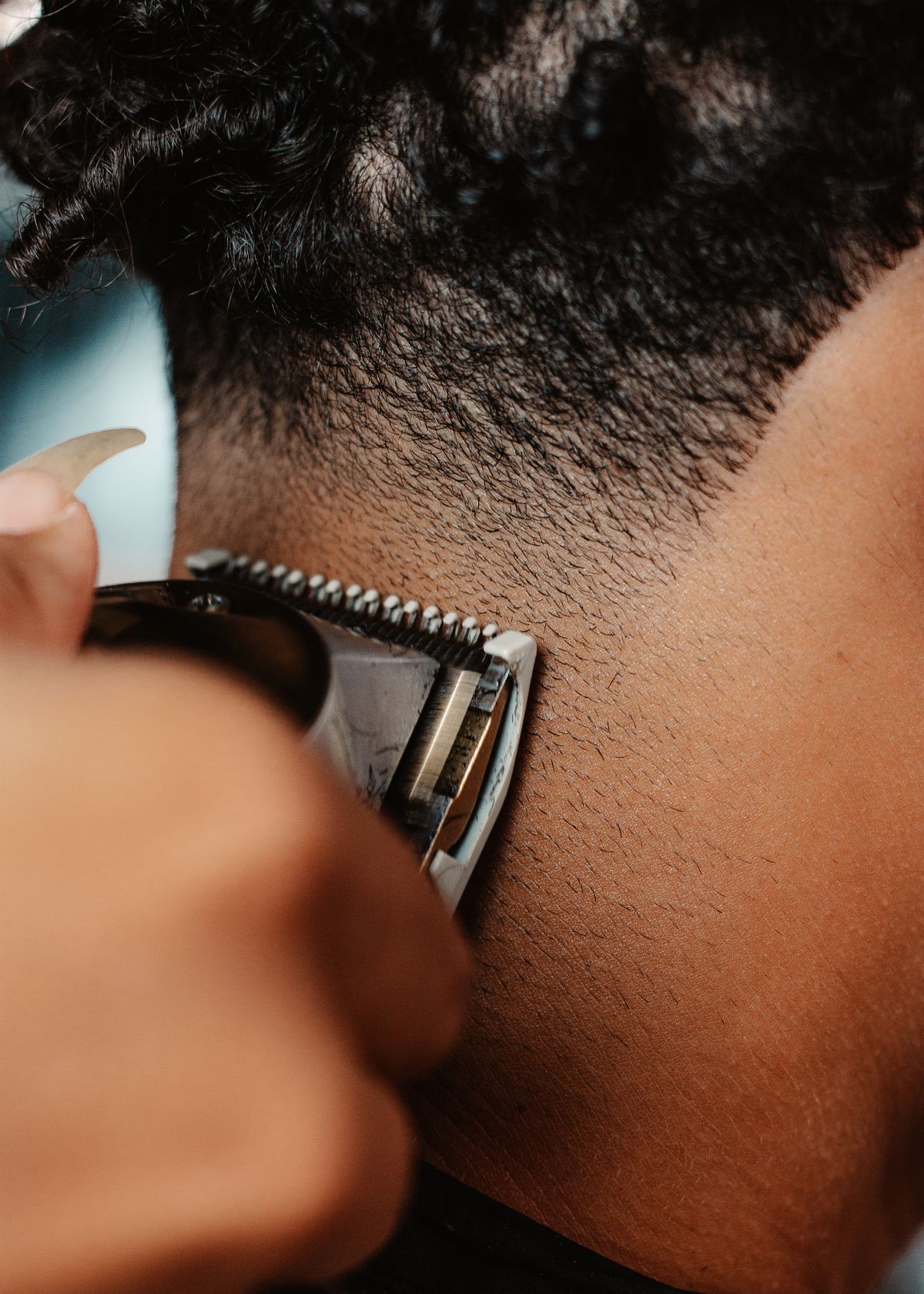
For most FUE procedures, the hair across the planned extraction zone is clipped short. This creates an even working length and helps the surgeon see the direction and spacing of each follicular unit. Patients should follow the clinic’s instructions rather than shaving the area themselves too early, because the surgical team may need to examine and mark the donor boundaries first.
Short hair gives a clearer view of the skin and makes individual grafts easier to access with the punch. It also helps the surgeon spread extractions across the safe zone, monitor the density left behind and reduce the chance of catching neighbouring shafts. Some clinics clip to around a grade 1, although the exact length depends on the technique and equipment.
A full donor shave is not the only option. Partial-shave and unshaven FUE approaches exist for suitable cases, but they are more technically demanding and may limit the working area. Concealing the haircut must not force too many extraction sites into a narrow band. With FUT, only the strip area may need trimming, allowing the longer hair above it to cover the closure.
How is donor hair extracted?
Donor grafts can be collected one follicular unit at a time or obtained from a narrow strip of scalp. The first approach is FUE; the second is FUT. Both involve surgery, both leave permanent scars and both depend on accurate mapping of the donor zone.
Choosing between them requires more than comparing technique names. Haircut, scalp laxity, previous scars, graft requirements and the long-term donor reserve all matter. The useful comparison is how each method affects graft supply, healing, scarring and the coverage left at the back.
Follicular Unit Extraction (FUE) and DHI
FUE produces a distributed pattern of small circular extraction wounds rather than one line. A cylindrical punch, commonly around 0.7–1.2 mm, scores the skin around a selected follicular unit. The surgeon then releases and lifts that graft individually, leaving a small opening in its place. Punch selection and depth control also need to follow the angle of the follicle below the skin.
The openings form pinpoint crusts and close as the donor area heals. Many patients plan around an initial 10–14-day recovery window, although redness, sensitivity and visible marks can last for different lengths of time. The number, spacing and distribution of the punch sites influence how the area looks once the hair has grown back over them.
DHI usually describes graft placement with an implanter rather than a different way of obtaining donor hair. The follicles are commonly harvested with FUE first. There is no long linear scar, but FUE and DHI are not scarless: each extracted unit leaves a small circular scar. Those scattered marks are generally easier to conceal with a short haircut than a linear FUT scar, provided the area is not overharvested.
Initial recovery after FUE is often shorter than recovery from a strip incision, but that comparison does not guarantee a particular healing time. The scale of the procedure, skin response, aftercare and individual healing all affect when the donor region looks and feels settled.
Follicular Unit Transplantation (FUT)
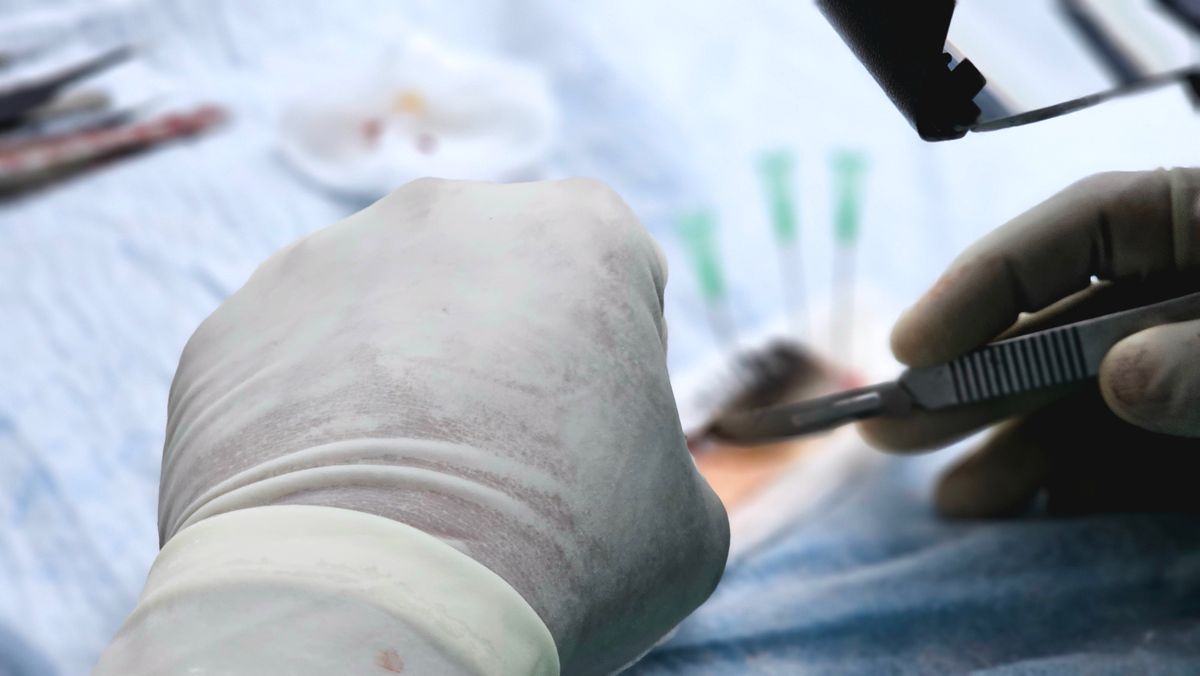
FUT is often referred to as strip surgery. The surgeon removes a narrow ellipse of hair-bearing scalp, closes the edges and divides the removed tissue under magnification to create individual follicular-unit grafts. The dissection preserves naturally occurring units, which may contain one, two, three or four hairs.
The whole head does not usually need to be shaved for FUT. Hair above and below the trimmed strip can remain longer and cover the closure, which may suit patients who want to keep a longer hairstyle, including some women and transgender patients. Scalp laxity, previous surgery and scar risk still need to be assessed before this route is chosen.
For some patients, a strip can provide more grafts in one session than an FUE or DHI harvest would safely allow, without spreading punch sites across a wide shaved area. The trade-off is a permanent linear scar. Its visibility depends on where the strip was taken, the tension on the closure, individual healing and the length of the surrounding hair. A close haircut can expose the line even when it has healed well.
What will the donor area look like after surgery?
The donor region looks different immediately after a transplant because the hair has been clipped and the extraction or strip site is fresh. With FUE, many small red points are visible across the harvested zone. With FUT, the donor wound follows a line beneath the surrounding hair. Neither immediate appearance shows what the area will look like once healing and hair growth have progressed.
During the early recovery period
Fresh FUE sites show as pinpoint redness and crusting across the clipped donor band. In this patient photograph, that band is visible immediately after individual follicular units have been removed; it is an early postoperative view rather than a healed result.
Mild soreness, tightness, itching or temporary altered sensation can occur. The crusts usually loosen during the first week or two, while redness may remain visible for longer in some skin types. Ten to fourteen days is a useful initial recovery guide, although a fixed date cannot describe every patient’s healing.
Patients should follow the washing, sleeping, medication and activity instructions supplied by their own surgical team. Picking at crusts or scratching the donor area can interfere with healing. Our hair transplant aftercare guide explains the general stages, but the instructions issued for the individual operation take priority.
FUT recovery
After FUT, the donor area heals along the closed strip site rather than across hundreds or thousands of individual punch sites. The surrounding hair may conceal the line, but tenderness and tightness can still occur and stitches or staples may require removal according to the surgeon’s plan. The final scar should be judged after healing, not from the appearance during the first few days.
What does the donor area look like after recovery?
Once the skin has healed and the surrounding hair has grown, the remaining follicles begin to cover the extraction marks. The final appearance depends on how much hair was removed, how evenly the sites were distributed, the density left behind and the length at which the patient wears the back and sides.
Once the skin has settled, the graft count is only one part of the visible result. In a dense, well-planned donor zone, removing up to around 2,500 grafts may be difficult to detect at the patient’s usual haircut length. The same harvest can look much thinner on another scalp, however, and larger sessions remove more of the available coverage. Density, calibre, curl, colour contrast and scalp size all change what the eye sees.
The area should be assessed in ordinary light after sufficient regrowth, not only under flash photography immediately after a close clip. Very short hair reveals both FUE dots and FUT lines more readily. Patients who plan to wear a skin fade or shave the scalp should discuss that before the technique and graft total are chosen.
Does donor hair grow back after a transplant?
A completely extracted follicular unit has been moved, not copied. The empty extraction site does not grow another unit, either immediately or later. Hair around it continues to grow, and those unharvested follicles provide the coverage seen across the donor region after healing.
This makes the donor supply finite. Every procedure reduces the number available for later work, so the plan must account for more than the area that concerns the patient today. Untreated hair may continue to recede or thin, creating another demand on the same reserve.
Overharvesting occurs when more follicular units are removed than the remaining hair can conceal, or when too many sites are concentrated in one part of the donor zone. It can leave patchy thinning, visible circular scars or a moth-eaten pattern. Repair is difficult because the area needing correction is also the area that has already lost much of its usable supply.
Conclusion
The usual donor zone curves around the rear of the head and above the ears, but the usable boundaries differ from one scalp to another. Thick-looking hair is helpful; stability, density, calibre, miniaturisation, previous surgery and the requested recipient coverage matter just as much. Those findings need to be examined together before a graft number is agreed, with the appearance of the remaining donor area protected from the outset.
Hair transplant surgery always involves a trade-off: follicles used to improve the hairline, mid-scalp or crown are permanently removed from the donor reserve. An experienced surgeon can reduce the risk of poor distribution and overharvesting, but experience cannot remove every surgical risk. Choose a doctor and clinic that explain the extraction plan, the scar pattern, the expected recovery and what will remain for the future. Patients can check a doctor’s registration through the GMC medical register and read independent procedural information in the NHS hair transplant guide.
About the author
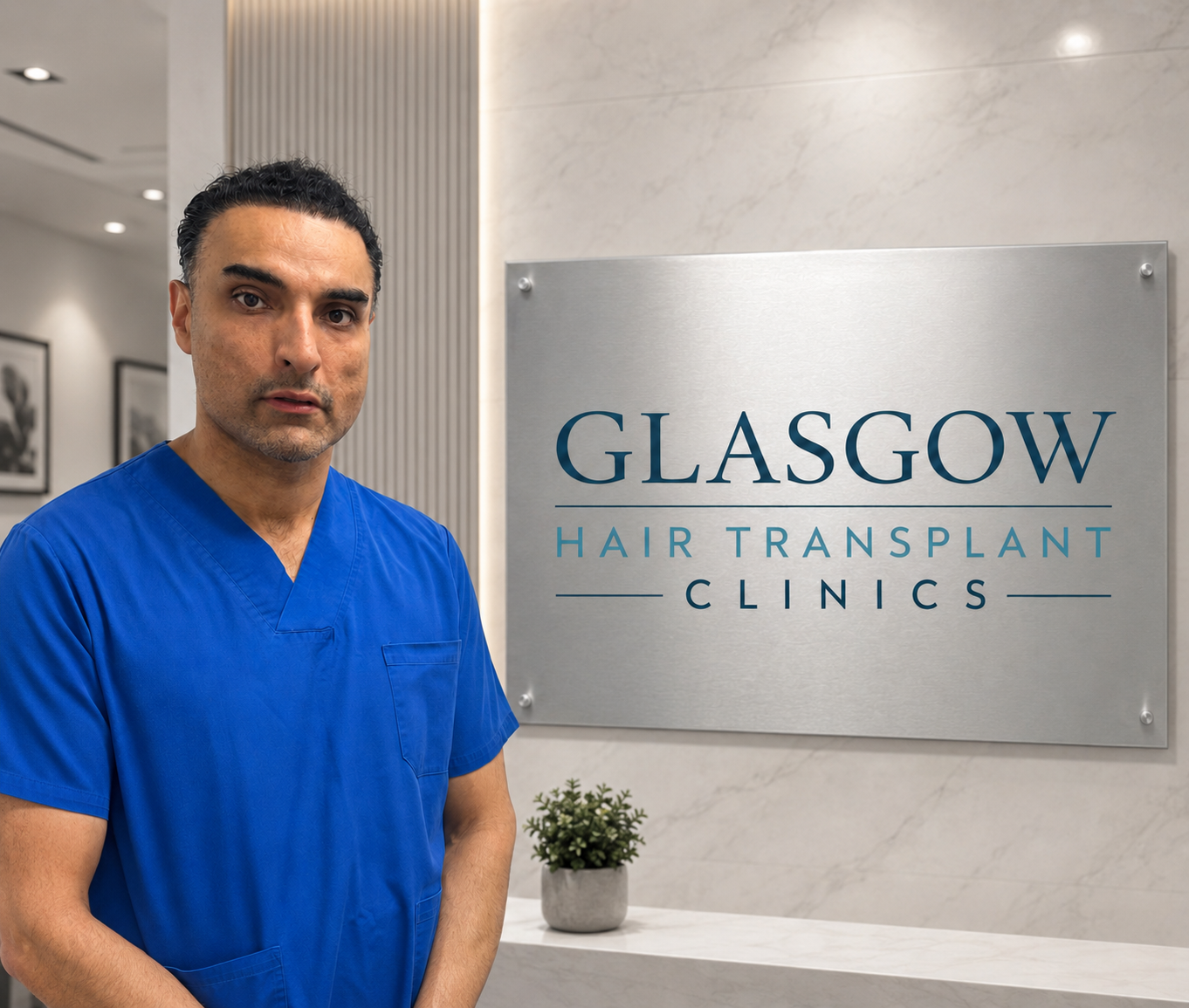
Dr Harpreet Kalra
Dr Harpreet Kalra is a hair transplant surgeon and GP who takes part in pre-operative assessment and treatment planning for Glasgow patients. He reviews the pattern of hair loss, donor quality, previous treatment, realistic graft requirements and the reserve that should be protected for the future. GMC number 7126076.
Related hair transplant guides
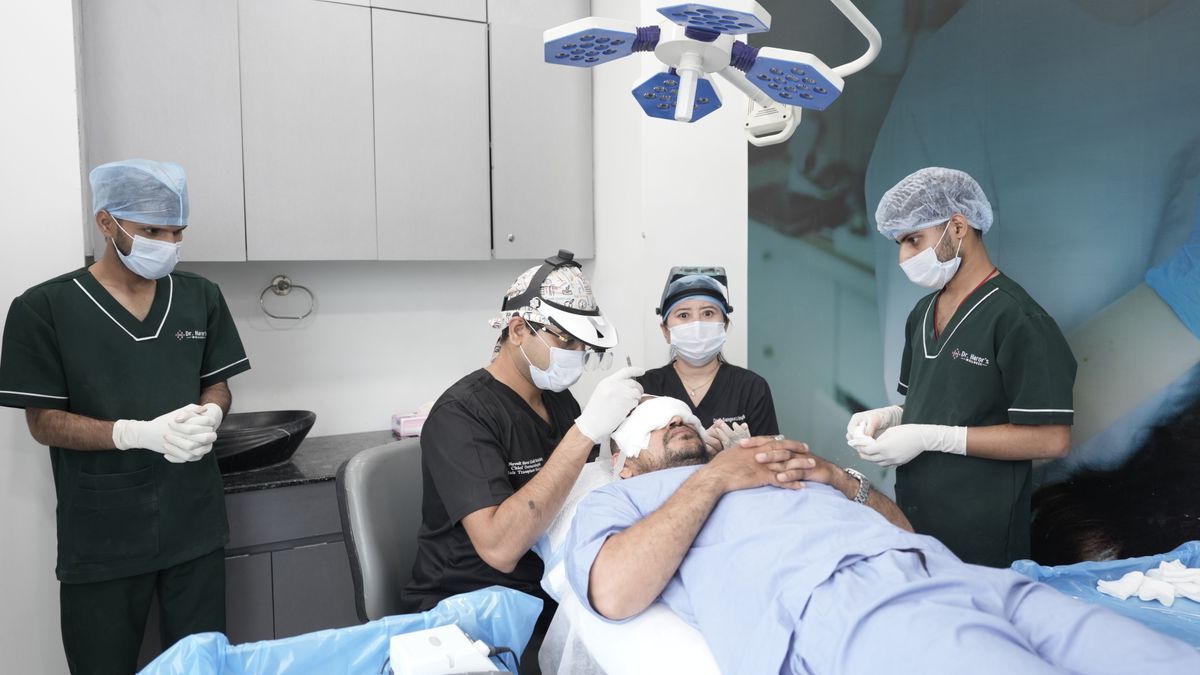

For independent information about FUE, FUT, recovery and surgical risks, read the NHS hair transplant guide .
Get your donor area assessed
Donor quality cannot be judged from a photograph or a generic graft estimate. At a consultation, we examine the donor area, review the pattern of hair loss and work out how much hair needs to be preserved for the future.
Call 0141 363 0019 or complete the consultation form and our Glasgow team will contact you. You can discuss donor density, FUE, DHI, FUT, realistic graft numbers, scarring, aftercare and recovery before deciding whether treatment is right for you.
Book a Free Consultation