






- Waiting too long before acting, allowing follicle miniaturisation to progress beyond the point where non-surgical options remain effective
- Stopping and restarting medication (finasteride or minoxidil) inconsistently, which undermines results and may lead to increased shedding
- Buying from unregulated overseas sellers , risking counterfeit or incorrectly stored formulations
- Using tight hairstyles or heavy styling products that cause traction alopecia or make thinning more visible
- Relying on unproven treatments (caffeine shampoos, biotin megadoses, laser combs) instead of clinically supported options
- Hiding the problem with damaging styles — combover styling that stresses the scalp and remaining follicles
- Ignoring underlying health causes such as iron deficiency, thyroid dysfunction, or telogen effluvium triggered by illness
The single most useful action you can take right now is to book a clinical assessment with a UK-regulated prescriber. NHS guidance, the Care Quality Commission (CQC), and the General Medical Council (GMC) all provide frameworks for safe, diagnosis-led care. Glasgowhairtransplantclinics, whose surgeons are on the GMC register and whose clinics are CQC registered, offers free consultations for men at this stage.
Table of Contents
- The most common hair loss mistakes men make, explained
- Why men lose hair: causes and what a clinician looks for
- What actually works in the UK: treatments with evidence behind them
- How to choose a clinic or prescriber safely in the UK
- Daily care and prevention: practical steps you can take now
- Treatment timelines: what to expect and when to reassess
- Clinician corrections to myths men commonly believe
- Key takeaways
- Why early, evidence-based action is the only sensible approach
- Glasgowhairtransplantclinics: specialist assessment when you are ready
- Useful sources and further reading
- FAQ
The most common hair loss mistakes men make, explained
1. Waiting until the loss is severe
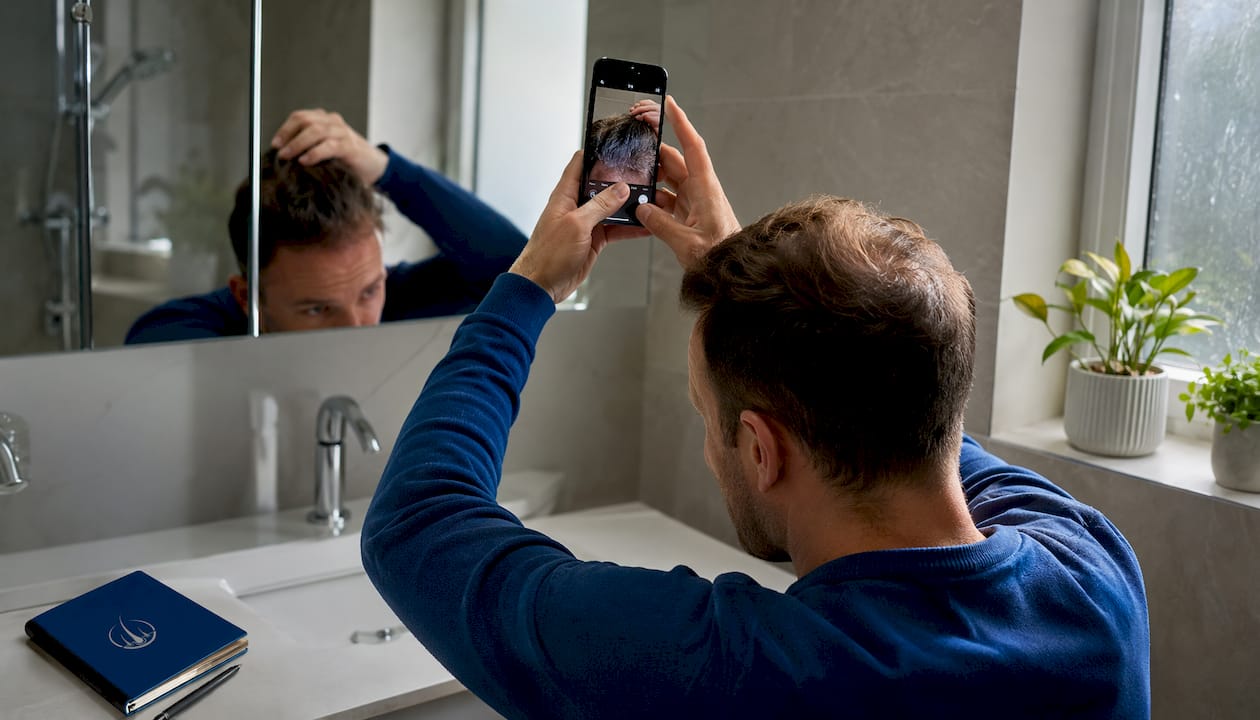
The most damaging error is delay. Follicles move along a miniaturisation spectrum; once a follicle has fully miniaturised, pharmacological recovery becomes far less likely. Early clinical assessment widens non-surgical options precisely because follicles are still partially viable. Men who act at the first sign of thinning have considerably more treatment routes available than those who wait years.
Do this instead: Check your hairline and crown monthly under consistent lighting. If you notice progressive thinning over two to three months, book an assessment rather than monitoring indefinitely.
2. Stopping medication when shedding increases
Many men stop finasteride or minoxidil within the first eight to twelve weeks because they notice more hair in the shower. This is almost always a normal, temporary phase called telogen effluvium, where the treatment cycle pushes resting hairs out before new growth begins. Stopping at this point resets the process entirely.
Do this instead: Commit to a minimum of six months before evaluating results. If shedding feels extreme or persists beyond three months, speak to your prescriber rather than stopping unilaterally.
3. Buying medication from unregulated sources
Unregulated international suppliers risk inconsistent potency, improper storage, and counterfeit formulations. UK guidance favours supply through GPhC-regulated pharmacies with a named prescriber. A product that looks identical to a licensed medicine may contain the wrong dosage or inactive ingredients.
Do this instead: Source finasteride and minoxidil only through a UK-regulated pharmacy or a clinic whose prescribing pathway includes a named clinician and a GPhC-registered dispensing pharmacy.
4. Using heavy, shiny styling products
Heavy gels and pomades with a high-shine finish draw the eye directly to the scalp and make thinning look worse. They also weigh hair down, reducing the appearance of density. This is one of the most common grooming errors for men with thinning hair, and one of the easiest to fix.
Do this instead: Switch to matte, volumising products. A small amount of clay or fibre product applied to damp hair and worked through with the fingers adds texture and the appearance of thickness without highlighting the scalp.
5. Relying on unproven treatments
Caffeine shampoos, biotin supplements at high doses, and laser combs are frequently marketed to men experiencing hair loss. None has the clinical evidence base of finasteride or minoxidil, which remain the primary medical treatments for male pattern baldness in UK practice. Spending months on unproven products delays access to treatments that actually work.
Do this instead: Use unproven products only as adjuncts, never as replacements. If a product cannot point to peer-reviewed clinical trials, treat it as cosmetic at best.
6. Combover styling and tight hairstyles
Combovers require pulling hair across the scalp under tension, which stresses follicles and can cause traction alopecia over time. Tight man-buns, cornrows, and similar styles produce the same effect. Traction alopecia, if sustained, can cause permanent follicle damage at the hairline.
Do this instead: Opt for shorter, textured cuts that work with your current density rather than against it. A good barber who understands thinning hair can suggest cuts that genuinely improve appearance without causing further damage.
7. Ignoring potential medical causes
Not all hair loss is androgenetic alopecia. Iron deficiency, vitamin D insufficiency, thyroid disorders, and significant physical or psychological stress can all trigger telogen effluvium. Men who self-diagnose male pattern baldness and go straight to finasteride may be treating the wrong condition entirely.
Do this instead: Ask your GP for a blood panel that includes ferritin, thyroid function, and vitamin D before starting any medication. Treating an underlying deficiency can resolve shedding without pharmaceutical intervention.
8. Skipping scalp care entirely
A neglected scalp accumulates sebum, product residue, and dead skin cells that can impede healthy follicle function. Equally, men with thinning hair sometimes wash so infrequently out of fear that washing causes loss. Normal washing does not cause hair loss.
Do this instead: Wash two to four times per week with a gentle, sulphate-free shampoo. During washing, use a firm but not aggressive scalp massage to stimulate blood flow. Being overly gentle is counterproductive; a confident circular motion with the fingertips is appropriate.
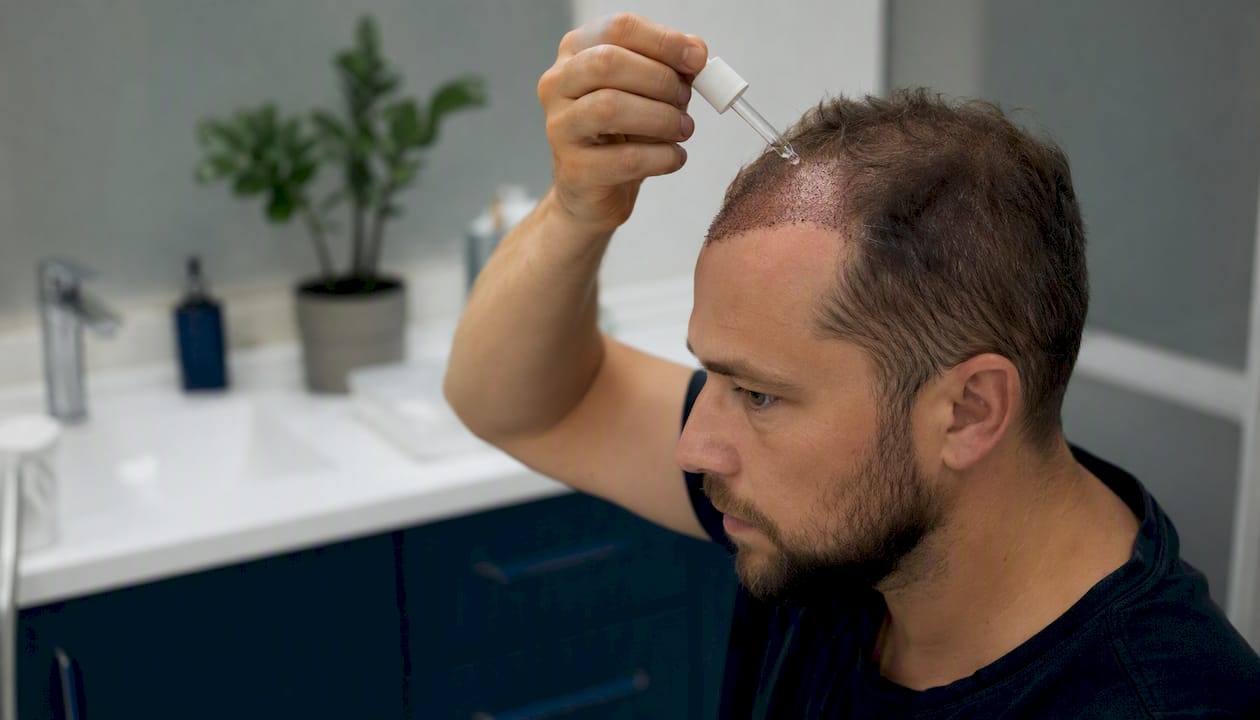
Pro Tip: Apply a scalp-specific serum or light oil (such as rosehip or argan) to the scalp after washing, not to the lengths, to support the follicular environment without weighing hair down.
Why men lose hair: causes and what a clinician looks for
Male pattern baldness, or androgenetic alopecia, is the primary cause of hair loss in men and accounts for the vast majority of cases. It is driven by a genetic sensitivity to dihydrotestosterone (DHT), which causes follicles to progressively miniaturise over years or decades. The pattern typically begins at the temples or crown and follows a predictable progression.
Other causes are worth ruling out before assuming androgenetic alopecia:
- Telogen effluvium: Diffuse shedding triggered by stress, illness, surgery, or nutritional deficiency. Adults normally lose between 50 and 100 hairs per day; substantially more suggests a transient cause rather than permanent loss.
- Traction alopecia: Follicle damage from sustained mechanical tension, most commonly from tight hairstyles. Reversible if caught early; potentially permanent if sustained.
- Alopecia areata: An autoimmune condition producing patchy loss, distinct from the gradual recession of androgenetic alopecia. See the guide to patchy hair loss for a detailed clinical overview.
- Nutritional and medical causes: Iron deficiency, thyroid dysfunction, and significant caloric restriction can all produce diffuse shedding.
At a GP appointment, the clinician will take a history (onset, pattern, family history, medications, recent illness), examine the scalp and hair pattern, and may request blood tests. If the pattern is unclear or the loss is rapid, referral to a dermatologist or trichologist is appropriate. A diagnosis-led approach using history, pattern recognition, photographs, and targeted tests is the safer route than self-prescribing.
What actually works in the UK: treatments with evidence behind them
Medical treatments
Minoxidil (topical, applied directly to the scalp) works by prolonging the growth phase of the hair cycle and increasing follicle size. It is available over the counter in the UK in 2% and 5% concentrations. Results typically become visible at three to six months, with peak effect around twelve months. It must be used continuously; stopping reverses gains within months. Local irritation and scalp dryness are the most common side effects.
Finasteride (oral, 1 mg daily) works by blocking the conversion of testosterone to DHT. It is prescription-only in the UK and not routinely available on the NHS for cosmetic hair loss, so most men access it privately. Results appear at six to twelve months. A minority of men experience sexual side effects including reduced libido or erectile dysfunction; these resolve in most cases after stopping the medication. Both risks and benefits should be discussed with a prescriber before starting.
Pro Tip: A medication pathway that combines topical minoxidil with finasteride is often more effective than either alone for androgenetic alopecia, and is increasingly used in UK clinical practice.
Procedural options
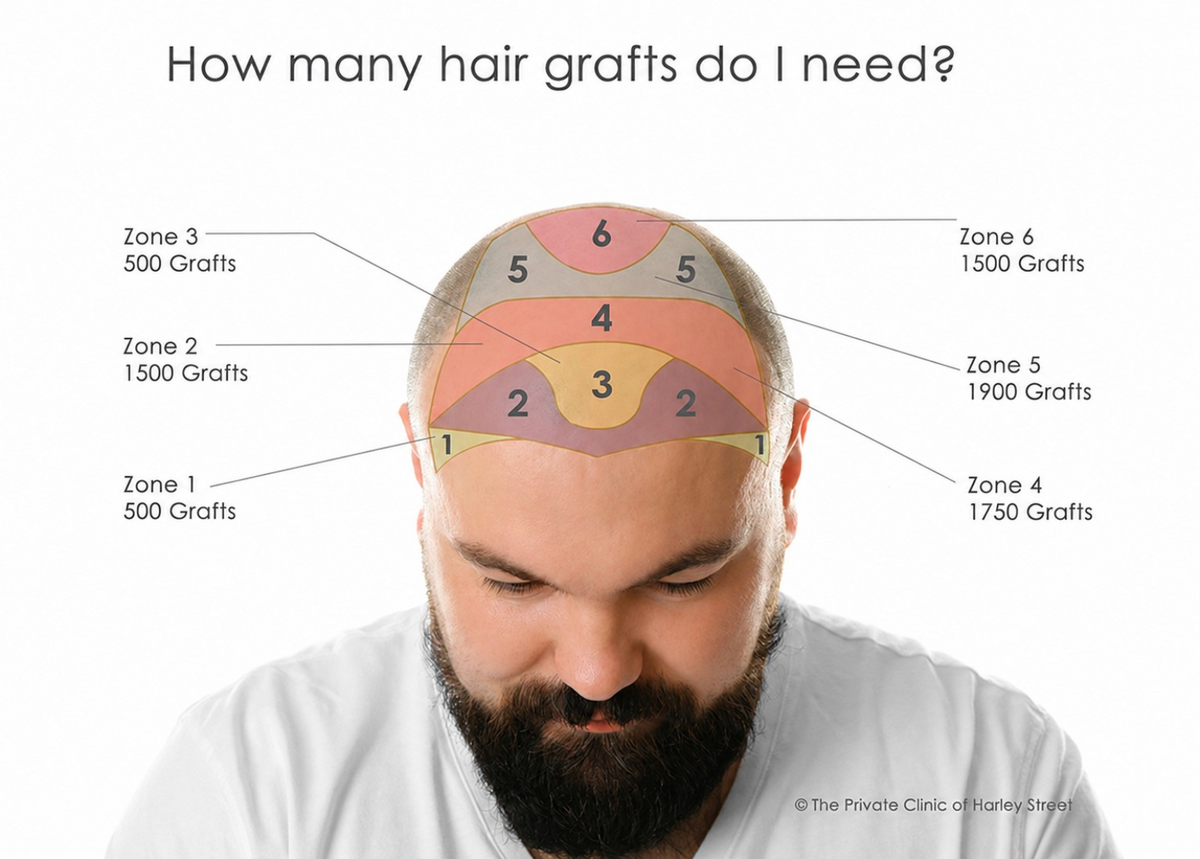
- FUE (Follicular Unit Extraction) and DHI (Direct Hair Implantation) transplants: Surgical procedures that relocate donor follicles from the back and sides of the scalp to thinning areas. Suitable for men with stable, established loss and sufficient donor density. Results are permanent but require twelve months for full maturation.
- PRP (Platelet-Rich Plasma) therapy: A minimally invasive treatment using the patient’s own plasma, injected into the scalp to support follicle health. Used as an adjunct to medical therapy or as a standalone option for early-stage loss.
- SMP (Scalp Micropigmentation): A non-surgical, cosmetic procedure that replicates the appearance of a shaved head or adds the illusion of density. Suitable for men who are not candidates for transplantation or who prefer a non-surgical result.
On safety and access: UK prescribing regulations require that finasteride is supplied through a GPhC-regulated pharmacy following a clinical assessment. Buying from unregulated sellers bypasses these checks and introduces real risks around potency and product integrity.
A combined, clinician-led plan tends to outperform self-directed single-treatment approaches, particularly for men with moderate to advanced loss. For a full comparison of these UK hair loss treatment options, the linked guide covers each in detail.
How to choose a clinic or prescriber safely in the UK
Checklist before committing
| Check | What to look for |
|---|---|
| CQC registration | Clinic listed on the Care Quality Commission register |
| GMC-registered surgeon | Named clinician verifiable on the GMC register |
| Clear informed consent process | Written risks, alternatives, and expected outcomes discussed before treatment |
| Before-and-after portfolio | Real patient photographs with consistent lighting and angles |
| Structured follow-up and aftercare | Defined review appointments after treatment begins |
| Named UK prescriber | Finasteride prescribed by an identifiable, licensed clinician |
| GPhC-regulated pharmacy supply | Medication dispensed through a registered UK pharmacy |
Red flags to walk away from
- No medical questionnaire before prescribing
- Medication shipped from abroad with no named UK prescriber
- Guaranteed results or dramatic before-and-after claims with no clinical caveats
- No follow-up appointments or aftercare plan offered
- Telehealth assessment that does not include quality photographs and a structured history
Telehealth assessments are widely used in UK practice and can be appropriate when they include a clear history, quality photographs, and a named prescriber. If the assessment feels rushed or superficial, pause rather than proceed.
Questions to ask at your consultation
- What is the most likely cause of my hair loss, and how confident are you in that diagnosis?
- Are there alternative causes we should rule out first?
- What is the realistic timeline for results with this treatment?
- What are the side effects, and how common are they?
- What does aftercare involve, and how often will I be reviewed?
Daily care and prevention: practical steps you can take now
Small, consistent changes to your daily routine can slow further loss and support any treatment already in use. These are not replacements for clinical treatment, but they matter.
- Washing: Use a gentle, sulphate-free shampoo two to four times per week. Wash with warm rather than hot water; heat increases scalp inflammation. For scalp health and regrowth support, consistent, gentle cleansing is more effective than infrequent deep-washing.
- Styling products: Choose matte, lightweight clays or fibres over heavy waxes and shiny gels. Matte products improve perceived density and do not highlight the scalp.
- Hat use: Wearing hats does not cause hair loss. Tight-fitting hats worn for extended periods can cause friction, but casual hat use is not a clinical concern.
- Traction-limiting styles: Avoid tight ponytails, buns, or braids. If you wear your hair longer, keep it loose when at home.
- Nutrition: In the UK, iron deficiency and vitamin D insufficiency are common and both contribute to diffuse shedding. If you have not had a blood test recently, ask your GP to check ferritin and vitamin D levels. Adequate protein intake (from meat, fish, eggs, or legumes) supports the hair growth cycle.
- Scalp massage: A firm, circular massage during washing stimulates blood flow to the follicles. Two to three minutes during each wash is sufficient.
For a full prevention protocol, the guide to preventing further hair loss covers each of these areas in greater depth.
Treatment timelines: what to expect and when to reassess
Consistency is the single most important factor in treatment success. The table below shows typical milestones for the main evidence-based options.
| Treatment | — | 3–6 months | 6–12 months | 12 months+ |
|---|---|---|---|---|
| Minoxidil (topical) | Possible increased shedding (normal) | Early regrowth in some men | Visible density improvement | Maintenance phase; stopping reverses gains |
| Finasteride (oral) | Minimal visible change | Shedding may slow | Regrowth and stabilisation in most men | Continued improvement; long-term use required |
| FUE / DHI transplant | Post-operative shedding of transplanted hairs (normal) | Follicles enter dormancy | New growth begins | Full result visible at 12 months |
| PRP therapy | Scalp sensitivity post-treatment | Gradual improvement in hair quality | Cumulative benefit with repeat sessions | Maintenance sessions recommended |
Increased shedding in the first eight to twelve weeks of minoxidil or finasteride use is a normal part of the treatment cycle, not a sign that the treatment is failing. It becomes a clinical concern if shedding is severe, if it persists beyond three months, or if it is accompanied by scalp pain, redness, or patchy loss. In those cases, return to your prescriber promptly.
Standardised monthly photographs taken under the same lighting, from the same angles, are the most reliable way to track progress. The early signs of hair loss guide includes practical advice on photographic tracking.
Clinician corrections to myths men commonly believe
Myth: Shampoo causes male pattern baldness. Reality: No shampoo causes androgenetic alopecia. MPB is genetic and hormonal. Harsh shampoos can irritate the scalp and cause temporary shedding, but they do not trigger the follicle miniaturisation process that drives pattern baldness.
Myth: All hair loss treatments are equally effective. Reality: Finasteride and minoxidil have the strongest clinical evidence for androgenetic alopecia. Supplements, shampoos, and many marketed devices have not demonstrated equivalent results in peer-reviewed trials. The gap between what is marketed and what is clinically supported is significant.
Myth: Scalp massage damages thinning hair. Reality: A firm scalp massage during washing stimulates blood flow and is not harmful to follicles. Aggressive pulling or scratching is different. Gentle, consistent massage is a positive habit, not a risk.
Myth: Hair transplants look unnatural. Reality: Modern FUE and DHI techniques, when performed by a GMC-registered surgeon, produce results that are indistinguishable from natural hair growth. The outdated “plug” appearance belongs to older techniques no longer used in reputable UK clinics.
Hair loss carries a psychological weight that is often underestimated. Men who feel distressed by thinning hair are not overreacting — the evidence consistently links hair loss to reduced self-esteem and increased anxiety. If hair loss is affecting your mental wellbeing, speak to your GP or a counsellor alongside pursuing clinical treatment. Addressing both the physical and psychological dimensions produces better outcomes overall.
For men who want to understand the emotional dimension more fully, the guide to restoring confidence and wellbeing covers this in detail.
Key takeaways
The single most important action for any man experiencing hair loss is to seek a regulated clinical assessment early, before follicle miniaturisation becomes irreversible.
| Point | Details |
|---|---|
| Act early | Follicle miniaturisation progresses over time; early assessment preserves non-surgical options. |
| Use regulated sources | Source finasteride and minoxidil through GPhC-regulated pharmacies with a named UK prescriber. |
| Stay consistent | Both minoxidil and finasteride require continuous use; stopping reverses gains within months. |
| Check credentials | Verify CQC registration and GMC-registered surgeons before committing to any clinic. |
| Glasgowhairtransplantclinics | CQC-registered clinics with GMC-registered surgeons offering free consultations across UK locations. |
Why early, evidence-based action is the only sensible approach
The pattern we see repeatedly is men who arrive having spent twelve to eighteen months on unproven products, by which point their options have narrowed considerably. The biology is straightforward: follicles that have fully miniaturised are very difficult to recover pharmacologically. The men who achieve the best non-surgical outcomes are those who act when thinning first becomes noticeable, not when it becomes undeniable.
We also see men who are embarrassed to seek help, or who assume that hair loss is something to simply accept. Both responses are understandable. But regulated, evidence-based treatment has a strong track record when started appropriately, and the psychological benefit of taking control of the situation is itself meaningful. CQC registration and GMC-registered surgeons are not bureaucratic details; they are the difference between a safe, monitored treatment pathway and a gamble on an unregulated product. That distinction shapes outcomes.
Glasgowhairtransplantclinics: specialist assessment when you are ready
If you have read this far, you are already ahead of most men who delay for years. Glasgowhairtransplantclinics offers free online and face-to-face consultations at CQC-registered clinics across the UK, with surgeons on the GMC register. The assessment is diagnosis-led, not sales-led.
A clinical consultation with Glasgowhairtransplantclinics includes:
- A structured diagnosis to identify the cause and stage of your hair loss
- A personalised treatment plan covering medical and procedural options
- Transparent pricing for FUE, DHI, and PRP treatments
- Defined follow-up and aftercare at every stage
View clinic locations and book a consultation at a UK site convenient for you. If you are considering surgical options, the before-and-after results gallery gives a realistic picture of what is achievable.
Useful sources and further reading
- NHS: Hair loss — The NHS overview of causes, treatments, and when to see a GP; the starting point for any UK reader.
- General Pharmaceutical Council (GPhC) — The UK regulator for pharmacies; use this to verify that any online pharmacy supplying hair loss medication is registered.
- Care Quality Commission (CQC) — The independent regulator of health and social care in England; check clinic registration here before booking.
- General Medical Council (GMC) — Verify that any surgeon or prescriber is on the GMC register before proceeding with treatment.
- PMC clinical review on hair loss — A peer-reviewed clinical review covering androgenetic alopecia, treatment evidence, and the importance of early intervention.
- Men’s Health UK: thinning hair styling guide — Practical guidance on cuts and products that improve the appearance of thinning hair while treatment takes effect.
- Unfashionable Male: hair loss guide for British men — A candid, UK-specific guide covering grooming, styling, and mindset for men dealing with hair loss.
FAQ
What is the biggest cause of hair loss in men?
Male pattern baldness (androgenetic alopecia) is the primary cause, accounting for the vast majority of cases. It is driven by a genetic sensitivity to DHT, which causes progressive follicle miniaturisation over time.
Is losing 100 hairs a day normal?
Yes. Adults normally lose between 50 and 100 hairs per day as part of the natural hair cycle. Shedding substantially more than this, particularly if diffuse, may indicate telogen effluvium triggered by stress, illness, or nutritional deficiency.
What are the main evidence-based treatments for thinning hair?
Finasteride and minoxidil are the primary medical treatments for male pattern baldness in UK practice. For men with established loss, procedural options including FUE hair transplants, PRP therapy, and SMP are also available through regulated UK clinics.
Why is hair loss increasing in younger men?
Androgenetic alopecia has a strong genetic component and can begin in a man’s twenties. Increased awareness and earlier recognition mean more younger men are seeking help sooner, which is clinically positive. Lifestyle factors including poor nutrition, high stress, and disrupted sleep can accelerate or trigger telogen effluvium in younger men, compounding genetic predisposition.
How do I know if a UK hair loss clinic is reputable?
Check that the clinic is registered with the CQC, that the prescribing clinician is on the GMC register, and that the consultation includes a structured medical history and informed consent process. Glasgowhairtransplantclinics meets all of these standards and offers free initial consultations.

About the author
Dr Harpreet Kalra is a GP and hair-transplant surgeon at Glasgow Hair Transplant Clinics. His consultations consider the diagnosis, donor area, existing hair and likely future pattern before treatment is discussed.
Get clear advice before treating hair loss
Our Glasgow team can assess your hair loss and explain which options are appropriate, evidence-based and realistic.
Book a Free Consultation