

Does dandruff cause hair loss?
What flakes and itching can tell you, how to care for your scalp and when to ask for help.

Published: 11 October 2026
Updated: 11 October 2026
Contents
- What dandruff actually is
- Does dandruff cause permanent baldness?
- Why might you notice more hair at the same time?
- Dandruff or another scalp condition?
- Choosing an anti-dandruff shampoo
- How often should you wash your hair?
- Should you scratch or brush the flakes away?
- Do scalp oils and home remedies help?
- Will hair grow back when the dandruff clears?
- When to speak to a pharmacist or GP
- What to bring to a scalp assessment
- Questions and answers
Flakes on your shoulders do not automatically mean that you are losing your hair permanently. Dandruff affects the scalp, while hair loss can have several different causes. The two can appear together, and scratching an uncomfortable scalp can add to the problem, but a receding hairline or a widening parting should not simply be blamed on dandruff.
The useful starting point is to separate three questions: what is causing the flaking, whether hairs are shedding or breaking, and whether the density of your hair is changing. Those answers determine whether an anti-dandruff shampoo, a medical assessment or a separate hair-loss discussion is the right next step.
What dandruff actually is
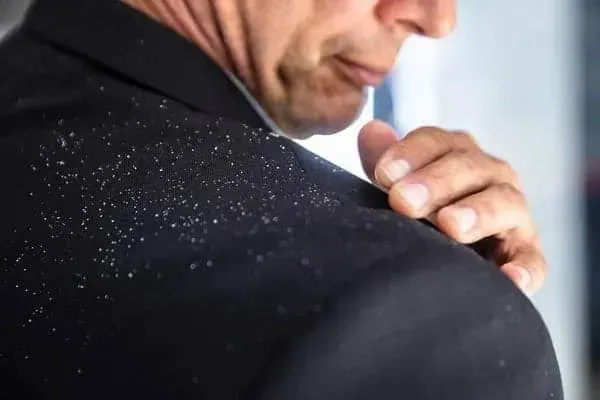
Dandruff causes visible flakes of skin in the hair and on the scalp. It may come with itching or a feeling of dryness. It is common, is not contagious and does not mean that someone has poor personal hygiene. People who wash carefully can still develop it.
A flaky scalp is a description rather than a complete diagnosis. Some people have mild dandruff without much irritation. Others have a more inflamed scalp, sometimes with similar changes around their eyebrows or elsewhere. Thick scale, soreness, broken hairs or distinct bald patches need a closer look because several skin conditions can appear similar at home.
It helps to describe what you can actually see. Fine loose flakes are different from crusting that sticks to the scalp. General itching is different from one painful patch. Write down whether the problem changes after washing or after a particular product; that is more useful than trying to identify a condition from photographs online.
Does dandruff cause permanent baldness?
Ordinary dandruff is not the same condition as inherited pattern hair loss. Treating flakes should not be presented as a guaranteed way to restore a receding hairline, and having dandruff does not by itself establish that follicles have been permanently damaged.
Hair that snaps during repeated scratching or rough handling is also different from a whole hair shedding during its growth cycle. You may notice short pieces of different lengths, longer strands, or both. A clinician can examine the hair and scalp if the distinction is unclear. You do not need to collect and classify every hair before asking for advice.
The mistake to avoid is assuming that one visible problem explains everything. A person can have scalp irritation and a separate pattern of thinning. If the flakes settle but density keeps changing, the remaining concern deserves its own assessment. Our guide to causes of hair loss in men explains why the pattern and timing matter.
Why might you notice more hair at the same time?
An uncomfortable scalp attracts attention. You may look more closely at your brush, touch your hair more often or notice strands against a dark towel that you previously ignored. That does not mean the change is imaginary; it means the amount you notice and the amount actually being lost are not always identical.
There may also be a genuine change in shedding. Recent illness, substantial weight loss, changes in medication and other health events belong in the history. If these occurred before the flaking, mention that sequence rather than assuming the scalp symptoms came first.
Compare photographs taken under similar conditions and consider what has changed over several weeks. A photograph with wet hair and bright overhead light cannot fairly be compared with dry hair photographed in softer light. Consistent records can help a consultation, whereas repeated checks throughout the day usually make the comparison harder.
Dandruff or another scalp condition?
The NHS dandruff guidance describes several possible explanations for flaking, including seborrhoeic dermatitis, eczema, psoriasis and reactions to hair products. It also advises seeking help for persistent symptoms, marked itching, redness or swelling.
A new product is worth mentioning, particularly if the scalp became uncomfortable soon after you introduced it. Keep the packaging or photograph the ingredient list. Include hair dye, styling spray, oils, dry shampoo and leave-in products rather than focusing only on the shampoo used in the shower.
Do not keep testing the same product on an already sore scalp to prove that it is responsible. A clinician or pharmacist can advise on the next step. If the reaction is severe or spreading, seek prompt medical advice rather than waiting for an ordinary dandruff routine to work.
Choosing an anti-dandruff shampoo
An anti-dandruff product should be chosen for the scalp problem you are treating. A bottle advertised for thicker-looking hair may be a cosmetic product and may do little for itching or scale. Ask a pharmacist to help identify a suitable option and explain its directions.
Medicated products differ. Check how often to use the particular shampoo, whether it should remain on the scalp before rinsing and what to do once symptoms improve. Do not transfer instructions from another brand or use several treatments together simply because they contain different ingredients.
The NHS information on ketoconazole explains one medicine used for fungal skin conditions, including dandruff. It is a treatment for an identified scalp problem, not proof that every person with thinning hair needs an antifungal shampoo.
If a product makes the scalp more uncomfortable, ask for advice. A stronger sensation is not evidence that it is working better. Bring details of what you used, how often and what changed, so the next choice is based on that experience.
How often should you wash your hair?
There is no single washing schedule that suits every scalp and every hairstyle. Your usual routine, oiliness, exercise, hair texture and the instructions for any prescribed product all matter. A medicated shampoo schedule and an ordinary cleansing schedule are not necessarily the same thing.
Try to keep the routine understandable. If you change the shampoo, introduce a scalp serum and start washing twice as often in the same week, it becomes difficult to tell which change helped or caused irritation. Make a note of the treatment plan and allow the agreed review period rather than switching products after every wash.
Avoid treating cleansing as a competition to remove every visible flake in one session. The aim is a comfortable scalp. Scrubbing until the skin is sore, or using very hot water because the hair feels greasy, can make everyday care unpleasant without resolving the cause.
Should you scratch or brush the flakes away?
Picking at the scalp is not a useful treatment. It can leave the skin sore, and rough brushing can damage the hair shaft. If itching is so strong that you cannot leave the area alone, that is a reason to discuss the symptoms rather than simply trying to be more disciplined.
Use your fingertips gently when washing and rinse thoroughly. Detangle with care, working through knots without repeatedly pulling at the roots. If brushing is painful, stop and ask what is causing the discomfort. A scalp brush or exfoliating tool is optional equipment, not an essential part of treatment.
Our hair transplant aftercare guide covers a separate situation: a recently treated scalp. After surgery, follow the operating clinic's instructions before using medicated shampoos, scrubs or oils. Ordinary dandruff advice should not replace a surgical aftercare plan.
Do scalp oils and home remedies help?
People often try an oil because flakes look dry. But a dry-looking scalp does not establish why it is flaking, and the word “natural” does not tell you whether a product will suit your skin. Essential oils and fragranced mixtures can also make it harder to identify which ingredient caused a reaction.
Before adding another product, ask what it is meant to achieve. Is it intended to soften the hair, remove cosmetic build-up or treat a diagnosed skin condition? Those are different purposes. A product that makes the lengths feel smoother is not necessarily treating the scalp.
If you have already tried several remedies, list them at your appointment. Include how long each was used and whether the skin became more itchy, greasy or sore. That history can prevent another round of the same unsuitable products.
Will hair grow back when the dandruff clears?
The answer depends on why the hair changed. If the concern is breakage, improvement needs to be judged as new, less-damaged length grows. If there is increased shedding, the underlying trigger and the hair cycle matter. If inherited thinning is also present, clearing the scalp does not remove that separate process.
Do not accept a fixed regrowth promise based only on the presence of flakes. A useful plan explains what the clinician thinks is happening, what improvement would look like and when to review it. The review should consider scalp comfort and visible hair density separately.
For example, less itching can be a worthwhile improvement even before your hair looks different. Conversely, a comfortable scalp does not settle the question of a gradually widening parting. Keeping those outcomes separate gives a more accurate picture than asking whether one shampoo has “worked” in every respect.
When to speak to a pharmacist or GP
A pharmacist is a useful first contact for uncomplicated dandruff and advice about products. Arrange a GP assessment if the problem persists despite following treatment directions, if the scalp is significantly inflamed, or if you are worried about the hair loss itself.
Mention bald patches, changes in the eyebrows, persistent tenderness, crusting or a clear change in density. You do not need to wait until thinning becomes severe. If you have photographs showing how the hairline used to look, bring a small selection with dates rather than a large collection of almost identical images.
The appointment is also a chance to discuss the impact on you. Avoiding social events, struggling to sleep because of itching or repeatedly checking the mirror are relevant concerns. They help explain why you are seeking help and what you need from the plan.
What to bring to a scalp assessment
Bring the names of your current hair products, medicines and supplements. Note when the flakes started, when you first noticed extra hair, whether the scalp hurts or itches and whether the problem affects other areas. Include recent health changes even if they seem unrelated to hair care.
Useful questions include: what is the likely diagnosis, what alternatives need considering, which product should I use and how, and when should I come back? If treatment is suggested, ask what to do if it irritates the scalp or fails to help.
You can contact the Glasgow team about a hair-loss consultation, but an active skin problem may need GP or dermatology care first. Establishing the cause makes any later discussion of hair restoration more useful.
Questions and answers
Can dandruff make a receding hairline worse?
The two can occur together, but dandruff should not be used as the automatic explanation for progressive recession. Record both the scalp symptoms and the change in hairline position. If recession continues after the scalp improves, ask for a separate assessment of the hair-loss pattern.
Is a flaky scalp a sign that I am washing badly?
Not necessarily. Dandruff can occur despite careful washing. The right routine depends on the condition and the product instructions. Increasing the frequency or scrubbing harder without understanding the problem can leave you with an uncomfortable scalp and little useful information about what helps.
Does more hair in the shower mean the shampoo is damaging follicles?
No. Washing makes loose hairs easier to see, and timing alone does not show that the shampoo caused the loss. A new burning or itchy reaction is a different clue and should be discussed. Look at scalp symptoms, the longer-term pattern and recent health changes together.
Can I have a hair transplant while my scalp is sore and flaky?
Tell the surgeon before making treatment plans. An active scalp problem needs assessment, and surgery should not be used to bypass the diagnosis. Ask whether treatment needs to be postponed, who should manage the scalp condition and what improvement is needed before suitability can be reconsidered.
Should I use the same shampoo permanently?
Ask the pharmacist or prescriber what maintenance is appropriate for your particular product and diagnosis. A short treatment course and a long-term routine may differ. If symptoms repeatedly return, review the diagnosis and instructions rather than increasing the strength or frequency yourself.