Follicular Unit Extraction (FUE) in the UK is generally a private cosmetic procedure with costs that can vary widely depending on the clinic, graft count, and surgeon involvement. The NHS notes
that UK prices can range from roughly £1,000 to £30,000, though the lower end reflects very small or non-surgical cases. Hair transplants for pattern hair loss are classified as cosmetic procedures and are not routinely funded by the NHS, so every patient pays privately.
Here is a quick orientation before you read further:
Typical UK FUE range:
varies significantly depending on graft count, clinic, and other factors
Per-graft ballpark:
rates vary depending on clinic and surgeon involvement
Key caveat:
your individual quote depends on graft count, surgeon experience, clinic accreditation, and what aftercare is included — the sections below break each of these down with concrete examples
What the FUE price actually means: graft bands and pricing models
Not all clinics price the same way, and understanding the model matters before you compare quotes.
Per-graft pricing
charges a fixed rate for each follicular unit extracted and implanted. At £2–£5 per graft, a 2,000-graft session typically falls close to £5,000 at many UK clinics, though quotes can vary depending on surgeon involvement and other factors. This model is transparent in theory, but it requires a written graft estimate and clear rules for what happens if the final count differs from the quote. Without that, patients can face unexpected charges if more grafts are used than planned.
Graft-band packages
group cases into bands (e.g. “up to 1,500 grafts” or “2,000–2,500 grafts”) and charge a flat fee for the band. This is the most common UK model and makes budgeting straightforward, provided you understand exactly what the band includes.
Flat packages
cover a defined procedure regardless of graft count, often including consultation, theatre time, and basic aftercare. These suit patients whose graft needs are well-defined after a proper donor assessment.
The price for FUE hair transplants in the UK varies considerably depending on graft count and clinic; patients should request detailed quotes to understand their specific costs.
The cost for a 2,500-graft or 1,500-graft FUE session depends on many factors, and patients should obtain personalised quotes rather than rely on generic price ranges. When hair loss is advanced, a single session may not achieve full coverage, and a second session adds to the total cost. A thorough donor-area assessment at consultation will tell you whether one session is realistic.
What your quote usually includes and what it often does not
Understanding what a headline price covers is the most practical step you can take before comparing clinics.
Typically included in a UK FUE quote:
Pre-operative assessment and medical history review
Surgeon’s time for incision-making and graft placement
Initial post-op review, usually at one to two weeks
Commonly excluded or priced as add-ons:
Platelet Rich Plasma (PRP) therapy, which some clinics offer alongside FUE to support growth
Additional follow-up appointments beyond the initial review
Premium technique upgrades such as sapphire-blade incisions or DHI implantation
Revision surgery if growth is inadequate
Extended aftercare packs or specialist shampoos
Travel and accommodation for patients attending from outside the clinic’s city
The true cost of a hair transplant extends well beyond the procedure day. Aftercare, follow-up visits, and access to complication support across the first twelve months are clinically meaningful, and their absence from a headline price is a genuine hidden cost. Patients who under-budget for post-operative support sometimes face additional expense later, particularly if growth is uneven or a revision is needed.
Pro Tip:Before signing anything, ask the clinic to confirm in writing: who performs the recipient-site incisions (surgeon or technician), exactly how many follow-up appointments are included, what the revision policy is, and whether PRP or premium tools are bundled or billed separately.
Key factors that make one FUE quote higher or lower
Several variables drive the price difference between a £3,500 quote and a £9,000 one. Knowing which factors are worth paying a premium for helps you spend wisely.
Graft count
— the single largest cost driver. More grafts mean longer theatre time, more surgeon effort, and higher facility costs. Always get a written graft estimate before comparing prices.
Surgeon involvement
— whether a GMC-registered surgeon
performs the critical incision steps directly, rather than delegating them to technicians, is the most important quality variable. Surgeon-led procedures cost more and are worth it.
Technique and equipment
— standard FUE, sapphire-blade FUE, and DHI (Direct Hair Implantation) carry different costs. Sapphire and DHI add-ons typically increase the price by several hundred to over a thousand pounds.
Clinic accreditation and theatre standards
— CQC-registered surgical facilities must meet specific safety standards. Clinics operating outside that framework may quote lower prices but carry higher risk.
Session length and team size
— a large graft session requires a skilled team working for six to eight hours. Clinics that compress this into fewer hours with fewer staff may compromise graft survival rates.
Geographic location
— London and major city clinics typically charge more than regional clinics for equivalent procedures, reflecting higher overheads.
Donor complexity
— fine, low-density, or curly donor hair requires more careful extraction and may reduce the number of viable grafts, affecting both the plan and the price.
Concurrent procedures
— adding a beard or eyebrow transplant in the same session increases cost but may be more efficient than separate visits.
Pro Tip:Ask specifically whether the surgeon will perform the recipient-site incisions personally. BAHRS guidance
is clear that a GMC-registered doctor should carry out the primary surgical steps in both donor and recipient areas. Clinics where technicians perform these steps represent a safety concern, regardless of how competitive the price looks.
Safety, regulation, and NHS policy for FUE in the UK
The UK has a clear regulatory framework for surgical hair restoration, and understanding it protects you from unsafe providers.
Any clinic performing FUE as a surgical procedure must be registered with the Care Quality Commission (CQC). The operating surgeon must hold full GMC registration and a current licence to practise. These are not optional quality markers — they are legal requirements for surgical activity in England. Scotland, Wales, and Northern Ireland have equivalent regulatory bodies.
The NHS does not routinely fund hair transplants for male or female pattern hair loss. Surgical correction is not commissioned for androgenetic alopecia or most forms of alopecia areata. Funding is reserved for exceptional reconstructive cases, such as hair loss following burns, trauma, or certain medical treatments. For the vast majority of patients, FUE is a privately funded procedure.
Red flags to question before booking:
No CQC registration number provided for the surgical facility
No named, GMC-registered surgeon confirmed for your procedure
Price guarantees that seem unrealistically low without a clear explanation of what is excluded
No written surgical plan or graft estimate offered before you pay a deposit
Pressure to book immediately without a proper consultation
A quick check on the GMC register and the CQC website takes five minutes and can confirm whether a clinic’s claims are accurate.
Turkey versus the UK: what the price difference really means
Turkish FUE packages are frequently advertised at £1,500–£3,500, compared with typical UK prices of £3,000–£10,000+. That gap is real, but the full picture is more nuanced.
Potential advantages of a Turkish package:
Lower headline price for high-graft-count procedures
Packages often include hotel accommodation and airport transfers
Some clinics have high-volume experience with large sessions
Risks and hidden costs to factor in:
Return flights (typically £150–£400+ depending on timing and origin)
Additional nights if recovery requires an extended stay
Post-operative medications purchased locally or on return
Time off work, which can be a week or more
Follow-up appointments: if complications arise, a return trip to Turkey adds significant cost
Differing regulatory standards — Turkish clinics are not subject to CQC or GMC oversight
Technician-led procedures are more common in high-volume overseas models, raising the question of who actually performs the surgical steps
For patients with straightforward hair loss, a well-chosen overseas clinic can deliver good results. The risk rises with complexity: scarring, difficult donor characteristics, or any need for revision surgery becomes significantly harder to manage when your surgeon is in another country. The NHS guidance on hair transplants recommends factoring in the full cost of aftercare and complication support across the first twelve months when making this comparison.
How to get an accurate, comparable quote from any UK clinic
A quote is only useful if you know exactly what it covers. These are the questions to ask at every consultation.
Consultation checklist:
Request a written surgical plan including the graft estimate range and hairline design
Confirm who performs each surgical step: surgeon or technician
Ask for the full aftercare schedule and how many follow-up appointments are included
Clarify the revision policy: what triggers eligibility, who assesses it, and whether it costs extra
Get a written breakdown of what is and is not included in the quoted price
Sample questions and what a reassuring answer looks like:
“Will the surgeon perform the recipient-site incisions personally?”
— A good answer names the surgeon and confirms their direct involvement in both donor extraction and recipient-site creation.
“How do you count and document grafts?”
— A reliable clinic will explain their counting method and confirm what happens if the final graft count is higher or lower than estimated.
“What is your revision policy if growth is below expectations at twelve months?”
— Look for a clear, written policy rather than a vague reassurance.
“Is PRP included, or is it an additional cost?”
— This is a common add-on; knowing upfront avoids surprises.
“What follow-up is available if I have concerns after the procedure?”
— Confirm whether follow-up is in-person, remote, or both, and for how long.
Clinics that cannot answer these questions clearly at consultation are worth approaching with caution. A written graft estimate is the single most useful document for comparing quotes fairly across different providers. Recovery typically involves one to two weeks of visible healing, with final growth results assessed at nine to twelve months. If a second session is needed, that timeline and cost should be discussed at the initial consultation.
What Glasgowhairtransplantclinics offers: credentials and example pricing
Glasgowhairtransplantclinics operates CQC-registered surgical facilities with GMC-registered surgeons across multiple UK locations, including Glasgow and Newcastle. Every procedure is planned and led by a qualified surgeon, with written surgical plans and transparent graft estimates provided before any commitment is made.
Example pricing bands at Glasgowhairtransplantclinics:
Procedure
Typical graft range
Indicative price range
Hairline FUE
1,000–2,000 grafts
Typically falls in the £3,000 to £10,000+ UK range; a standard 2,000-graft session is often quoted near £5,000.
Crown / mid-scalp FUE
2,000–3,000 grafts
—
Beard transplant
—
Available on consultation
Eyebrow transplant
—
Available on consultation
PRP therapy
N/A (non-surgical)
—
Prices are indicative and subject to a personalised assessment. The full pricing page
lists current bands for FUE, DHI, and PRP.
Credentials at a glance:
CQC-registered surgical facilities
GMC-registered surgeons with a licence to practise
HIS (Hair Industry Standards) registered
Multiple UK locations: Glasgow, Newcastle, and additional sites
Free online or face-to-face consultations available
Treatments offered: FUE, beard transplants, eyebrow transplants, PRP, and SMP
To arrange a consultation, patients can book online or by phone. Bringing photographs of your hair loss pattern and any previous medical history relating to hair loss helps the surgeon provide a realistic graft estimate at the first appointment. Before and after results
are published on the clinic website for reference.
Payment options and financing for FUE in the UK
FUE is a significant private expenditure, and most UK clinics offer more than one way to manage the cost.
Common payment options include:
Full payment upfront
— often the simplest route and sometimes accompanied by a small discount
Staged payments
— a deposit at booking with the balance due before or on the procedure day
Clinic finance plans
— monthly instalments arranged through the clinic, sometimes interest-free for shorter terms
Third-party medical finance
— providers such as Chrysalis Finance or Medifinance offer personal loans specifically for cosmetic procedures, with terms typically ranging from twelve to sixty months
Personal loans
— a standard unsecured personal loan from a high-street bank or building society can cover the cost, often at competitive rates for patients with good credit
Before taking any finance, confirm the total amount repayable, the APR, and whether early repayment is permitted without penalty. Clinic finance plans vary considerably in their terms, so read the agreement carefully. For patients considering hair transplant insurance coverage, standard health insurance policies do not cover cosmetic FUE, though some critical illness or medical complications policies may cover post-operative complications.
Additional costs beyond the procedure itself
The procedure fee is rarely the only expense, particularly for patients travelling from outside the clinic’s city.
Travel and accommodation within the UK:
Patients attending clinics in Glasgow, Newcastle, or London from elsewhere in the UK may need to budget for return travel (rail or air) and at least one night’s accommodation
A typical hotel near a city-centre clinic costs £80–£150 per night; budget options are available in most cities
Some clinics offer guidance on nearby accommodation or have arrangements with local hotels
Other costs to plan for:
Post-operative medications (if not included): typically £30–£80 for the initial course
Specialist aftercare products: shampoos and sprays recommended for the first few weeks, usually £20–£60
Time off work: most patients take five to ten days off; self-employed patients should factor in lost income
Follow-up appointments: confirm whether these are included or charged separately
PRP sessions post-procedure: if recommended to support growth, these are typically priced separately
A thorough pre- and post-operative plan
from your clinic will itemise these costs in advance. Patients who budget only for the procedure fee and overlook these surrounding costs often find the total spend is 15–25% higher than the headline quote.
Key takeaways
UK FUE hair transplant costs vary widely, influenced by graft count, surgeon involvement, and inclusion of aftercare in the quoted price.
Point
Details
Headline UK price range
FUE procedure costs vary widely in the UK depending on graft count and clinic; personal quotes are essential to understand pricing.
Per-graft ballpark
Per-graft rates differ between clinics and surgeon involvement; always request a written graft estimate for comparisons.
NHS funding
Hair transplants for pattern hair loss are not routinely funded by the NHS; all patients pay privately.
Safety checklist
Verify CQC registration for the facility and GMC registration for the named surgeon before paying any deposit.
Glasgowhairtransplantclinics
CQC-registered, GMC-supervised clinics in Glasgow and Newcastle offering FUE, beard, eyebrow, PRP, and SMP with free consultations.
What patients often wish they had known before booking
The cost conversation before a hair transplant tends to focus on the procedure fee. What catches people off guard is everything around it.
Recovery takes longer than most patients expect. The first ten days involve visible scabbing and redness, and the “shock loss” phase — where transplanted hairs shed before regrowing — can be unsettling if you are not prepared for it. Understanding this timeline before you book means you can plan time off work and manage expectations with people around you.
Aftercare costs are easy to overlook at the planning stage. Specialist shampoos, post-operative sprays, and follow-up appointments can add a meaningful sum to the total, particularly if they are not included in your quoted price. Asking for a written breakdown of what is covered for the twelve months after surgery is one of the most practical steps you can take.
The question of who performs the surgical steps matters more than most patients realise until after the fact. Confirming in writing that a GMC-registered surgeon will personally carry out the recipient-site incisions is not bureaucratic caution — it is the single most important quality check available to you. Getting a second opinion from a different clinic before committing is also worth the time, particularly for larger or more complex cases. Keeping photographic records from the day of surgery through to twelve months gives you a clear basis for any follow-up conversation about growth outcomes.
Glasgowhairtransplantclinics: surgeon-led FUE across the UK
For patients who want a UK-based, surgeon-led procedure with full regulatory oversight, Glasgowhairtransplantclinics offers a straightforward alternative to the uncertainty of overseas packages. Every procedure is carried out in a CQC-registered facility by a GMC-registered surgeon, with a written surgical plan and transparent pricing provided before any commitment is required.
The clinic’s services cover hairline FUE restoration, beard and eyebrow transplants, PRP therapy, and Scalp Micro Pigmentation, with locations in Glasgow, Newcastle, and additional UK sites. Consultations are free, available online or face to face, and designed to give you a realistic graft estimate and cost breakdown specific to your hair loss pattern.
To arrange your free consultation or view current pricing bands, visit the Glasgow Hair Transplant Clinics cost page or contact the team directly to book at a location near you.
This article provides general information about FUE hair transplant costs in the UK. It is not a substitute for professional medical advice. Confirm current pricing, eligibility, and surgical suitability with a qualified GMC-registered surgeon before making any decisions.
Authoritative sources and further reading
The figures and regulatory guidance in this article draw on the following sources. Checking the GMC and CQC registers directly is the most reliable way to verify any clinic’s credentials.
Source
What it covers
NHS: hair transplant guidance
UK price range (£1,000–£30,000), NHS funding policy, and post-operative care overview
GMC: cosmetic interventions professional standards
Legal requirements for surgeon registration, CQC registration, and consent standards
BAHRS guidance via ISHRS / FightTheFight
Guidance on surgeon-performed surgical steps and delegation risks
TreatCompare: hair transplant cost UK
Market benchmark price ranges and graft-band examples
Meet Your Clinic: FUE cost UK 2026
Per-graft pricing breakdown and technique comparisons
Meet Your Clinic: UK vs Turkey FUE cost
Turkey vs UK advertised price comparison and hidden-cost analysis
There is no single UK price for Follicular Unit Extraction (FUE). The final figure depends on the number of grafts required, the donor area, the part of the scalp being treated, the surgical plan and what the clinic includes after the procedure.
The NHS gives a broad UK hair-transplant range of £1,000 to £30,000. That figure covers hair transplantation generally, not FUE alone, and it is too wide to serve as a quote. A useful comparison starts with a clinical graft estimate and a written list of what the fee covers.
How an FUE quote is calculated
FUE removes follicular units individually from suitable donor hair at the back and sides of the scalp. Those grafts are prepared and placed into the planned recipient area. A small hairline correction and a procedure covering the frontal third and mid-scalp are different operations, even if both are described simply as FUE.
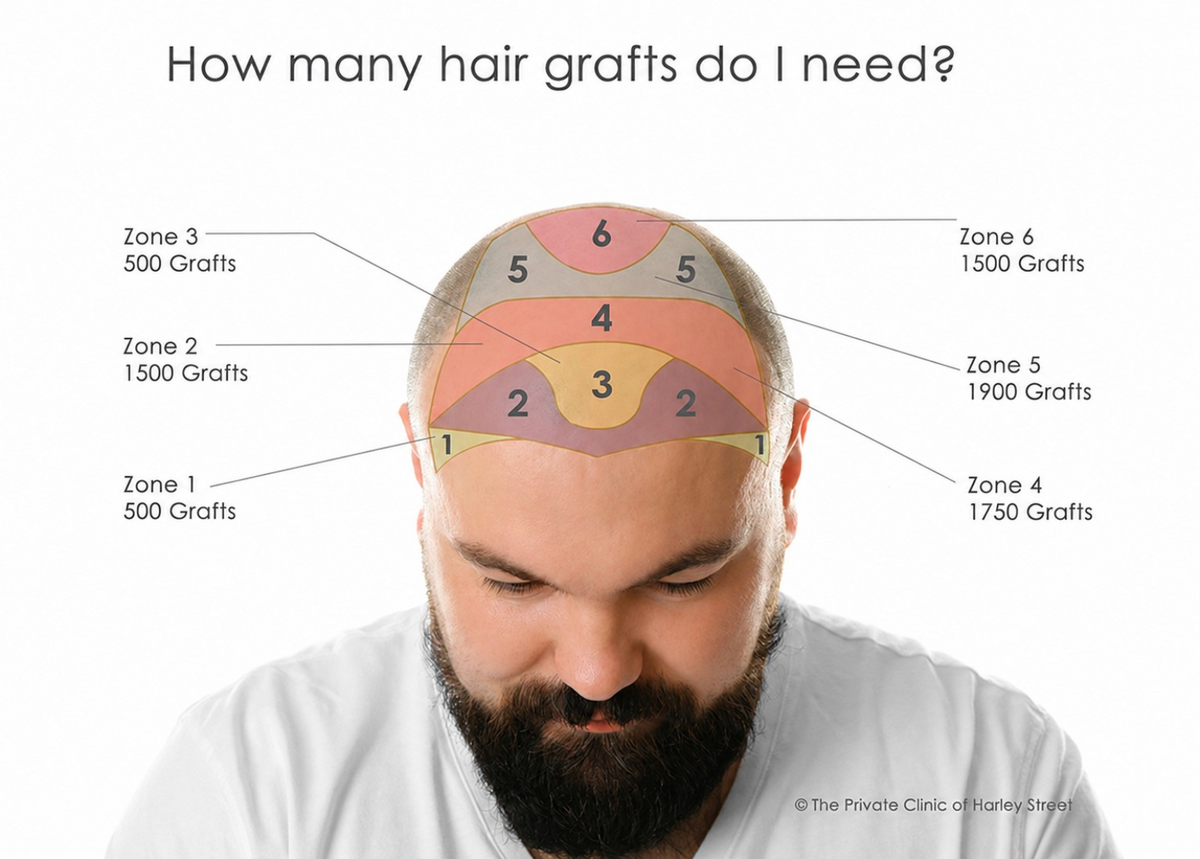
Graft count is a major part of the calculation, but it is not a shopping target. The surgeon first has to decide how many grafts the donor area can supply without leaving it visibly depleted. Hair calibre, curl, colour contrast and the size of the recipient area affect how much coverage a given number of grafts can create. Our donor-area guide
explains why the available supply matters as much as the area a patient wants treated.
Clinics use different pricing models. Some quote a fixed fee for an agreed graft band; others set a package price after consultation. A per-graft figure can look easy to compare, but it is only useful when the estimated count, the person carrying out each surgical step and all follow-up charges are written down.
Current Glasgow FUE guide prices
The figures below are the current guide prices published by Glasgow Hair Transplant Clinics. They are not UK averages. The clinic confirms an individual price after assessing the pattern of hair loss, donor hair and likely graft requirement.
Graft guide
Published price
Typical planning context
500 grafts
£1,999
A small hairline adjustment or selected scar work
1,000 grafts
£2,999
Early hairline recession or temple restoration
1,500 grafts
£3,499
A hairline or limited area of thinning
2,000 grafts
£3,999
Hairline work with frontal or mid-scalp thinning
2,500 grafts
£4,499
A broader frontal area extending into the mid-scalp
The clinic's published FUE prices currently begin at £1,999 for 500 grafts, with 1,000 grafts listed at £2,999. Larger operations cost more and may need to be staged when the recipient area is extensive or the donor supply needs protecting. See the main hair transplant cost page
for the complete, current price table before relying on any figure in this article.
What should be included in the price?
A low headline figure is not automatically a low total cost. Ask for an itemised quotation showing the consultation and assessment, surgical fee, theatre use, local anaesthetic, aftercare products, scheduled reviews and the clinic's policy on further treatment or revision.
Glasgow Hair Transplant Clinics states that its written quote includes an aftercare kit, scheduled follow-up appointments and aftercare support for 12 months after surgery. Another provider may package these services differently. Compare each provider's written terms rather than two numbers on separate websites.
A fair comparison uses itemised written quotes, not headline prices alone. Photo by Kindel Media via Pexels.
The GMC guidance for cosmetic interventions
requires doctors to explain their charges clearly, including what is covered by the quote and what other charges may become payable for routine follow-up or revision. It also requires patients to be given the time and information needed to reach a voluntary, informed decision.
Why two similar graft estimates can produce different prices
The area being restored
A frontal hairline uses grafts differently from the crown. Single-hair follicular units are normally reserved for a softer leading edge, while stronger multi-hair units can add coverage behind it. Crown work has to follow the natural whorl and may spread grafts across a larger surface area. The same graft count therefore does not create the same visual change in every case.
The condition of the donor area
Previous surgery, low density, miniaturisation or scarring can make extraction more demanding and reduce the number of grafts that should be taken. A responsible plan is based on what can be removed safely, not on an advertised “maximum graft” package.
Who performs the procedure
Before booking, obtain the full name of the doctor responsible for the procedure and check their status on the GMC medical register. Ask who will carry out donor incisions, recipient-site creation and graft placement. The answer should be clear before money changes hands.
Aftercare and continuity
Hair transplantation does not end when the patient leaves the operating room. The clinic should explain how concerns are handled during the early healing period, when reviews take place and who is available if symptoms are unexpected. The NHS advises patients to contact the clinic promptly if they develop severe pain or unexpected symptoms after surgery.
Regulation depends on where treatment takes place
England and Scotland have different clinic regulators. In England, independent clinics that provide cosmetic surgery must be registered with the Care Quality Commission. In Scotland, patients can check independent services through Healthcare Improvement Scotland. Do not treat a professional logo as proof; search for the exact clinic name and address.
The operating doctor should also appear on the GMC register with a licence to practise. Dr Harpreet Kalra is listed under GMC reference 7126076. Registration is a starting check, not a prediction of the result. Patients should still discuss risks, likely coverage, scarring, future hair loss and the possibility that the outcome may not meet expectations.
How to compare FUE quotes properly
Obtain a written graft estimate based on the donor area and recipient plan.
Confirm the technique and exactly who performs each surgical stage.
Ask whether the number is a fixed fee, a graft band or an estimate that can change.
Check which medicines, aftercare products and follow-up appointments are included.
Read the cancellation, deposit and revision terms before paying.
Verify the clinic with the regulator for the country in which surgery will take place and verify the doctor on the GMC register.
Do not compare a UK quotation with an overseas package until travel, accommodation, time away from work, follow-up access and the route for dealing with complications have been considered. The cheapest booking price and the lowest overall financial risk are not necessarily the same.
Finance does not change the treatment decision
Finance is available at the Glasgow clinic subject to the provider's approval, terms and affordability checks. Before signing any agreement, check the deposit, annual percentage rate, total repayable amount, payment schedule and what happens if the procedure is postponed or cancelled. The surgical plan and written quote should be settled before the cost is spread into instalments.
A free consultation is an opportunity to establish whether surgery is suitable and what it would involve; it is not a reason to commit immediately. The GMC says patients must have enough time and information to decide voluntarily and must be told that they can change their mind.
Questions to take to a cost consultation
How was my graft range calculated?
What will this number of grafts realistically cover?
How much donor hair should remain for future loss?
What is included for the first 12 months after surgery?
Could the quoted price change, and in what circumstances?
What are the foreseeable risks and what happens if I need clinical help?
Patients considering FUE can read the clinic's detailed FUE procedure guide
before requesting an individual assessment.
Prices were checked against the clinic's published cost page on 30 August 2026 and can change. This article provides general information, not an individual quotation or a recommendation to undergo surgery.
About the author
Dr Harpreet Kalra
is a GP and hair-transplant surgeon at Glasgow Hair Transplant Clinics. His consultations consider the diagnosis, donor area, existing hair and likely future pattern before treatment and graft requirements are discussed.
There is no single UK price for Follicular Unit Extraction (FUE). The final figure depends on the number of grafts required, the donor area, the part of the scalp being treated, the surgical plan and what the clinic includes after the procedure.
The NHS gives a broad UK hair-transplant range of £1,000 to £30,000. That figure covers hair transplantation generally, not FUE alone, and it is too wide to serve as a quote. A useful comparison starts with a clinical graft estimate and a written list of what the fee covers.
How an FUE quote is calculated
FUE removes follicular units individually from suitable donor hair at the back and sides of the scalp. Those grafts are prepared and placed into the planned recipient area. A small hairline correction and a procedure covering the frontal third and mid-scalp are different operations, even if both are described simply as FUE.
Graft count is a major part of the calculation, but it is not a shopping target. The surgeon first has to decide how many grafts the donor area can supply without leaving it visibly depleted. Hair calibre, curl, colour contrast and the size of the recipient area affect how much coverage a given number of grafts can create. Our donor-area guide
explains why the available supply matters as much as the area a patient wants treated.
Clinics use different pricing models. Some quote a fixed fee for an agreed graft band; others set a package price after consultation. A per-graft figure can look easy to compare, but it is only useful when the estimated count, the person carrying out each surgical step and all follow-up charges are written down.
Current Glasgow FUE guide prices
The figures below are the current guide prices published by Glasgow Hair Transplant Clinics. They are not UK averages. The clinic confirms an individual price after assessing the pattern of hair loss, donor hair and likely graft requirement.
Graft guide
Published price
Typical planning context
500 grafts
£1,999
A small hairline adjustment or selected scar work
1,000 grafts
£2,999
Early hairline recession or temple restoration
1,500 grafts
£3,499
A hairline or limited area of thinning
2,000 grafts
£3,999
Hairline work with frontal or mid-scalp thinning
2,500 grafts
£4,499
A broader frontal area extending into the mid-scalp
The clinic's published FUE prices currently begin at £1,999 for 500 grafts, with 1,000 grafts listed at £2,999. Larger operations cost more and may need to be staged when the recipient area is extensive or the donor supply needs protecting. See the main hair transplant cost page
for the complete, current price table before relying on any figure in this article.
What should be included in the price?
A low headline figure is not automatically a low total cost. Ask for an itemised quotation showing the consultation and assessment, surgical fee, theatre use, local anaesthetic, aftercare products, scheduled reviews and the clinic's policy on further treatment or revision.
Glasgow Hair Transplant Clinics states that its written quote includes an aftercare kit, scheduled follow-up appointments and aftercare support for 12 months after surgery. Another provider may package these services differently. Compare each provider's written terms rather than two numbers on separate websites.
A fair comparison uses itemised written quotes, not headline prices alone. Photo by Kindel Media via Pexels.
The GMC guidance for cosmetic interventions
requires doctors to explain their charges clearly, including what is covered by the quote and what other charges may become payable for routine follow-up or revision. It also requires patients to be given the time and information needed to reach a voluntary, informed decision.
Why two similar graft estimates can produce different prices
The area being restored
A frontal hairline uses grafts differently from the crown. Single-hair follicular units are normally reserved for a softer leading edge, while stronger multi-hair units can add coverage behind it. Crown work has to follow the natural whorl and may spread grafts across a larger surface area. The same graft count therefore does not create the same visual change in every case.
The condition of the donor area
Previous surgery, low density, miniaturisation or scarring can make extraction more demanding and reduce the number of grafts that should be taken. A responsible plan is based on what can be removed safely, not on an advertised “maximum graft” package.
Who performs the procedure
Before booking, obtain the full name of the doctor responsible for the procedure and check their status on the GMC medical register. Ask who will carry out donor incisions, recipient-site creation and graft placement. The answer should be clear before money changes hands.
Aftercare and continuity
Hair transplantation does not end when the patient leaves the operating room. The clinic should explain how concerns are handled during the early healing period, when reviews take place and who is available if symptoms are unexpected. The NHS advises patients to contact the clinic promptly if they develop severe pain or unexpected symptoms after surgery.
Regulation depends on where treatment takes place
England and Scotland have different clinic regulators. In England, independent clinics that provide cosmetic surgery must be registered with the Care Quality Commission. In Scotland, patients can check independent services through Healthcare Improvement Scotland. Do not treat a professional logo as proof; search for the exact clinic name and address.
The operating doctor should also appear on the GMC register with a licence to practise. Dr Harpreet Kalra is listed under GMC reference 7126076. Registration is a starting check, not a prediction of the result. Patients should still discuss risks, likely coverage, scarring, future hair loss and the possibility that the outcome may not meet expectations.
How to compare FUE quotes properly
Obtain a written graft estimate based on the donor area and recipient plan.
Confirm the technique and exactly who performs each surgical stage.
Ask whether the number is a fixed fee, a graft band or an estimate that can change.
Check which medicines, aftercare products and follow-up appointments are included.
Read the cancellation, deposit and revision terms before paying.
Verify the clinic with the regulator for the country in which surgery will take place and verify the doctor on the GMC register.
Do not compare a UK quotation with an overseas package until travel, accommodation, time away from work, follow-up access and the route for dealing with complications have been considered. The cheapest booking price and the lowest overall financial risk are not necessarily the same.
Finance does not change the treatment decision
Finance is available at the Glasgow clinic subject to the provider's approval, terms and affordability checks. Before signing any agreement, check the deposit, annual percentage rate, total repayable amount, payment schedule and what happens if the procedure is postponed or cancelled. The surgical plan and written quote should be settled before the cost is spread into instalments.
A free consultation is an opportunity to establish whether surgery is suitable and what it would involve; it is not a reason to commit immediately. The GMC says patients must have enough time and information to decide voluntarily and must be told that they can change their mind.
Questions to take to a cost consultation
How was my graft range calculated?
What will this number of grafts realistically cover?
How much donor hair should remain for future loss?
What is included for the first 12 months after surgery?
Could the quoted price change, and in what circumstances?
What are the foreseeable risks and what happens if I need clinical help?
Patients considering FUE can read the clinic's detailed FUE procedure guide
before requesting an individual assessment.
Prices were checked against the clinic's published cost page on 30 August 2026 and can change. This article provides general information, not an individual quotation or a recommendation to undergo surgery.
About the author
Dr Harpreet Kalra
is a GP and hair-transplant surgeon at Glasgow Hair Transplant Clinics. His consultations consider the diagnosis, donor area, existing hair and likely future pattern before treatment and graft requirements are discussed.
There is no single UK price for Follicular Unit Extraction (FUE). The final figure depends on the number of grafts required, the donor area, the part of the scalp being treated, the surgical plan and what the clinic includes after the procedure.
The NHS gives a broad UK hair-transplant range of £1,000 to £30,000. That figure covers hair transplantation generally, not FUE alone, and it is too wide to serve as a quote. A useful comparison starts with a clinical graft estimate and a written list of what the fee covers.
How an FUE quote is calculated
FUE removes follicular units individually from suitable donor hair at the back and sides of the scalp. Those grafts are prepared and placed into the planned recipient area. A small hairline correction and a procedure covering the frontal third and mid-scalp are different operations, even if both are described simply as FUE.
Graft count is a major part of the calculation, but it is not a shopping target. The surgeon first has to decide how many grafts the donor area can supply without leaving it visibly depleted. Hair calibre, curl, colour contrast and the size of the recipient area affect how much coverage a given number of grafts can create. Our donor-area guide
explains why the available supply matters as much as the area a patient wants treated.
Clinics use different pricing models. Some quote a fixed fee for an agreed graft band; others set a package price after consultation. A per-graft figure can look easy to compare, but it is only useful when the estimated count, the person carrying out each surgical step and all follow-up charges are written down.
Current Glasgow FUE guide prices
The figures below are the current guide prices published by Glasgow Hair Transplant Clinics. They are not UK averages. The clinic confirms an individual price after assessing the pattern of hair loss, donor hair and likely graft requirement.
Graft guide
Published price
Typical planning context
500 grafts
£1,999
A small hairline adjustment or selected scar work
1,000 grafts
£2,999
Early hairline recession or temple restoration
1,500 grafts
£3,499
A hairline or limited area of thinning
2,000 grafts
£3,999
Hairline work with frontal or mid-scalp thinning
2,500 grafts
£4,499
A broader frontal area extending into the mid-scalp
The clinic's published FUE prices currently begin at £1,999 for 500 grafts, with 1,000 grafts listed at £2,999. Larger operations cost more and may need to be staged when the recipient area is extensive or the donor supply needs protecting. See the main hair transplant cost page
for the complete, current price table before relying on any figure in this article.
What should be included in the price?
A low headline figure is not automatically a low total cost. Ask for an itemised quotation showing the consultation and assessment, surgical fee, theatre use, local anaesthetic, aftercare products, scheduled reviews and the clinic's policy on further treatment or revision.
Glasgow Hair Transplant Clinics states that its written quote includes an aftercare kit, scheduled follow-up appointments and aftercare support for 12 months after surgery. Another provider may package these services differently. Compare each provider's written terms rather than two numbers on separate websites.
A fair comparison uses itemised written quotes, not headline prices alone. Photo by Kindel Media via Pexels.
The GMC guidance for cosmetic interventions
requires doctors to explain their charges clearly, including what is covered by the quote and what other charges may become payable for routine follow-up or revision. It also requires patients to be given the time and information needed to reach a voluntary, informed decision.
Why two similar graft estimates can produce different prices
The area being restored
A frontal hairline uses grafts differently from the crown. Single-hair follicular units are normally reserved for a softer leading edge, while stronger multi-hair units can add coverage behind it. Crown work has to follow the natural whorl and may spread grafts across a larger surface area. The same graft count therefore does not create the same visual change in every case.
The condition of the donor area
Previous surgery, low density, miniaturisation or scarring can make extraction more demanding and reduce the number of grafts that should be taken. A responsible plan is based on what can be removed safely, not on an advertised “maximum graft” package.
Who performs the procedure
Before booking, obtain the full name of the doctor responsible for the procedure and check their status on the GMC medical register. Ask who will carry out donor incisions, recipient-site creation and graft placement. The answer should be clear before money changes hands.
Aftercare and continuity
Hair transplantation does not end when the patient leaves the operating room. The clinic should explain how concerns are handled during the early healing period, when reviews take place and who is available if symptoms are unexpected. The NHS advises patients to contact the clinic promptly if they develop severe pain or unexpected symptoms after surgery.
Regulation depends on where treatment takes place
England and Scotland have different clinic regulators. In England, independent clinics that provide cosmetic surgery must be registered with the Care Quality Commission. In Scotland, patients can check independent services through Healthcare Improvement Scotland. Do not treat a professional logo as proof; search for the exact clinic name and address.
The operating doctor should also appear on the GMC register with a licence to practise. Dr Harpreet Kalra is listed under GMC reference 7126076. Registration is a starting check, not a prediction of the result. Patients should still discuss risks, likely coverage, scarring, future hair loss and the possibility that the outcome may not meet expectations.
How to compare FUE quotes properly
Obtain a written graft estimate based on the donor area and recipient plan.
Confirm the technique and exactly who performs each surgical stage.
Ask whether the number is a fixed fee, a graft band or an estimate that can change.
Check which medicines, aftercare products and follow-up appointments are included.
Read the cancellation, deposit and revision terms before paying.
Verify the clinic with the regulator for the country in which surgery will take place and verify the doctor on the GMC register.
Do not compare a UK quotation with an overseas package until travel, accommodation, time away from work, follow-up access and the route for dealing with complications have been considered. The cheapest booking price and the lowest overall financial risk are not necessarily the same.
Finance does not change the treatment decision
Finance is available at the Glasgow clinic subject to the provider's approval, terms and affordability checks. Before signing any agreement, check the deposit, annual percentage rate, total repayable amount, payment schedule and what happens if the procedure is postponed or cancelled. The surgical plan and written quote should be settled before the cost is spread into instalments.
A free consultation is an opportunity to establish whether surgery is suitable and what it would involve; it is not a reason to commit immediately. The GMC says patients must have enough time and information to decide voluntarily and must be told that they can change their mind.
Questions to take to a cost consultation
How was my graft range calculated?
What will this number of grafts realistically cover?
How much donor hair should remain for future loss?
What is included for the first 12 months after surgery?
Could the quoted price change, and in what circumstances?
What are the foreseeable risks and what happens if I need clinical help?
Patients considering FUE can read the clinic's detailed FUE procedure guide
before requesting an individual assessment.
Prices were checked against the clinic's published cost page on 30 August 2026 and can change. This article provides general information, not an individual quotation or a recommendation to undergo surgery.
About the author
Dr Harpreet Kalra
is a GP and hair-transplant surgeon at Glasgow Hair Transplant Clinics. His consultations consider the diagnosis, donor area, existing hair and likely future pattern before treatment and graft requirements are discussed.
FUE cost UK: a realistic price guide for 2026
There is no single UK price for Follicular Unit Extraction (FUE). The final figure depends on the number of grafts required, the donor area, the part of the scalp being treated, the surgical plan and what the clinic includes after the procedure.
The NHS gives a broad UK hair-transplant range of £1,000 to £30,000. That figure covers hair transplantation generally, not FUE alone, and it is too wide to serve as a quote. A useful comparison starts with a clinical graft estimate and a written list of what the fee covers.
How an FUE quote is calculated
FUE removes follicular units individually from suitable donor hair at the back and sides of the scalp. Those grafts are prepared and placed into the planned recipient area. A small hairline correction and a procedure covering the frontal third and mid-scalp are different operations, even if both are described simply as FUE.
Graft count is a major part of the calculation, but it is not a shopping target. The surgeon first has to decide how many grafts the donor area can supply without leaving it visibly depleted. Hair calibre, curl, colour contrast and the size of the recipient area affect how much coverage a given number of grafts can create. Our donor-area guide
explains why the available supply matters as much as the area a patient wants treated.
Clinics use different pricing models. Some quote a fixed fee for an agreed graft band; others set a package price after consultation. A per-graft figure can look easy to compare, but it is only useful when the estimated count, the person carrying out each surgical step and all follow-up charges are written down.
Current Glasgow FUE guide prices
The figures below are the current guide prices published by Glasgow Hair Transplant Clinics. They are not UK averages. The clinic confirms an individual price after assessing the pattern of hair loss, donor hair and likely graft requirement.
Graft guide
Published price
Typical planning context
500 grafts
£1,999
A small hairline adjustment or selected scar work
1,000 grafts
£2,999
Early hairline recession or temple restoration
1,500 grafts
£3,499
A hairline or limited area of thinning
2,000 grafts
£3,999
Hairline work with frontal or mid-scalp thinning
2,500 grafts
£4,499
A broader frontal area extending into the mid-scalp
The clinic's published FUE prices currently begin at £1,999 for 500 grafts, with 1,000 grafts listed at £2,999. Larger operations cost more and may need to be staged when the recipient area is extensive or the donor supply needs protecting. See the main hair transplant cost page
for the complete, current price table before relying on any figure in this article.
What should be included in the price?
A low headline figure is not automatically a low total cost. Ask for an itemised quotation showing the consultation and assessment, surgical fee, theatre use, local anaesthetic, aftercare products, scheduled reviews and the clinic's policy on further treatment or revision.
Glasgow Hair Transplant Clinics states that its written quote includes an aftercare kit, scheduled follow-up appointments and aftercare support for 12 months after surgery. Another provider may package these services differently. Compare each provider's written terms rather than two numbers on separate websites.
FUE pricing should follow an individual clinical assessment and realistic graft plan.
The GMC guidance for cosmetic interventions
requires doctors to explain their charges clearly, including what is covered by the quote and what other charges may become payable for routine follow-up or revision. It also requires patients to be given the time and information needed to reach a voluntary, informed decision.
Why two similar graft estimates can produce different prices
The area being restored
A frontal hairline uses grafts differently from the crown. Single-hair follicular units are normally reserved for a softer leading edge, while stronger multi-hair units can add coverage behind it. Crown work has to follow the natural whorl and may spread grafts across a larger surface area. The same graft count therefore does not create the same visual change in every case.
The condition of the donor area
Previous surgery, low density, miniaturisation or scarring can make extraction more demanding and reduce the number of grafts that should be taken. A responsible plan is based on what can be removed safely, not on an advertised “maximum graft” package.
Who performs the procedure
Before booking, obtain the full name of the doctor responsible for the procedure and check their status on the GMC medical register. Ask who will carry out donor incisions, recipient-site creation and graft placement. The answer should be clear before money changes hands.
Aftercare and continuity
Hair transplantation does not end when the patient leaves the operating room. The clinic should explain how concerns are handled during the early healing period, when reviews take place and who is available if symptoms are unexpected. The NHS advises patients to contact the clinic promptly if they develop severe pain or unexpected symptoms after surgery.
Regulation depends on where treatment takes place
England and Scotland have different clinic regulators. In England, independent clinics that provide cosmetic surgery must be registered with the Care Quality Commission. In Scotland, patients can check independent services through Healthcare Improvement Scotland. Do not treat a professional logo as proof; search for the exact clinic name and address.
The operating doctor should also appear on the GMC register with a licence to practise. Dr Harpreet Kalra is listed under GMC reference 7126076. Registration is a starting check, not a prediction of the result. Patients should still discuss risks, likely coverage, scarring, future hair loss and the possibility that the outcome may not meet expectations.
How to compare FUE quotes properly
Obtain a written graft estimate based on the donor area and recipient plan.
Confirm the technique and exactly who performs each surgical stage.
Ask whether the number is a fixed fee, a graft band or an estimate that can change.
Check which medicines, aftercare products and follow-up appointments are included.
Read the cancellation, deposit and revision terms before paying.
Verify the clinic with the regulator for the country in which surgery will take place and verify the doctor on the GMC register.
Do not compare a UK quotation with an overseas package until travel, accommodation, time away from work, follow-up access and the route for dealing with complications have been considered. The cheapest booking price and the lowest overall financial risk are not necessarily the same.
Finance does not change the treatment decision
Finance is available at the Glasgow clinic subject to the provider's approval, terms and affordability checks. Before signing any agreement, check the deposit, annual percentage rate, total repayable amount, payment schedule and what happens if the procedure is postponed or cancelled. The surgical plan and written quote should be settled before the cost is spread into instalments.
A free consultation is an opportunity to establish whether surgery is suitable and what it would involve; it is not a reason to commit immediately. The GMC says patients must have enough time and information to decide voluntarily and must be told that they can change their mind.
Questions to take to a cost consultation
How was my graft range calculated?
What will this number of grafts realistically cover?
How much donor hair should remain for future loss?
What is included for the first 12 months after surgery?
Could the quoted price change, and in what circumstances?
What are the foreseeable risks and what happens if I need clinical help?
Patients considering FUE can read the clinic's detailed FUE procedure guide
before requesting an individual assessment.
Prices were checked against the clinic's published cost page on 30 August 2026 and can change.
About the author
Dr Harpreet Kalra
is a GP and hair-transplant surgeon at Glasgow Hair Transplant Clinics. His consultations consider the diagnosis, donor area, existing hair and likely future pattern before treatment is discussed.
Get an individual FUE assessment and quote
Our Glasgow team can assess your donor area, discuss realistic graft requirements and provide a written quotation.
Can finasteride help preserve native hair after a transplant? Read the UK evidence, timing, side effects and current MHRA safety advice before treatment.
Compare 2026 hair transplant costs quoted in Newcastle and elsewhere in the UK, including graft pricing, travel, clinic regulation and what a consultation should confirm.