

Is your hair starting to thin? Early signs worth checking
Androgenetic alopecia, the clinical term for pattern hair loss, is the most common cause of thinning in both men and women in the UK. The early signs of hair loss are identifiable changes in hair volume, shedding patterns, and scalp appearance that signal the need for prompt attention. Recognising these changes before significant follicle damage occurs gives you the best chance of preserving what you have. Normal daily shedding sits between 50 and 100 hairs, and anything consistently above that threshold over several weeks warrants a closer look.


Early signs of hair loss: what to watch for
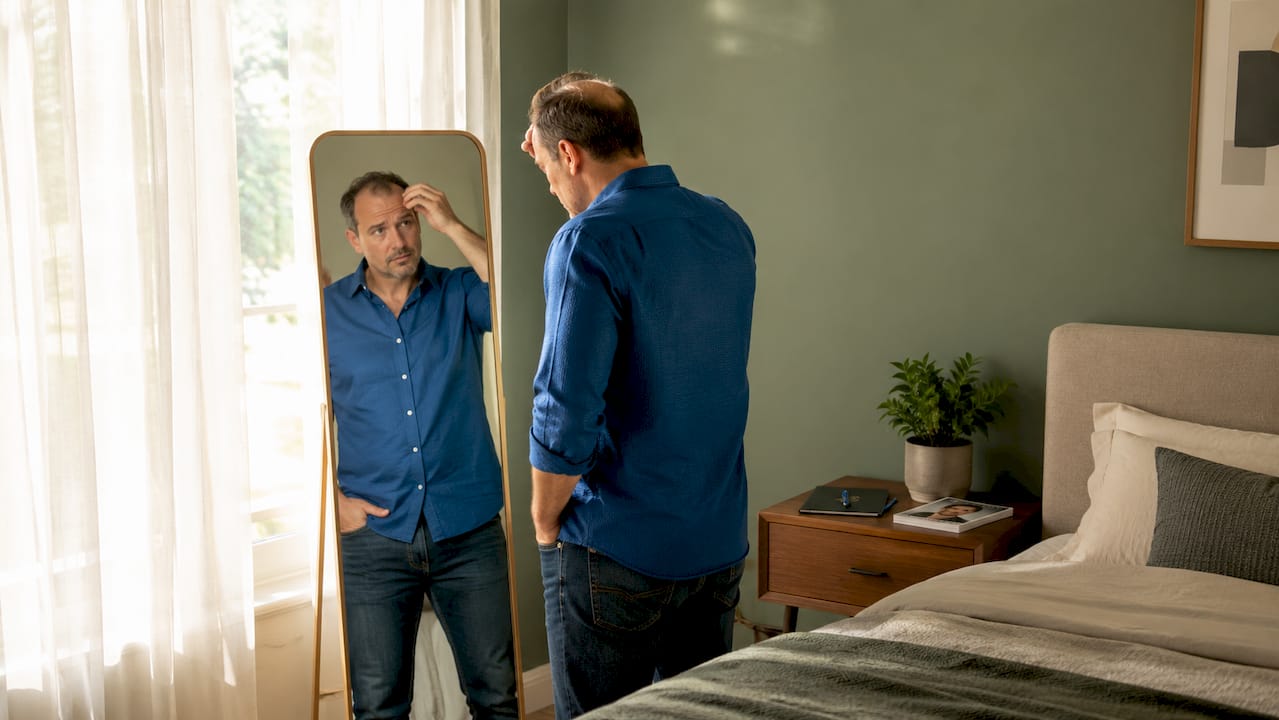
Androgenetic alopecia, the clinical term for pattern hair loss, is the most common cause of thinning in both men and women in the UK. The early signs of hair loss are identifiable changes in hair volume, shedding patterns, and scalp appearance that signal the need for prompt attention. Recognising these changes before significant follicle damage occurs gives you the best chance of preserving what you have. Normal daily shedding sits between 50 and 100 hairs, and anything consistently above that threshold over several weeks warrants a closer look.
1. What are the early signs of hair loss you can spot at home?
The most reliable early warning signs are visible changes you can observe without any specialist equipment. Gradual thinning at the crown, a widening parting, and a receding hairline at the temples are the three most reported initial hair loss symptoms in clinical practice. These changes often develop slowly over months, which is why many people miss them until significant density has already been lost.
- Thinning at the crown or temples. Hair becomes finer and shorter in these areas before it disappears entirely. You may notice your scalp is more visible under bright light.
- A widening hair parting. The parting line broadens as density reduces along the top of the scalp. This is one of the earliest hair thinning signs in women.
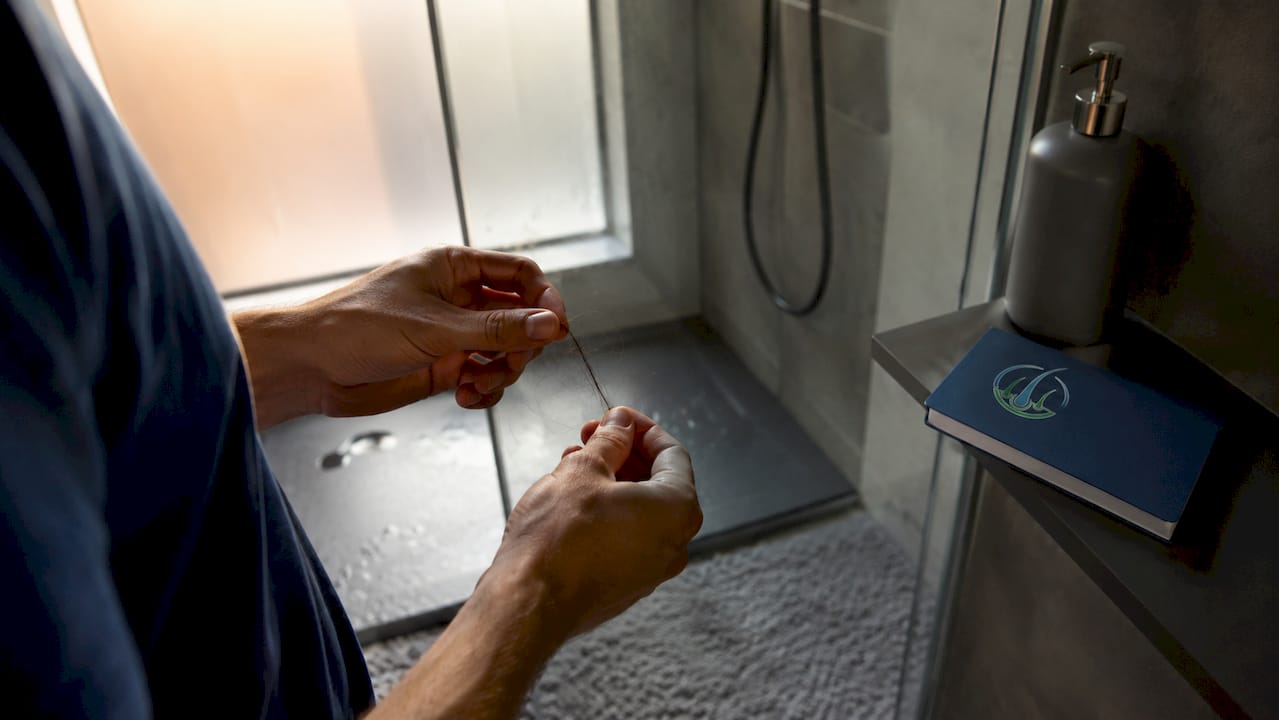
- Increased hair on your pillow or in the shower drain. Finding noticeably more hair after sleeping or washing is a common early baldness indicator.
- Changes in hair texture. Hair may feel finer, more brittle, or less voluminous than it used to. This reflects follicle miniaturisation in its early stages.
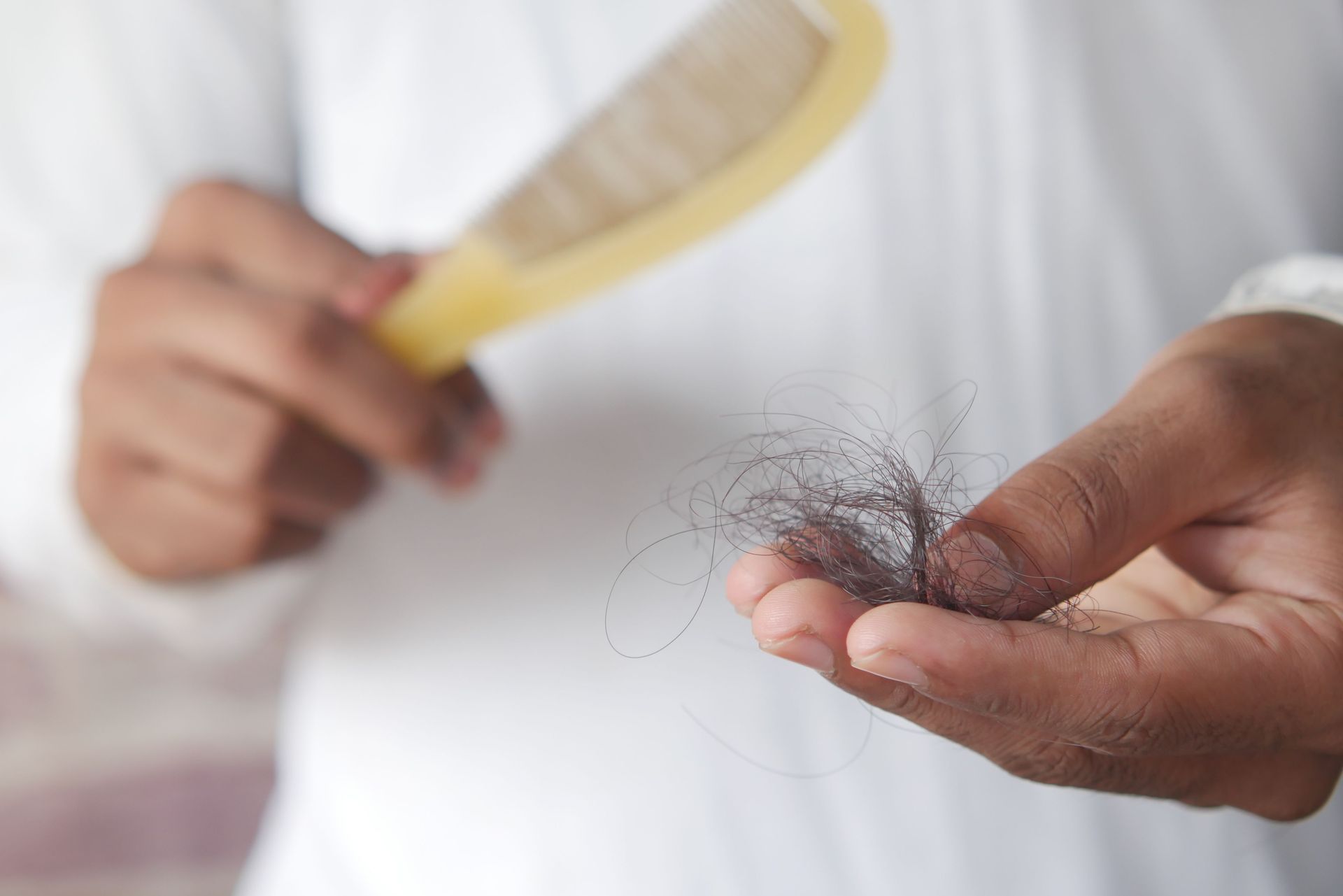
- Hairbrush accumulation. A significant increase in hair collected on your brush after a standard brushing session is worth monitoring.
The gentle pull test is a simple home method to assess shedding. Grip a small section of around 60 hairs between your fingers and pull slowly from root to tip. Losing more than six hairs consistently suggests above-normal shedding and warrants further assessment.
Pro Tip: Take a photograph of your parting and crown in consistent lighting every four to six weeks. Visual comparison over time is far more reliable than relying on memory alone.
2. What causes these early signs?
Understanding the cause behind your symptoms determines which treatment will work. The most common trigger is androgenetic alopecia, where the hormone dihydrotestosterone (DHT) causes hair follicles to shrink progressively. Over 95% of male hair loss is attributed to this pattern, and a similar genetic mechanism affects women, though the presentation differs.
Several other causes are worth knowing:
- Thyroid dysfunction and iron deficiency. Hair loss can be an early marker of systemic health issues including low ferritin levels and thyroid imbalance. Both are treatable once identified through blood tests.
- Hormonal changes. Pregnancy, the postpartum period, and menopause all trigger temporary or longer-term shedding in women. The role of hormones in female hair loss is well established and often underestimated.
- Telogen effluvium. Physical or emotional stress pushes a large proportion of follicles into the resting phase simultaneously, causing diffuse shedding two to three months after the triggering event.
- Traction alopecia. Tight hairstyles such as high ponytails, braids, and extensions place repeated mechanical stress on follicles, particularly along the hairline. This is a preventable cause of early thinning.
- Alopecia areata. An autoimmune condition causing patchy loss, often appearing suddenly. It requires specialist evaluation rather than self-management.
The role of genetics in baldness means that a family history of hair loss significantly raises your personal risk. Knowing this allows you to monitor for signs earlier and act before miniaturisation becomes advanced.
3. How to tell normal shedding from early baldness signs
The clinical threshold for concern is consistent shedding above 100 hairs per day over several weeks. However, the amount of hair you see after washing can reflect your washing frequency, hair length, and natural cycle phase rather than pathological loss. Clumped hair after a wash following several days without washing is not automatically alarming.
Is your hair starting to thin? Early signs worth checking
Most people notice early hair loss as a change from what is normal for them: a little more scalp at the crown, a hairline that has moved back, or a parting that seems wider in photographs. A handful of hairs in the shower on one particular day says much less.
Pattern and pace matter. Gradual recession is assessed differently from a smooth new bald patch, heavy shedding after illness or a sore, scaly scalp. Appearance alone cannot always establish the cause, which is why the NHS recommends seeing a GP if you are worried about hair loss before approaching a commercial clinic.
What tends to change first?
The hairline and temples
Male pattern hair loss commonly begins with gradual recession at the frontal hairline and temples. The two sides are not always identical, and a mature adult hairline is not automatically evidence of active loss. Photographs taken several months apart are more useful than judging a single image.
The crown or central parting
More scalp may become visible around the crown, particularly under strong overhead light. Female pattern hair loss more often reduces density over the top of the scalp and widens the parting while leaving the frontal hairline relatively intact. Hair styling, product, lighting and wet hair can all exaggerate the appearance, so consistency matters when comparing photographs.
Hair calibre
In pattern hair loss, susceptible follicles may produce progressively finer, shorter hairs. A mixture of thick and very fine hairs in an affected area can be a useful clinical clue. It is not the same as brittle hair snapping after heat, chemical processing or repeated mechanical damage.
Shedding across the scalp
Diffuse shedding can follow illness, major stress, pregnancy, marked weight loss, iron deficiency, thyroid disease or a change in medication. It may not become obvious until weeks or months after the trigger. This is different from the slowly enlarging frontal or crown pattern typical of androgenetic alopecia.
Hair loss where styles pull
Braids, extensions, tight ponytails and other styles that repeatedly pull on the same follicles can cause traction alopecia. Reducing tension early gives the best chance of preventing permanent damage.
Shedding is not a fixed daily test
The NHS says that losing about 50 to 100 hairs a day can be normal. The number you see also depends on hair length, how often you wash or brush it and where each follicle is in its growth cycle. Counting every strand often creates more anxiety without showing whether density has actually changed.
A home hair-pull test is not a reliable diagnosis. Clinicians sometimes use a pull test alongside the history and scalp examination, but washing, technique and the phase of the hair cycle affect the result.
A better record is a set of monthly photographs taken with dry hair, the same parting, the same camera distance and similar lighting. Include the front, both temples, the top and the crown. Avoid taking photographs every day; normal variation can make them misleading.
When a GP should assess the change
Make an appointment if the change is sudden or rapidly increasing, or if you notice one or more smooth round patches, loss of eyebrow or body hair, marked itching, pain, burning, redness, scaling, crusting or pustules. A shiny area with fewer visible follicle openings also needs assessment.
None of these signs confirms a serious disorder, but they warrant assessment because alopecia areata, scalp infection and scarring alopecia are managed differently from ordinary pattern loss. The Primary Care Dermatology Society's alopecia overview stresses the importance of distinguishing scarring from non-scarring hair loss because damaged follicles may not regrow.
Tell the GP if shedding followed a new medicine, illness or marked weight change, or if there are other health symptoms. The clinic's types of alopecia guide explains the broad differences between pattern loss, autoimmune loss, temporary shedding and scarring conditions.
What an assessment involves
A GP or dermatologist will usually ask where the change began, how quickly it progressed and whether the scalp has symptoms. Recent illness, pregnancy, weight change, diet, medication, hair-care practices and family history may all be relevant.
The clinician then examines the pattern and the scalp. Blood tests are not necessary for everyone, but selected tests may be appropriate if the history suggests iron deficiency, thyroid disease or another medical cause. Magnified examination, fungal testing or a small scalp biopsy is sometimes required when the diagnosis is uncertain.
Bring a list of medicines and supplements, a short timeline and any photographs taken under consistent conditions. The clinic's consultation preparation guide gives a practical checklist.
Treatment depends on the diagnosis
There is no single treatment for every form of hair loss. Telogen effluvium often improves once the trigger has settled, although persistent shedding needs review. Alopecia areata and scarring alopecia may require dermatology treatment. Removing repeated tension is central to early traction alopecia.
For confirmed pattern hair loss, a clinician may discuss topical minoxidil for men or women, depending on the licensed product and individual suitability. Finasteride 1 mg is a prescription treatment licensed for male pattern hair loss; it is not licensed for female pattern hair loss in the UK, and the NHS advises women not to use it. Neither medicine works for everyone, and benefit generally depends on continued use.
The MHRA's updated finasteride warning covers depression, suicidal thoughts and sexual dysfunction; sexual dysfunction has sometimes persisted after treatment stopped. A prescriber should ask about any history of depression or suicidal thoughts. Anyone taking finasteride 1 mg who develops depression or suicidal thoughts should stop it and contact a healthcare professional as soon as possible. Call 999 if there is an immediate risk of serious harm, and contact the prescriber about sexual dysfunction.
PRP is offered privately, but the British Association of Dermatologists describes the evidence as limited and the response as unpredictable. It should not be presented as a diagnosis or guaranteed treatment. The clinic's hair-loss treatment page sets out medical, non-surgical and surgical options.
Where a transplant fits
A transplant is not the first response to unexplained shedding or an active scalp disorder. It may be considered for suitable, stable and permanent loss only after the cause, donor area and likely future pattern have been assessed.
FUE and FUT describe the main ways donor follicles are obtained. DHI generally describes placement of prepared grafts with an implanter device, commonly after individual follicular-unit extraction. It is not a separate cure for early hair loss and does not remove the need for diagnosis or careful donor planning.
If the only evidence is a photograph taken under unfamiliar lighting, the most sensible step may simply be to create a consistent record and review it later. If symptoms, patches or rapid change are present, seek a medical assessment rather than waiting for a cosmetic consultation.
This article provides general information and cannot diagnose the cause of hair loss or recommend treatment for an individual reader.
About the author

Dr Harpreet Kalra is a GP and hair-transplant surgeon at Glasgow Hair Transplant Clinics. His consultations consider the cause and pattern of hair loss before medical or surgical options are discussed.
The Primary Care Dermatology Society highlights the critical importance of distinguishing scarring from non-scarring alopecia. Scarring alopecias destroy follicles permanently and require urgent diagnosis to prevent irreversible loss. Non-scarring forms, including androgenetic alopecia and telogen effluvium, are far more treatable when caught early.
Rapid or patchy hair loss accompanied by scalp redness or itching may indicate alopecia areata or a fungal infection. Both require specialist treatment and should not be managed with over-the-counter products alone.
Pro Tip: When you visit your GP, bring your photo log and a note of when you first noticed changes. A clear timeline helps clinicians assess the rate of progression and choose the right referral pathway.
4. What practical steps can you take when you notice early signs?
Acting early is the single most effective thing you can do to preserve your hair. The ‘wait-and-see’ approach is a well-documented pitfall, particularly for younger people with aggressive shedding, because follicle miniaturisation becomes harder to reverse the longer it continues.
- Optimise your nutrition. Iron, vitamin D, and protein are the three nutrients most directly linked to hair follicle health. A blood test through your GP can identify deficiencies quickly.
- Avoid damaging hairstyles and heat. Reduce tension on the hairline and avoid daily heat styling. These are preventable contributors to early thinning.
- Document your progress. Consistent photographs taken in the same lighting give you and any clinician an objective record of change over time.
- Seek expert advice promptly. NHS dermatology referral waits can range from 6 to 18 months for hair loss evaluation. This delay can significantly impact treatment outcomes, particularly for progressive conditions.
- Consider private consultation. Private clinics offer faster access to diagnosis and treatment. For younger patients or those with rapid progression, this speed can make a meaningful difference to long-term outcomes.
For younger men noticing early recession, the solutions available for young men have expanded considerably and are most effective when started before significant density is lost. Preparing well before any appointment also improves the quality of advice you receive. A consultation preparation guide can help you get the most from your first specialist visit.
5. What treatment options are available after early diagnosis in the UK?
Early diagnosis opens up the full range of treatment options. The right choice depends on the cause, the stage of loss, and your personal goals.
Medications are the first line for androgenetic alopecia. Minoxidil, applied topically, increases blood flow to follicles and extends the growth phase. Finasteride, taken orally, blocks DHT production and slows progression in men. Both work best when started early. Hair loss medication is most effective when follicles are still active rather than fully miniaturised.
Platelet Rich Plasma (PRP) therapy is a non-surgical treatment that uses growth factors from your own blood to stimulate follicle activity. It is particularly effective in the early stages of androgenetic alopecia and for diffuse thinning. Glasgowhairtransplantclinics offers PRP treatment sessions as a standalone or complementary option.
Hair transplant surgery becomes relevant when medical treatments have not halted progression or when density loss is already significant. Follicular Unit Extraction (FUE) and Direct Hair Implantation (DHI) are the two primary surgical techniques. Both are minimally invasive and produce natural results when performed by GMC-registered surgeons. A hairline transplant is a common procedure for those with early recession at the temples and frontal zone.
Personalised treatment plans matter because no single approach suits every patient. A specialist assessment considers your age, the pattern and rate of loss, your medical history, and your goals before recommending a course of action.
Pro Tip: Ask any clinic whether their surgeons are on the GMC register before committing to any procedure. Glasgowhairtransplantclinics surgeons are GMC registered, which is a non-negotiable standard for surgical hair restoration in the UK.
Key takeaways
Catching the early signs of hair loss before follicle miniaturisation becomes advanced is the most reliable way to preserve long-term hair density.
| Point | Details |
|---|---|
| Normal shedding threshold | Losing 50–100 hairs daily is normal; consistent loss above 100 warrants review. |
| Most common cause | Over 95% of male hair loss is androgenetic alopecia driven by DHT sensitivity. |
| Scarring alopecia is urgent | The Primary Care Dermatology Society advises early diagnosis to prevent permanent follicle destruction. |
| NHS waits are long | Dermatology referral waits of 6–18 months make private consultation a practical option for faster diagnosis. |
| Early treatment works best | Medications, PRP therapy, and FUE or DHI transplants all deliver better outcomes when started before advanced loss. |
Why I think most people wait too long
The most common thing I hear from people who come to us is some version of “I wish I’d come sooner.” They noticed the widening parting or the extra hair in the drain months or even years before they did anything about it. They told themselves it was stress, or that it would settle down, or that they were imagining it.
The emotional weight of hair loss is real and it is understandable. Hair is tied to identity and confidence in ways that are difficult to articulate. But that emotional difficulty is precisely what causes people to delay, and delay is what turns a manageable condition into a permanent one.
What I have found, both clinically and in conversations with patients, is that younger people in particular underestimate how quickly androgenetic alopecia can progress. A 25-year-old who notices early temple recession and waits two years has often lost density that could have been preserved with early medication or PRP therapy.
The other misconception worth addressing is that hair loss treatment is only for people with visible baldness. The most effective window for treatment is before the loss becomes obvious to others. Routine hair health checks, the same way you would monitor your skin or dental health, are a sensible habit for anyone with a family history of hair loss.
— Harley
Glasgowhairtransplantclinics: expert support from the first sign
Noticing early changes in your hair density or shedding pattern is the right time to seek a specialist opinion, not after significant loss has occurred.

Glasgowhairtransplantclinics offers free online and face-to-face consultations at CQC-registered clinics across Glasgow, Newcastle, and other UK locations. Our GMC-registered surgeons assess your individual pattern of loss and recommend a personalised plan, whether that is medication, PRP therapy, or a surgical procedure such as FUE or DHI. See the before and after results from patients who acted early, and book your free consultation today to understand your options clearly and without pressure.
FAQ
What are the first signs of hair loss in men?
The first signs in men are typically a receding hairline at the temples and gradual thinning at the crown. These are the hallmark early indicators of androgenetic alopecia, which accounts for over 95% of male hair loss.
Is hair loss reversible if caught early?
Non-scarring forms such as androgenetic alopecia and telogen effluvium are treatable and progression can be slowed or halted with early intervention. Scarring alopecias cause permanent follicle damage and must be diagnosed urgently to prevent irreversible loss.
How much hair loss per day is normal?
Losing between 50 and 100 hairs daily is within the normal range according to NHS guidance. Consistently losing more than 100 hairs per day over several weeks, particularly with visible thinning, warrants a clinical assessment.
When should I see a specialist about hair loss?
See a specialist if you notice patchy loss, scalp redness or pain, or consistent shedding above normal levels over several weeks. Given NHS dermatology wait times of up to 18 months, a private consultation offers faster access to diagnosis and treatment.
Can stress cause early hair thinning?
Yes. Physical or emotional stress triggers telogen effluvium, a condition where a large proportion of follicles enter the resting phase simultaneously. Shedding typically begins two to three months after the stressful event and usually resolves once the trigger is addressed.
Recommended
Is your hair starting to thin? Early signs worth checking
Most people notice early hair loss as a change from what is normal for them: a little more scalp at the crown, a hairline that has moved back, or a parting that seems wider in photographs. A handful of hairs in the shower on one particular day says much less.
Pattern and pace matter. Gradual recession is assessed differently from a smooth new bald patch, heavy shedding after illness or a sore, scaly scalp. Appearance alone cannot always establish the cause, which is why the NHS recommends seeing a GP if you are worried about hair loss before approaching a commercial clinic.
What tends to change first?
The hairline and temples
Male pattern hair loss commonly begins with gradual recession at the frontal hairline and temples. The two sides are not always identical, and a mature adult hairline is not automatically evidence of active loss. Photographs taken several months apart are more useful than judging a single image.
The crown or central parting
More scalp may become visible around the crown, particularly under strong overhead light. Female pattern hair loss more often reduces density over the top of the scalp and widens the parting while leaving the frontal hairline relatively intact. Hair styling, product, lighting and wet hair can all exaggerate the appearance, so consistency matters when comparing photographs.
Hair calibre
In pattern hair loss, susceptible follicles may produce progressively finer, shorter hairs. A mixture of thick and very fine hairs in an affected area can be a useful clinical clue. It is not the same as brittle hair snapping after heat, chemical processing or repeated mechanical damage.
Shedding across the scalp
Diffuse shedding can follow illness, major stress, pregnancy, marked weight loss, iron deficiency, thyroid disease or a change in medication. It may not become obvious until weeks or months after the trigger. This is different from the slowly enlarging frontal or crown pattern typical of androgenetic alopecia.
Hair loss where styles pull
Braids, extensions, tight ponytails and other styles that repeatedly pull on the same follicles can cause traction alopecia. Reducing tension early gives the best chance of preventing permanent damage.
Shedding is not a fixed daily test
The NHS says that losing about 50 to 100 hairs a day can be normal. The number you see also depends on hair length, how often you wash or brush it and where each follicle is in its growth cycle. Counting every strand often creates more anxiety without showing whether density has actually changed.
A home hair-pull test is not a reliable diagnosis. Clinicians sometimes use a pull test alongside the history and scalp examination, but washing, technique and the phase of the hair cycle affect the result.
A better record is a set of monthly photographs taken with dry hair, the same parting, the same camera distance and similar lighting. Include the front, both temples, the top and the crown. Avoid taking photographs every day; normal variation can make them misleading.
When a GP should assess the change
Make an appointment if the change is sudden or rapidly increasing, or if you notice one or more smooth round patches, loss of eyebrow or body hair, marked itching, pain, burning, redness, scaling, crusting or pustules. A shiny area with fewer visible follicle openings also needs assessment.
None of these signs confirms a serious disorder, but they warrant assessment because alopecia areata, scalp infection and scarring alopecia are managed differently from ordinary pattern loss. The Primary Care Dermatology Society's alopecia overview stresses the importance of distinguishing scarring from non-scarring hair loss because damaged follicles may not regrow.
Tell the GP if shedding followed a new medicine, illness or marked weight change, or if there are other health symptoms. The clinic's types of alopecia guide explains the broad differences between pattern loss, autoimmune loss, temporary shedding and scarring conditions.
What an assessment involves
A GP or dermatologist will usually ask where the change began, how quickly it progressed and whether the scalp has symptoms. Recent illness, pregnancy, weight change, diet, medication, hair-care practices and family history may all be relevant.
The clinician then examines the pattern and the scalp. Blood tests are not necessary for everyone, but selected tests may be appropriate if the history suggests iron deficiency, thyroid disease or another medical cause. Magnified examination, fungal testing or a small scalp biopsy is sometimes required when the diagnosis is uncertain.
Bring a list of medicines and supplements, a short timeline and any photographs taken under consistent conditions. The clinic's consultation preparation guide gives a practical checklist.
Treatment depends on the diagnosis
There is no single treatment for every form of hair loss. Telogen effluvium often improves once the trigger has settled, although persistent shedding needs review. Alopecia areata and scarring alopecia may require dermatology treatment. Removing repeated tension is central to early traction alopecia.
For confirmed pattern hair loss, a clinician may discuss topical minoxidil for men or women, depending on the licensed product and individual suitability. Finasteride 1 mg is a prescription treatment licensed for male pattern hair loss; it is not licensed for female pattern hair loss in the UK, and the NHS advises women not to use it. Neither medicine works for everyone, and benefit generally depends on continued use.
The MHRA's updated finasteride warning covers depression, suicidal thoughts and sexual dysfunction; sexual dysfunction has sometimes persisted after treatment stopped. A prescriber should ask about any history of depression or suicidal thoughts. Anyone taking finasteride 1 mg who develops depression or suicidal thoughts should stop it and contact a healthcare professional as soon as possible. Call 999 if there is an immediate risk of serious harm, and contact the prescriber about sexual dysfunction.
PRP is offered privately, but the British Association of Dermatologists describes the evidence as limited and the response as unpredictable. It should not be presented as a diagnosis or guaranteed treatment. The clinic's hair-loss treatment page sets out medical, non-surgical and surgical options.
Where a transplant fits
A transplant is not the first response to unexplained shedding or an active scalp disorder. It may be considered for suitable, stable and permanent loss only after the cause, donor area and likely future pattern have been assessed.
FUE and FUT describe the main ways donor follicles are obtained. DHI generally describes placement of prepared grafts with an implanter device, commonly after individual follicular-unit extraction. It is not a separate cure for early hair loss and does not remove the need for diagnosis or careful donor planning.
If the only evidence is a photograph taken under unfamiliar lighting, the most sensible step may simply be to create a consistent record and review it later. If symptoms, patches or rapid change are present, seek a medical assessment rather than waiting for a cosmetic consultation.
This article provides general information and cannot diagnose the cause of hair loss or recommend treatment for an individual reader.
About the author
Dr Harpreet Kalra is a GP and hair-transplant surgeon at Glasgow Hair Transplant Clinics. His consultations consider the cause and pattern of hair loss before medical or surgical options are discussed.
Certifications




1. What are the early signs of hair loss you can spot at home?
The most reliable early warning signs are visible changes you can observe without any specialist equipment. Gradual thinning at the crown, a widening parting, and a receding hairline at the temples are the three most reported initial hair loss symptoms in clinical practice. These changes often develop slowly over months, which is why many people miss them until significant density has already been lost.
- Thinning at the crown or temples. Hair becomes finer and shorter in these areas before it disappears entirely. You may notice your scalp is more visible under bright light.
- A widening hair parting. The parting line broadens as density reduces along the top of the scalp. This is one of the earliest hair thinning signs in women.
- Increased hair on your pillow or in the shower drain. Finding noticeably more hair after sleeping or washing is a common early baldness indicator.
- Changes in hair texture. Hair may feel finer, more brittle, or less voluminous than it used to. This reflects follicle miniaturisation in its early stages.
- Hairbrush accumulation. A significant increase in hair collected on your brush after a standard brushing session is worth monitoring.
The gentle pull test is a simple home method to assess shedding. Grip a small section of around 60 hairs between your fingers and pull slowly from root to tip. Losing more than six hairs consistently suggests above-normal shedding and warrants further assessment.
Pro Tip: Take a photograph of your parting and crown in consistent lighting every four to six weeks. Visual comparison over time is far more reliable than relying on memory alone.
2. What causes these early signs?
Understanding the cause behind your symptoms determines which treatment will work. The most common trigger is androgenetic alopecia, where the hormone dihydrotestosterone (DHT) causes hair follicles to shrink progressively. Over 95% of male hair loss is attributed to this pattern, and a similar genetic mechanism affects women, though the presentation differs.
Several other causes are worth knowing:
- Thyroid dysfunction and iron deficiency. Hair loss can be an early marker of systemic health issues including low ferritin levels and thyroid imbalance. Both are treatable once identified through blood tests.
- Hormonal changes. Pregnancy, the postpartum period, and menopause all trigger temporary or longer-term shedding in women. The role of hormones in female hair loss is well established and often underestimated.
- Telogen effluvium. Physical or emotional stress pushes a large proportion of follicles into the resting phase simultaneously, causing diffuse shedding two to three months after the triggering event.
- Traction alopecia. Tight hairstyles such as high ponytails, braids, and extensions place repeated mechanical stress on follicles, particularly along the hairline. This is a preventable cause of early thinning.
- Alopecia areata. An autoimmune condition causing patchy loss, often appearing suddenly. It requires specialist evaluation rather than self-management.
The role of genetics in baldness means that a family history of hair loss significantly raises your personal risk. Knowing this allows you to monitor for signs earlier and act before miniaturisation becomes advanced.
3. How to tell normal shedding from early baldness signs
The clinical threshold for concern is consistent shedding above 100 hairs per day over several weeks. However, the amount of hair you see after washing can reflect your washing frequency, hair length, and natural cycle phase rather than pathological loss. Clumped hair after a wash following several days without washing is not automatically alarming.
Is your hair starting to thin? Early signs worth checking
Most people notice early hair loss as a change from what is normal for them: a little more scalp at the crown, a hairline that has moved back, or a parting that seems wider in photographs. A handful of hairs in the shower on one particular day says much less.
Pattern and pace matter. Gradual recession is assessed differently from a smooth new bald patch, heavy shedding after illness or a sore, scaly scalp. Appearance alone cannot always establish the cause, which is why the NHS recommends seeing a GP if you are worried about hair loss before approaching a commercial clinic.
What tends to change first?
The hairline and temples
Male pattern hair loss commonly begins with gradual recession at the frontal hairline and temples. The two sides are not always identical, and a mature adult hairline is not automatically evidence of active loss. Photographs taken several months apart are more useful than judging a single image.
The crown or central parting
More scalp may become visible around the crown, particularly under strong overhead light. Female pattern hair loss more often reduces density over the top of the scalp and widens the parting while leaving the frontal hairline relatively intact. Hair styling, product, lighting and wet hair can all exaggerate the appearance, so consistency matters when comparing photographs.
Hair calibre
In pattern hair loss, susceptible follicles may produce progressively finer, shorter hairs. A mixture of thick and very fine hairs in an affected area can be a useful clinical clue. It is not the same as brittle hair snapping after heat, chemical processing or repeated mechanical damage.
Shedding across the scalp
Diffuse shedding can follow illness, major stress, pregnancy, marked weight loss, iron deficiency, thyroid disease or a change in medication. It may not become obvious until weeks or months after the trigger. This is different from the slowly enlarging frontal or crown pattern typical of androgenetic alopecia.
Hair loss where styles pull
Braids, extensions, tight ponytails and other styles that repeatedly pull on the same follicles can cause traction alopecia. Reducing tension early gives the best chance of preventing permanent damage.
Shedding is not a fixed daily test
The NHS says that losing about 50 to 100 hairs a day can be normal. The number you see also depends on hair length, how often you wash or brush it and where each follicle is in its growth cycle. Counting every strand often creates more anxiety without showing whether density has actually changed.
A home hair-pull test is not a reliable diagnosis. Clinicians sometimes use a pull test alongside the history and scalp examination, but washing, technique and the phase of the hair cycle affect the result.
A better record is a set of monthly photographs taken with dry hair, the same parting, the same camera distance and similar lighting. Include the front, both temples, the top and the crown. Avoid taking photographs every day; normal variation can make them misleading.
When a GP should assess the change
Make an appointment if the change is sudden or rapidly increasing, or if you notice one or more smooth round patches, loss of eyebrow or body hair, marked itching, pain, burning, redness, scaling, crusting or pustules. A shiny area with fewer visible follicle openings also needs assessment.
None of these signs confirms a serious disorder, but they warrant assessment because alopecia areata, scalp infection and scarring alopecia are managed differently from ordinary pattern loss. The Primary Care Dermatology Society's alopecia overview stresses the importance of distinguishing scarring from non-scarring hair loss because damaged follicles may not regrow.
Tell the GP if shedding followed a new medicine, illness or marked weight change, or if there are other health symptoms. The clinic's types of alopecia guide explains the broad differences between pattern loss, autoimmune loss, temporary shedding and scarring conditions.
What an assessment involves
A GP or dermatologist will usually ask where the change began, how quickly it progressed and whether the scalp has symptoms. Recent illness, pregnancy, weight change, diet, medication, hair-care practices and family history may all be relevant.
The clinician then examines the pattern and the scalp. Blood tests are not necessary for everyone, but selected tests may be appropriate if the history suggests iron deficiency, thyroid disease or another medical cause. Magnified examination, fungal testing or a small scalp biopsy is sometimes required when the diagnosis is uncertain.
Bring a list of medicines and supplements, a short timeline and any photographs taken under consistent conditions. The clinic's consultation preparation guide gives a practical checklist.
Treatment depends on the diagnosis
There is no single treatment for every form of hair loss. Telogen effluvium often improves once the trigger has settled, although persistent shedding needs review. Alopecia areata and scarring alopecia may require dermatology treatment. Removing repeated tension is central to early traction alopecia.
For confirmed pattern hair loss, a clinician may discuss topical minoxidil for men or women, depending on the licensed product and individual suitability. Finasteride 1 mg is a prescription treatment licensed for male pattern hair loss; it is not licensed for female pattern hair loss in the UK, and the NHS advises women not to use it. Neither medicine works for everyone, and benefit generally depends on continued use.
The MHRA's updated finasteride warning covers depression, suicidal thoughts and sexual dysfunction; sexual dysfunction has sometimes persisted after treatment stopped. A prescriber should ask about any history of depression or suicidal thoughts. Anyone taking finasteride 1 mg who develops depression or suicidal thoughts should stop it and contact a healthcare professional as soon as possible. Call 999 if there is an immediate risk of serious harm, and contact the prescriber about sexual dysfunction.
PRP is offered privately, but the British Association of Dermatologists describes the evidence as limited and the response as unpredictable. It should not be presented as a diagnosis or guaranteed treatment. The clinic's hair-loss treatment page sets out medical, non-surgical and surgical options.
Where a transplant fits
A transplant is not the first response to unexplained shedding or an active scalp disorder. It may be considered for suitable, stable and permanent loss only after the cause, donor area and likely future pattern have been assessed.
FUE and FUT describe the main ways donor follicles are obtained. DHI generally describes placement of prepared grafts with an implanter device, commonly after individual follicular-unit extraction. It is not a separate cure for early hair loss and does not remove the need for diagnosis or careful donor planning.
If the only evidence is a photograph taken under unfamiliar lighting, the most sensible step may simply be to create a consistent record and review it later. If symptoms, patches or rapid change are present, seek a medical assessment rather than waiting for a cosmetic consultation.
Questions and answers
Does a visible crown whorl mean I am going bald?
Not by itself. Hair direction, lighting and the haircut can expose scalp at the whorl. Compare photographs taken under similar conditions and seek an assessment if coverage appears to be changing.
Is counting shed hairs enough to diagnose hair loss?
No. Counts vary with washing, brushing and hair length. Changes in density, the distribution of thinning and scalp symptoms are more useful alongside a clinical history.
Should I wait until the thinning is obvious?
You can seek advice as soon as it concerns you. An assessment can establish a baseline and explain whether monitoring, investigation or treatment is appropriate.
About the author
Dr Harpreet Kalra is a GP and hair-transplant surgeon at Glasgow Hair Transplant Clinics. His consultations consider the diagnosis, donor area, existing hair and likely future pattern before treatment is discussed.
Have early hair thinning assessed
Our Glasgow team can document the pattern, check progression and explain suitable steps before further loss occurs.
Book a Free Consultation