
What does hair loss stabilisation mean?
Hair loss stabilisation means the point at which visible hair thinning stops progressing. Clinically, it refers to reducing excessive daily shedding to physiological norms, halting follicle miniaturisation, and maintaining hair density at a level that no longer visibly declines over time. Stabilisation is not the same as regrowth. It is the cessation of further loss, which is itself a meaningful and clinically recognised treatment goal.


What does hair loss stabilisation mean?

What is hair loss stabilisation?
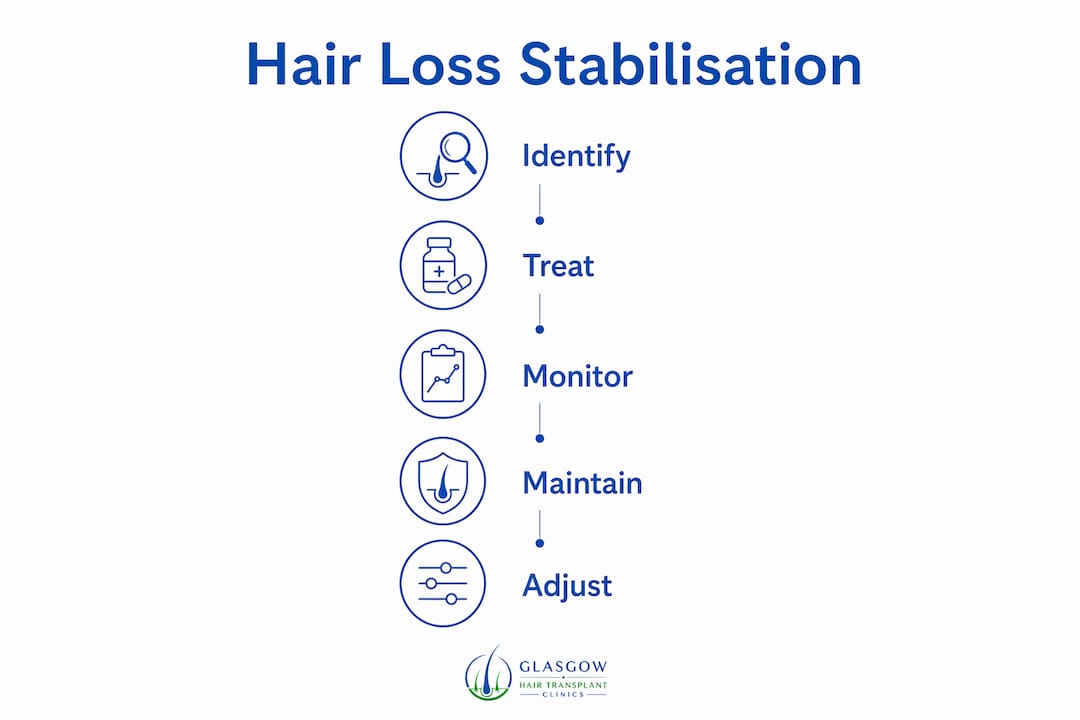
Hair loss stabilisation means the point at which visible hair thinning stops progressing. Clinically, it refers to reducing excessive daily shedding to physiological norms, halting follicle miniaturisation, and maintaining hair density at a level that no longer visibly declines over time. Stabilisation is not the same as regrowth. It is the cessation of further loss, which is itself a meaningful and clinically recognised treatment goal.
For most people experiencing androgenetic alopecia (the medical term for pattern hair loss), stabilisation is the realistic first aim of any treatment plan. Regrowth may follow once follicle health improves, but halting the decline comes first. Continuous management is typically required to maintain this state.
Key markers of hair loss stabilisation:
- Daily shedding returns to within normal physiological limits for most adults
- No visible reduction in scalp hair density over a sustained period
- Hairline and parting width remain stable across several months
- Follicle miniaturisation slows or stops
- Hair texture and thickness hold steady rather than continuing to fine down
- No new thinning patches appear
Table of Contents
- How the hair growth cycle relates to hair loss progression
- At what age does hair loss typically stabilise?
- Can hair loss truly stop without treatment?
- Which treatments are most effective at stabilising hair loss?
- How do you know if your hair loss is stabilising?
- UK clinical standards and expert guidance on managing stabilisation
- What causes hair loss and how does stabilisation occur?
- Why does stabilisation vary so much between individuals?
- How lifestyle and diet affect hair loss progression
- The role of genetics in whether hair loss stabilises
- The psychological impact of hair loss and coping with stabilisation
- Glasgowhairtransplantclinics: expert care for hair loss stabilisation in the UK
- Key takeaways
- FAQ
How the hair growth cycle relates to hair loss progression
Each hair follicle cycles through three phases: anagen (active growth), catagen (transition), and telogen (resting and shedding). In healthy hair, the anagen phase lasts 3–6 years, allowing hair to reach a full length before naturally shedding. In androgenetic alopecia, dihydrotestosterone (DHT) progressively shortens the anagen phase with each successive cycle, producing shorter, finer hairs until the follicle eventually stops producing visible growth altogether.
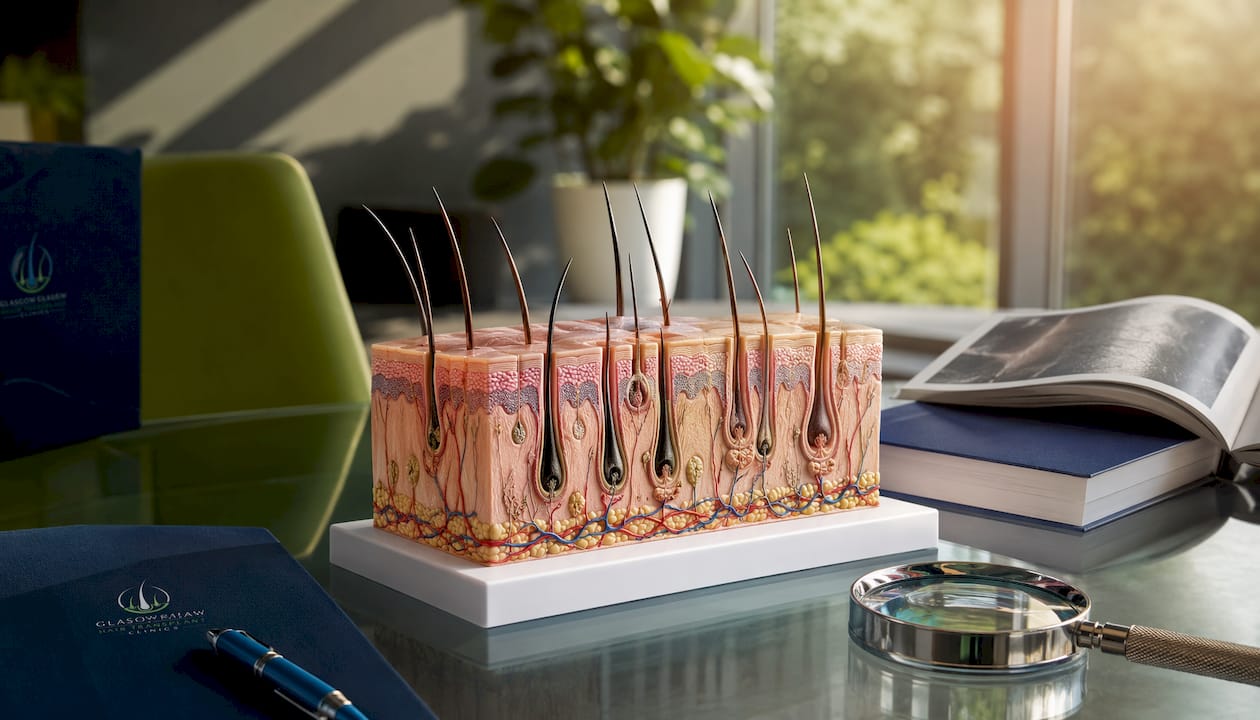
Follicle miniaturisation is the hallmark of this process. As the follicle shrinks, the hair it produces becomes progressively thinner and shorter, which is what creates the appearance of thinning rather than sudden baldness. Understanding this gradual mechanism explains why stabilisation, rather than reversal, is the primary clinical target.
Key stages in hair cycle disruption and progression:
- Anagen phase shortens progressively under DHT influence
- Hairs become finer and shorter with each growth cycle
- Telogen (resting) phase may lengthen, increasing visible shedding
- Follicle diameter reduces, producing vellus-like hairs
- Eventually, follicles may stop producing visible hair entirely
- Early intervention preserves follicle function before irreversible miniaturisation occurs
At what age does hair loss typically stabilise?
Hair loss progression varies considerably between individuals, but many men notice a slowing of active loss in their late 30s or 40s. This is not universal. Some people experience rapid progression in their 20s that plateaus early; others see gradual, continuous thinning well into their 60s. The timing of natural stabilisation depends heavily on genetic sensitivity to DHT and the rate at which follicles miniaturise.
Clinically, the markers of a plateau are more reliable than age alone. A stable hairline, consistent parting width, and no new thinning patches over a period of at least three to four months suggest that active progression has slowed. Clinical guidelines recognise that achieving and maintaining this plateau, even without dramatic regrowth, constitutes a successful treatment outcome that meaningfully improves quality of life.
Clinical note: Stabilisation observed without treatment may reflect a natural hormonal shift, but it is rarely permanent. Most untreated androgenetic alopecia resumes progression over time, particularly if DHT sensitivity remains high.
Can hair loss truly stop without treatment?
Androgenetic alopecia is inherently progressive. Without intervention, the majority of people with pattern hair loss will experience continued follicle miniaturisation over time, though the rate varies. Natural stabilisation can occur, particularly as androgen sensitivity changes with age, but it tends to be temporary rather than permanent.
The distinction between natural and treatment-induced stabilisation matters clinically. Treatment-induced stabilisation, achieved through medications such as finasteride or minoxidil, actively suppresses DHT activity or prolongs the anagen phase, creating a controlled plateau. A 10-year clinical study found that 86% of men using finasteride maintained stable or improved hair growth across the full decade, illustrating what consistent treatment can achieve. Natural stabilisation, by contrast, lacks this pharmacological support and is more likely to give way to resumed progression.
Pro Tip: Patients often interpret a treatment plateau as a sign that medication has stopped working. In reality, a stable hairline after months of treatment is precisely what success looks like. Stabilisation is the goal, not a stepping stone to guaranteed regrowth.
Stopping treatment typically reverses the gains. Discontinuing finasteride generally leads to resumed follicle miniaturisation, confirming that stabilisation requires ongoing intervention rather than a fixed course of treatment. This is not a flaw in the therapy; it reflects the chronic nature of androgenetic alopecia as a lifelong follicular ageing process.
Which treatments are most effective at stabilising hair loss?
Several medical and non-medical options can achieve or maintain hair loss stabilisation. The most established are finasteride and minoxidil, both approved for use in the UK for pattern hair loss.
- Finasteride works by inhibiting the type II 5-alpha reductase enzyme, which converts testosterone into DHT. By slowing DHT-driven follicular damage, it reduces the rate of miniaturisation. Clinical response may take several months to become apparent.
- Minoxidil prolongs the anagen phase and increases blood flow to follicles. Reduced shedding after 2–3 months of treatment is often an early sign that stabilisation is underway.
- PRP (Platelet-Rich Plasma) therapy uses concentrated growth factors from the patient’s own blood to support follicle health. PRP is more reliably effective at stabilising hair loss than at inducing significant regrowth, making it a strong option for maintenance.
- Scalp health and nutrition support the follicular environment. Deficiencies in iron, zinc, and vitamin D are associated with increased shedding, and addressing these can support stabilisation.
- Combination therapy using finasteride and minoxidil together tends to produce more favourable outcomes than either treatment alone.
Adherence is the single most important factor in long-term stabilisation. These treatments require consistent, indefinite use. Stopping them typically results in resumed hair loss within months.
You can review the full range of hair loss medication options available through Glasgowhairtransplantclinics, including finasteride and minoxidil protocols tailored to individual progression.
How do you know if your hair loss is stabilising?
Recognising the signs of stabilisation versus continued progression helps you assess whether your current approach is working. The key is monitoring over time, not day to day.
Signs that hair loss is stabilising:
- Noticeably less hair on your pillow, in the shower drain, or on your brush
- Hairline position unchanged over three to four months
- Parting width not visibly widening
- No new areas of thinning or scalp visibility
- Hair texture holding steady rather than becoming progressively finer
Signs that hair loss is still progressing:
- Continued or increased shedding beyond normal daily limits
- Widening parting or receding hairline
- New patches of thinning appearing
- Scalp becoming more visible in areas previously covered
- Hair feeling finer or shorter with each growth cycle
Stable, predictable shedding within normal limits, with no sudden fluctuations, is one of the clearest indicators that the follicular cycle has settled. If you are unsure whether your hair loss has plateaued, a trichoscopy assessment with a qualified specialist can provide a clinical picture of follicle diameter and density over time. Checking your hair loss stage against a structured framework is a useful starting point.
UK clinical standards and expert guidance on managing stabilisation
In the UK, androgenetic alopecia is managed within a framework that prioritises stabilisation as the primary treatment goal, with regrowth as a secondary outcome where follicle health allows. Glasgowhairtransplantclinics operates with GMC-registered surgeons and CQC-registered clinics, providing care that aligns with evidence-based dermatological guidelines. The evidence-based guideline for androgenetic alopecia confirms that treatment success is defined by stability or plateauing of hair loss, not solely by regrowth, and that this outcome meaningfully improves patient quality of life.
Realistic expectation-setting is central to good patient care. Many people begin treatment hoping for full regrowth and feel disappointed when their hairline simply holds steady. Clinically, a stable hairline after six to twelve months of treatment represents a positive outcome.
Practical tips from clinical practice:
- Begin treatment as early as possible; follicles that have fully miniaturised are unlikely to recover
- Allow at least six months before assessing whether a treatment is working
- Do not stop treatment during an initial shedding phase, as this is a normal part of follicular cycle synchronisation
- Combine medical treatment with scalp health support for best results
- Schedule periodic reviews with a qualified specialist to monitor density objectively
- Address psychological wellbeing alongside physical treatment
Pro Tip: A trichoscopy assessment every six months gives you an objective measure of follicle diameter and density, removing the guesswork from self-assessment. It is the clinical equivalent of a blood test for your hair.
What causes hair loss and how does stabilisation occur?
The primary driver of androgenetic alopecia is DHT binding to androgen receptors in scalp follicles. This binding shortens the anagen phase and triggers progressive follicle miniaturisation. Genetic predisposition determines how sensitive individual follicles are to DHT, which is why two people with identical hormone levels can experience very different rates of hair loss.
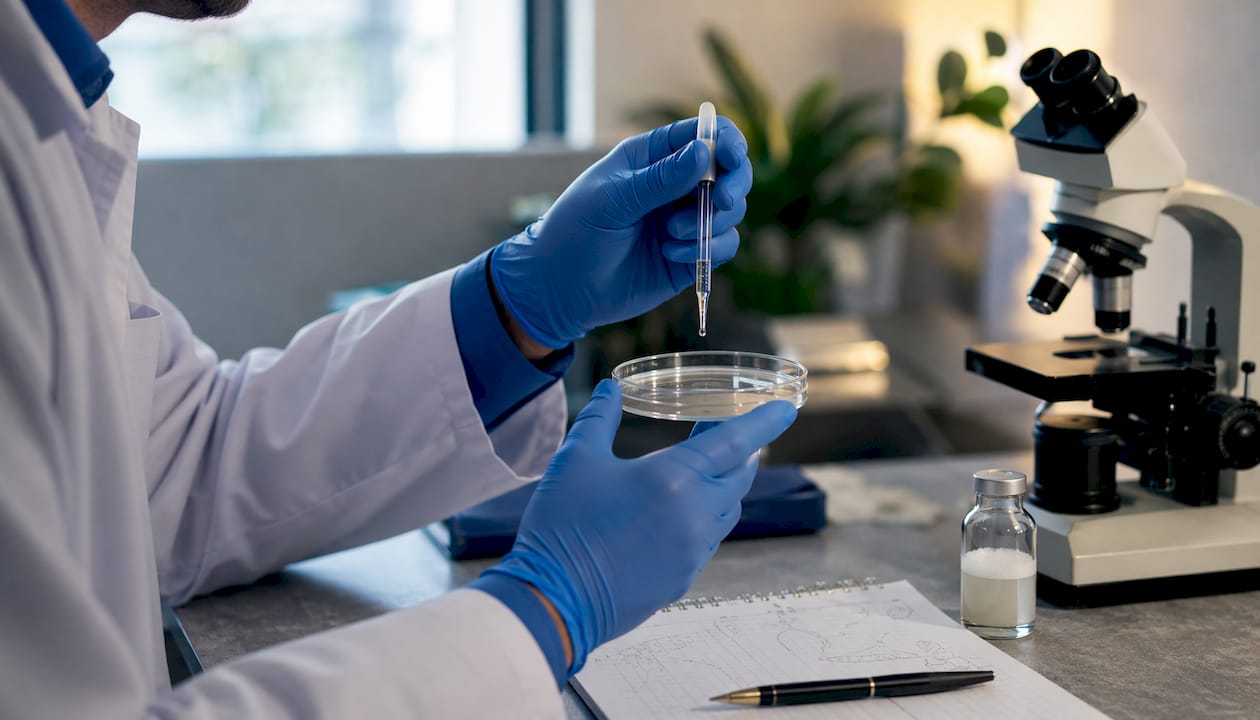
Stabilisation occurs when DHT activity at the follicle level is sufficiently reduced, either through pharmacological intervention or, in some cases, a natural reduction in androgen sensitivity with age. Once DHT-driven damage slows, the follicle can maintain its current size and continue producing hair at its existing calibre. The follicle does not recover lost diameter without additional support, but it stops shrinking further. This is the biological basis of stabilisation.
Inflammation around the follicle also plays a role in androgenetic alopecia progression. Scalp inflammation can accelerate miniaturisation, which is one reason scalp health management (including the use of anti-inflammatory shampoos and treatments) forms part of a comprehensive stabilisation approach.
Why does stabilisation vary so much between individuals?
No two people experience hair loss at the same rate or stabilise at the same point. Several factors account for this variability.
The number and sensitivity of androgen receptors in scalp follicles differs between individuals, determined largely by genetics. Someone with highly sensitive receptors will experience faster miniaturisation at the same DHT level as someone with lower receptor sensitivity. Age of onset also matters: earlier onset typically correlates with more extensive eventual loss, though not always with faster progression.
Hormonal fluctuations, including those associated with thyroid conditions, polycystic ovary syndrome (PCOS) in women, and changes in testosterone metabolism, can accelerate or temporarily slow progression. Treatment adherence, scalp health, nutritional status, and stress levels all introduce further variability. The prognosis for androgenetic alopecia is, as clinical literature confirms, highly individualised, with outcomes varying considerably from person to person even with identical treatment protocols.
How lifestyle and diet affect hair loss progression
Diet and lifestyle do not cause androgenetic alopecia, but they can meaningfully influence the rate of progression and the ease of achieving stabilisation. Nutritional deficiencies are a common and correctable contributor to excessive shedding. Iron deficiency, in particular, is associated with telogen effluvium (a diffuse shedding condition that can compound pattern hair loss), and correcting it often reduces overall shedding load.
Chronic stress elevates cortisol, which can disrupt the hair growth cycle and push more follicles into the telogen phase simultaneously, producing a shedding surge. Regular physical activity, adequate sleep, and stress management support hormonal balance and reduce this risk. Scalp hygiene also matters: sebum build-up and scalp inflammation can worsen follicular conditions, so regular, gentle cleansing supports the follicular environment. A diet rich in protein, B vitamins, zinc, and omega-3 fatty acids provides the building blocks follicles need to maintain their current function during a stabilisation phase.
The role of genetics in whether hair loss stabilises
Genetics account for approximately 80% of predisposition to male androgenetic alopecia. The inherited sensitivity of scalp follicles to DHT determines both the likelihood of hair loss and, broadly, the pattern and extent it follows. Family history on both maternal and paternal sides contributes, though the maternal line has historically received more attention in popular understanding.
Genetic predisposition does not fix a precise endpoint for hair loss, but it does set the parameters within which treatment and lifestyle factors operate. Someone with a strong genetic predisposition may achieve stabilisation with treatment but is unlikely to experience spontaneous, permanent natural stabilisation without it. Conversely, someone with lower genetic sensitivity may find that hair loss slows naturally in their 40s and remains manageable without pharmacological support. Understanding your genetic risk early allows for earlier intervention, which clinical evidence consistently shows produces better long-term outcomes. For guidance on setting realistic goals around stabilisation and restoration, specialist input is invaluable.
The psychological impact of hair loss and coping with stabilisation
Hair loss affects self-image and confidence in ways that are well-documented clinically. Male androgenetic alopecia is associated with increased rates of anxiety and depression in some men, and the psychological burden is often underestimated in clinical settings. Achieving stabilisation can provide significant psychological relief, not because the hair has returned, but because the sense of losing control over one’s appearance has stopped.
Coping strategies that support wellbeing during and after stabilisation include realistic expectation-setting from the outset, peer support groups, and, where needed, counselling. Knowing that a stable hairline is a genuine clinical success, rather than a failure to regrow, reframes the experience constructively. Many people find that once shedding reduces and their hair holds steady, their relationship with their appearance improves considerably, even without significant regrowth.
Glasgowhairtransplantclinics: expert care for hair loss stabilisation in the UK
For people who want professional support in achieving and maintaining hair loss stabilisation, Glasgowhairtransplantclinics offers a clear, medically grounded path forward. With GMC-registered surgeons, CQC-registered clinics, and a full range of treatments from PRP therapy to Follicular Unit Extraction (FUE) hair transplants, the clinics are equipped to support patients at every stage of hair loss, whether the goal is to halt progression or to restore density surgically once stabilisation is achieved.
The clinical team at Glasgowhairtransplantclinics understands that stabilisation is the foundation. For patients whose hair loss has plateaued and who want to explore surgical restoration, a hairline transplant or crown procedure becomes a realistic next step. For those still in the active management phase, medicated therapies and PRP sessions provide the ongoing support that stabilisation requires. Consultations are available online or face to face, with no obligation, giving you a clear clinical picture of where you stand and what your options are. Contact Glasgowhairtransplantclinics today to request a consultation and take the first step towards a stable, managed outcome.
Key takeaways
Hair loss stabilisation means halting visible follicle miniaturisation and normalising shedding rates, and it is the primary clinical goal for most people with androgenetic alopecia, requiring continuous management to maintain.
| Point | Details |
|---|---|
| Stabilisation vs regrowth | Stabilisation halts further loss; regrowth is a secondary goal dependent on follicle health. |
| Treatment adherence | Stopping finasteride or minoxidil typically resumes miniaturisation; ongoing use is required. |
| 86% long-term success | A 10-year study found 86% of men on finasteride maintained stable or improved hair growth. |
| Signs of stabilisation | Reduced shedding, stable hairline, and no new thinning patches over several months are key indicators. |
| Glasgowhairtransplantclinics | Offers GMC-registered clinical care, PRP therapy, and FUE transplants to support stabilisation and restoration. |
FAQ
What is stabilised hair loss?
Stabilised hair loss means daily shedding has returned to normal levels, follicle miniaturisation has halted, and hair density is no longer visibly declining over time. It is a clinical state of controlled, managed hair loss rather than a cure.
At what age does balding stabilise?
Many men see slowed progression in their late 30s or 40s, but individual variation is large and age alone is not a reliable predictor. Genetic sensitivity to DHT and treatment adherence are stronger determinants than age.
Does hair loss ever stabilise without treatment?
Natural stabilisation can occur, particularly as androgen sensitivity changes with age, but it is rarely permanent in androgenetic alopecia. Without pharmacological support, most pattern hair loss resumes progression over time.
Can thinning hair grow back once stabilised?
Stabilisation does not automatically produce regrowth. However, once the follicular environment is stabilised, treatments such as minoxidil or PRP may support partial regrowth in follicles that have not fully miniaturised. Fully miniaturised follicles are unlikely to recover without surgical intervention.
What organ is connected to hair loss?
The hair follicle itself is the primary structure involved, but androgenetic alopecia is driven by androgen hormones produced by the testes (in men) and adrenal glands, acting on genetically sensitive follicles in the scalp.
Recommended
Certifications




For most people experiencing androgenetic alopecia (the medical term for pattern hair loss), stabilisation is the realistic first aim of any treatment plan. Regrowth may follow once follicle health improves, but halting the decline comes first. Continuous management is typically required to maintain this state.
Key markers of hair loss stabilisation:
- Daily shedding returns to within normal physiological limits for most adults
- No visible reduction in scalp hair density over a sustained period
- Hairline and parting width remain stable across several months
- Follicle miniaturisation slows or stops
- Hair texture and thickness hold steady rather than continuing to fine down
- No new thinning patches appear
Table of Contents
- How the hair growth cycle relates to hair loss progression
- At what age does hair loss typically stabilise?
- Can hair loss truly stop without treatment?
- Which treatments are most effective at stabilising hair loss?
- How do you know if your hair loss is stabilising?
- UK clinical standards and expert guidance on managing stabilisation
- What causes hair loss and how does stabilisation occur?
- Why does stabilisation vary so much between individuals?
- How lifestyle and diet affect hair loss progression
- The role of genetics in whether hair loss stabilises
- The psychological impact of hair loss and coping with stabilisation
- Glasgowhairtransplantclinics: expert care for hair loss stabilisation in the UK
- Key takeaways
- FAQ
How the hair growth cycle relates to hair loss progression
Each hair follicle cycles through three phases: anagen (active growth), catagen (transition), and telogen (resting and shedding). In healthy hair, the anagen phase lasts 3–6 years, allowing hair to reach a full length before naturally shedding. In androgenetic alopecia, dihydrotestosterone (DHT) progressively shortens the anagen phase with each successive cycle, producing shorter, finer hairs until the follicle eventually stops producing visible growth altogether.
Follicle miniaturisation is the hallmark of this process. As the follicle shrinks, the hair it produces becomes progressively thinner and shorter, which is what creates the appearance of thinning rather than sudden baldness. Understanding this gradual mechanism explains why stabilisation, rather than reversal, is the primary clinical target.
Key stages in hair cycle disruption and progression:
- Anagen phase shortens progressively under DHT influence
- Hairs become finer and shorter with each growth cycle
- Telogen (resting) phase may lengthen, increasing visible shedding
- Follicle diameter reduces, producing vellus-like hairs
- Eventually, follicles may stop producing visible hair entirely
- Early intervention preserves follicle function before irreversible miniaturisation occurs
At what age does hair loss typically stabilise?
Hair loss progression varies considerably between individuals, but many men notice a slowing of active loss in their late 30s or 40s. This is not universal. Some people experience rapid progression in their 20s that plateaus early; others see gradual, continuous thinning well into their 60s. The timing of natural stabilisation depends heavily on genetic sensitivity to DHT and the rate at which follicles miniaturise.
Clinically, the markers of a plateau are more reliable than age alone. A stable hairline, consistent parting width, and no new thinning patches over a period of at least three to four months suggest that active progression has slowed. Clinical guidelines recognise that achieving and maintaining this plateau, even without dramatic regrowth, constitutes a successful treatment outcome that meaningfully improves quality of life.
Clinical note: Stabilisation observed without treatment may reflect a natural hormonal shift, but it is rarely permanent. Most untreated androgenetic alopecia resumes progression over time, particularly if DHT sensitivity remains high.
Can hair loss truly stop without treatment?
Androgenetic alopecia is inherently progressive. Without intervention, the majority of people with pattern hair loss will experience continued follicle miniaturisation over time, though the rate varies. Natural stabilisation can occur, particularly as androgen sensitivity changes with age, but it tends to be temporary rather than permanent.
The distinction between natural and treatment-induced stabilisation matters clinically. Treatment-induced stabilisation, achieved through medications such as finasteride or minoxidil, actively suppresses DHT activity or prolongs the anagen phase, creating a controlled plateau. A 10-year clinical study found that 86% of men using finasteride maintained stable or improved hair growth across the full decade, illustrating what consistent treatment can achieve. Natural stabilisation, by contrast, lacks this pharmacological support and is more likely to give way to resumed progression.
Pro Tip: Patients often interpret a treatment plateau as a sign that medication has stopped working. In reality, a stable hairline after months of treatment is precisely what success looks like. Stabilisation is the goal, not a stepping stone to guaranteed regrowth.
Stopping treatment typically reverses the gains. Discontinuing finasteride generally leads to resumed follicle miniaturisation, confirming that stabilisation requires ongoing intervention rather than a fixed course of treatment. This is not a flaw in the therapy; it reflects the chronic nature of androgenetic alopecia as a lifelong follicular ageing process.
Which treatments are most effective at stabilising hair loss?
Several medical and non-medical options can achieve or maintain hair loss stabilisation. The most established are finasteride and minoxidil, both approved for use in the UK for pattern hair loss.
- Finasteride works by inhibiting the type II 5-alpha reductase enzyme, which converts testosterone into DHT. By slowing DHT-driven follicular damage, it reduces the rate of miniaturisation. Clinical response may take several months to become apparent.
- Minoxidil prolongs the anagen phase and increases blood flow to follicles. Reduced shedding after 2–3 months of treatment is often an early sign that stabilisation is underway.
- PRP (Platelet-Rich Plasma) therapy uses concentrated growth factors from the patient’s own blood to support follicle health. PRP is more reliably effective at stabilising hair loss than at inducing significant regrowth, making it a strong option for maintenance.
- Scalp health and nutrition support the follicular environment. Deficiencies in iron, zinc, and vitamin D are associated with increased shedding, and addressing these can support stabilisation.
- Combination therapy using finasteride and minoxidil together tends to produce more favourable outcomes than either treatment alone.
Adherence is the single most important factor in long-term stabilisation. These treatments require consistent, indefinite use. Stopping them typically results in resumed hair loss within months.
You can review the full range of hair loss medication options available through Glasgowhairtransplantclinics, including finasteride and minoxidil protocols tailored to individual progression.
How do you know if your hair loss is stabilising?
Recognising the signs of stabilisation versus continued progression helps you assess whether your current approach is working. The key is monitoring over time, not day to day.
Signs that hair loss is stabilising:
- Noticeably less hair on your pillow, in the shower drain, or on your brush
- Hairline position unchanged over three to four months
- Parting width not visibly widening
- No new areas of thinning or scalp visibility
- Hair texture holding steady rather than becoming progressively finer
Signs that hair loss is still progressing:
- Continued or increased shedding beyond normal daily limits
- Widening parting or receding hairline
- New patches of thinning appearing
- Scalp becoming more visible in areas previously covered
- Hair feeling finer or shorter with each growth cycle
Stable, predictable shedding within normal limits, with no sudden fluctuations, is one of the clearest indicators that the follicular cycle has settled. If you are unsure whether your hair loss has plateaued, a trichoscopy assessment with a qualified specialist can provide a clinical picture of follicle diameter and density over time. Checking your hair loss stage against a structured framework is a useful starting point.
UK clinical standards and expert guidance on managing stabilisation
In the UK, androgenetic alopecia is managed within a framework that prioritises stabilisation as the primary treatment goal, with regrowth as a secondary outcome where follicle health allows. Glasgowhairtransplantclinics operates with GMC-registered surgeons and CQC-registered clinics, providing care that aligns with evidence-based dermatological guidelines. The evidence-based guideline for androgenetic alopecia confirms that treatment success is defined by stability or plateauing of hair loss, not solely by regrowth, and that this outcome meaningfully improves patient quality of life.
Realistic expectation-setting is central to good patient care. Many people begin treatment hoping for full regrowth and feel disappointed when their hairline simply holds steady. Clinically, a stable hairline after six to twelve months of treatment represents a positive outcome.
Practical tips from clinical practice:
- Begin treatment as early as possible; follicles that have fully miniaturised are unlikely to recover
- Allow at least six months before assessing whether a treatment is working
- Do not stop treatment during an initial shedding phase, as this is a normal part of follicular cycle synchronisation
- Combine medical treatment with scalp health support for best results
- Schedule periodic reviews with a qualified specialist to monitor density objectively
- Address psychological wellbeing alongside physical treatment
Pro Tip: A trichoscopy assessment every six months gives you an objective measure of follicle diameter and density, removing the guesswork from self-assessment. It is the clinical equivalent of a blood test for your hair.
What causes hair loss and how does stabilisation occur?
The primary driver of androgenetic alopecia is DHT binding to androgen receptors in scalp follicles. This binding shortens the anagen phase and triggers progressive follicle miniaturisation. Genetic predisposition determines how sensitive individual follicles are to DHT, which is why two people with identical hormone levels can experience very different rates of hair loss.
Stabilisation occurs when DHT activity at the follicle level is sufficiently reduced, either through pharmacological intervention or, in some cases, a natural reduction in androgen sensitivity with age. Once DHT-driven damage slows, the follicle can maintain its current size and continue producing hair at its existing calibre. The follicle does not recover lost diameter without additional support, but it stops shrinking further. This is the biological basis of stabilisation.
Inflammation around the follicle also plays a role in androgenetic alopecia progression. Scalp inflammation can accelerate miniaturisation, which is one reason scalp health management (including the use of anti-inflammatory shampoos and treatments) forms part of a comprehensive stabilisation approach.
Why does stabilisation vary so much between individuals?
No two people experience hair loss at the same rate or stabilise at the same point. Several factors account for this variability.
The number and sensitivity of androgen receptors in scalp follicles differs between individuals, determined largely by genetics. Someone with highly sensitive receptors will experience faster miniaturisation at the same DHT level as someone with lower receptor sensitivity. Age of onset also matters: earlier onset typically correlates with more extensive eventual loss, though not always with faster progression.
Hormonal fluctuations, including those associated with thyroid conditions, polycystic ovary syndrome (PCOS) in women, and changes in testosterone metabolism, can accelerate or temporarily slow progression. Treatment adherence, scalp health, nutritional status, and stress levels all introduce further variability. The prognosis for androgenetic alopecia is, as clinical literature confirms, highly individualised, with outcomes varying considerably from person to person even with identical treatment protocols.
How lifestyle and diet affect hair loss progression
Diet and lifestyle do not cause androgenetic alopecia, but they can meaningfully influence the rate of progression and the ease of achieving stabilisation. Nutritional deficiencies are a common and correctable contributor to excessive shedding. Iron deficiency, in particular, is associated with telogen effluvium (a diffuse shedding condition that can compound pattern hair loss), and correcting it often reduces overall shedding load.
Chronic stress elevates cortisol, which can disrupt the hair growth cycle and push more follicles into the telogen phase simultaneously, producing a shedding surge. Regular physical activity, adequate sleep, and stress management support hormonal balance and reduce this risk. Scalp hygiene also matters: sebum build-up and scalp inflammation can worsen follicular conditions, so regular, gentle cleansing supports the follicular environment. A diet rich in protein, B vitamins, zinc, and omega-3 fatty acids provides the building blocks follicles need to maintain their current function during a stabilisation phase.
The role of genetics in whether hair loss stabilises
Genetics account for approximately 80% of predisposition to male androgenetic alopecia. The inherited sensitivity of scalp follicles to DHT determines both the likelihood of hair loss and, broadly, the pattern and extent it follows. Family history on both maternal and paternal sides contributes, though the maternal line has historically received more attention in popular understanding.
Genetic predisposition does not fix a precise endpoint for hair loss, but it does set the parameters within which treatment and lifestyle factors operate. Someone with a strong genetic predisposition may achieve stabilisation with treatment but is unlikely to experience spontaneous, permanent natural stabilisation without it. Conversely, someone with lower genetic sensitivity may find that hair loss slows naturally in their 40s and remains manageable without pharmacological support. Understanding your genetic risk early allows for earlier intervention, which clinical evidence consistently shows produces better long-term outcomes. For guidance on setting realistic goals around stabilisation and restoration, specialist input is invaluable.
The psychological impact of hair loss and coping with stabilisation
Hair loss affects self-image and confidence in ways that are well-documented clinically. Male androgenetic alopecia is associated with increased rates of anxiety and depression in some men, and the psychological burden is often underestimated in clinical settings. Achieving stabilisation can provide significant psychological relief, not because the hair has returned, but because the sense of losing control over one’s appearance has stopped.
Coping strategies that support wellbeing during and after stabilisation include realistic expectation-setting from the outset, peer support groups, and, where needed, counselling. Knowing that a stable hairline is a genuine clinical success, rather than a failure to regrow, reframes the experience constructively. Many people find that once shedding reduces and their hair holds steady, their relationship with their appearance improves considerably, even without significant regrowth.
Glasgowhairtransplantclinics: expert care for hair loss stabilisation in the UK
For people who want professional support in achieving and maintaining hair loss stabilisation, Glasgowhairtransplantclinics offers a clear, medically grounded path forward. With GMC-registered surgeons, CQC-registered clinics, and a full range of treatments from PRP therapy to Follicular Unit Extraction (FUE) hair transplants, the clinics are equipped to support patients at every stage of hair loss, whether the goal is to halt progression or to restore density surgically once stabilisation is achieved.
The clinical team at Glasgowhairtransplantclinics understands that stabilisation is the foundation. For patients whose hair loss has plateaued and who want to explore surgical restoration, a hairline transplant or crown procedure becomes a realistic next step. For those still in the active management phase, medicated therapies and PRP sessions provide the ongoing support that stabilisation requires. Consultations are available online or face to face, with no obligation, giving you a clear clinical picture of where you stand and what your options are. Contact Glasgowhairtransplantclinics today to request a consultation and take the first step towards a stable, managed outcome.
Key takeaways
Hair loss stabilisation means halting visible follicle miniaturisation and normalising shedding rates, and it is the primary clinical goal for most people with androgenetic alopecia, requiring continuous management to maintain.
| Point | Details |
|---|---|
| Stabilisation vs regrowth | Stabilisation halts further loss; regrowth is a secondary goal dependent on follicle health. |
| Treatment adherence | Stopping finasteride or minoxidil typically resumes miniaturisation; ongoing use is required. |
| 86% long-term success | A 10-year study found 86% of men on finasteride maintained stable or improved hair growth. |
| Signs of stabilisation | Reduced shedding, stable hairline, and no new thinning patches over several months are key indicators. |
| Glasgowhairtransplantclinics | Offers GMC-registered clinical care, PRP therapy, and FUE transplants to support stabilisation and restoration. |
FAQ
What is stabilised hair loss?
Stabilised hair loss means daily shedding has returned to normal levels, follicle miniaturisation has halted, and hair density is no longer visibly declining over time. It is a clinical state of controlled, managed hair loss rather than a cure.
At what age does balding stabilise?
Many men see slowed progression in their late 30s or 40s, but individual variation is large and age alone is not a reliable predictor. Genetic sensitivity to DHT and treatment adherence are stronger determinants than age.
Does hair loss ever stabilise without treatment?
Natural stabilisation can occur, particularly as androgen sensitivity changes with age, but it is rarely permanent in androgenetic alopecia. Without pharmacological support, most pattern hair loss resumes progression over time.
Can thinning hair grow back once stabilised?
Stabilisation does not automatically produce regrowth. However, once the follicular environment is stabilised, treatments such as minoxidil or PRP may support partial regrowth in follicles that have not fully miniaturised. Fully miniaturised follicles are unlikely to recover without surgical intervention.
What organ is connected to hair loss?
The hair follicle itself is the primary structure involved, but androgenetic alopecia is driven by androgen hormones produced by the testes (in men) and adrenal glands, acting on genetically sensitive follicles in the scalp.

About the author
Dr Harpreet Kalra is a GP and hair-transplant surgeon at Glasgow Hair Transplant Clinics. His consultations consider the diagnosis, donor area, existing hair and likely future pattern before treatment is discussed.
Plan the next step for stable hair loss
Our Glasgow team can assess whether your hair loss is stable and explain the timing of medical or surgical treatment.
Book a Free Consultation